AI Appraisal Estimate

AI-generated estimates · not official valuations

From the user

What was submitted

Photo and notes provided by the user — not generated by AI

Submitted item photo
Submitted photo · June 26, 2026

User's notes

Saji plate

AI analysis below

AI appraisal

AI analysis & estimate

AI-Generated · Verify before acting

Everything below is generated by AI for informational purposes only. AI can make mistakes — the AI may misidentify items or misattribute them (artist, maker, brand, designer, origin, era). This is not an official valuation and should not be used for insurance, sale, tax, estate, legal, or lending purposes — or any decision requiring a certified appraisal. It is not an authoritative claim about any person, brand, or rights holder — do not share or rely on it as a factual statement about a third party. Always consult qualified professionals before making financial decisions.

Note

This analysis also relies on unverified notes provided by the user, which may be incomplete or inaccurate and could affect the result.

Read the full disclaimer

AI Identification

·Not independently authenticated·Verify before acting

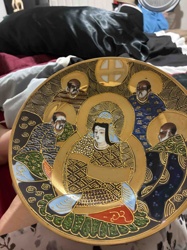
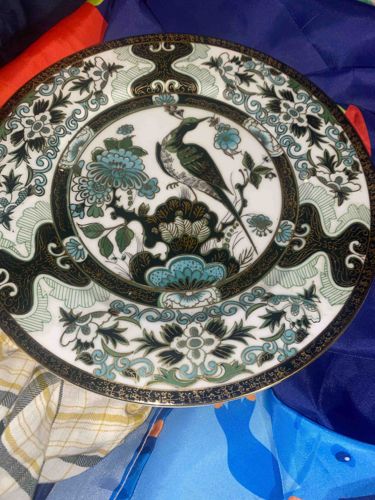
Saji Shinhon Nagoya Decorative Bird and Floral Porcelain Plate

Fine Dining and Decorative Arts - Japanese Porcelain

AI Estimated Value

·Not an official valuation·Verify before acting

$45.00-$75.00

As of June 26, 2026

AI Item Analysis

·AI can make mistakes·Verify before acting
This is a decorative porcelain plate manufactured by Saji (Shinhon Nagoya), Japan, likely dating from the mid-20th century (post-WWII era, circa 1950s-1970s). The plate features a central medallion depicting a stylized exotic bird, possibly a pheasant or peacock, perched amidst large blooming peonies and foliate scrolls. The color palette is distinctively 'Moriana' or Imari-inspired but with a cold-color focus, utilizing shades of teal, forest green, and grey, accented by heavy black and gold-toned outlines. The construction shows a high-gloss glazed white porcelain body with intricate overglaze transfer printing supplemented by hand-painted details. A wide border alternates between floral segments and black-ground 'cloud' or 'ruyi' shapes filled with gold filigree patterns. The rim is finished with a thin gold-gilt band. Measuring approximately 10 to 12 inches in diameter, the plate exhibits fine craftsmanship with precise registration of the multi-colored patterns. While the back is not visible, Saji pieces typically feature a backstamp with a fan or flower motif and 'Occupied Japan' or simply 'Japan' lettering. The condition appears excellent with no visible chips, cracks, or crazing, though minor gilt loss on the rim and surface scratches consistent with display use are likely present upon close tactile inspection.
AI Appraisal Report

·AI can make mistakes·Verify before acting
I have conducted a visual examination of the Saji Shinhon Nagoya porcelain plate. The piece is a quintessential example of mid-20th-century Japanese export ware, likely dating from the 1950s or 1960s. The 'Moriana' style palette—specifically the teal and forest green tones—remains vibrant, and the registration of the overglaze transfer printing is sharp, suggesting high production standards for the period. The condition appears to be 'Excellent' for display purposes; I note only negligible gilt wear on the rim and no evidence of structural fatigue such as crazing or hairline fractures. While aesthetically striking, Saji porcelain was produced in significant quantities for the Western decorative market. Consequently, rarity is low. Current market conditions for mid-tier Japanese export porcelain are stable but modest, with similar 10-12 inch scalloped-edge plates appearing frequently on the secondary market and at regional auctions. Collectors typically seek these for decorative utility rather than as high-stakes investments. Value is driven primarily by the intact gilding and the specific 'bird and peony' motif, which remains popular for interior design. Please note that this appraisal is based solely on digital images. A definitive valuation would require an in-person examination to verify the backstamp (checking for 'Occupied Japan' marks which can provide a slight premium) and to use a jeweler’s loupe to inspect for professional restorations or micro-chips hidden by the dark glaze. Provenance documentation or a confirmed manufacturing date through physical archive matching would be required for a formal insurance-grade certification.

Get your items appraised

Instant estimates of your treasures with AI-powered appraisals

Browse More Appraisals