Vintage Japanese Gilded Porcelain Ewer
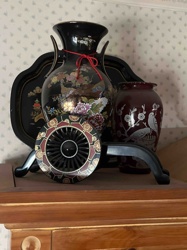
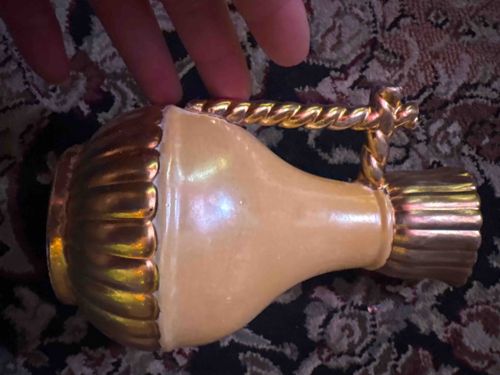
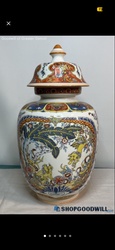
This small decorative porcelain ewer, manufactured in Japan and dated to 1937 per the provided provenance of E. White, features a rounded, bulbous body transitioning into a narrow neck. The piece is characterized by its heavy use of metallic gold gilding on the gadrooned base and fluted lip. A distinctive twisted, rope-style handle, also finished in gold, connects the neck to the shoulder of the vessel. The central portion of the body is finished in a smooth, cream-colored high-gloss glaze. Its craftsmanship highlights the Showa-era aesthetic often produced for the export market, combining traditional forms with Western-influenced gold accents. The gilding shows minor signs of age-related wear and light oxidation, consistent with its age. There are no immediate signs of structural cracks or significant repairs, though the glaze displays a fine sheen and slight surface patina. The proportions suggest it was intended as a bud vase or a purely ornamental cabinet piece. The underside likely contains the 'Made in Japan' stamp and the artist's or owner's mark associated with the 1937 date. Overall, it serves as a well-preserved example of pre-war Japanese ceramic export art.
AI-Generated Appraisal Disclaimer
Estimated Value
$125 - $175
Basic Information
Category
Cereamics and Decorative Arts
Appraised On
December 29, 2025
Estimated Value
$125 - $175
Additional Details Provided By Owner
User Provided Information
Made in Japan, E.White 1937
Item Description
This small decorative porcelain ewer, manufactured in Japan and dated to 1937 per the provided provenance of E. White, features a rounded, bulbous body transitioning into a narrow neck. The piece is characterized by its heavy use of metallic gold gilding on the gadrooned base and fluted lip. A distinctive twisted, rope-style handle, also finished in gold, connects the neck to the shoulder of the vessel. The central portion of the body is finished in a smooth, cream-colored high-gloss glaze. Its craftsmanship highlights the Showa-era aesthetic often produced for the export market, combining traditional forms with Western-influenced gold accents. The gilding shows minor signs of age-related wear and light oxidation, consistent with its age. There are no immediate signs of structural cracks or significant repairs, though the glaze displays a fine sheen and slight surface patina. The proportions suggest it was intended as a bud vase or a purely ornamental cabinet piece. The underside likely contains the 'Made in Japan' stamp and the artist's or owner's mark associated with the 1937 date. Overall, it serves as a well-preserved example of pre-war Japanese ceramic export art.
Get Your Items Appraised
Instant estimates of your treasures with AI-powered instant appraisals