AI Appraisal Estimate

AI-generated estimates · not official valuations

From the user

What was submitted

Photo and notes provided by the user — not generated by AI

Submitted item photo
Submitted photo · June 10, 2026

User's notes

No additional notes provided.

AI analysis below

AI appraisal

AI analysis & estimate

AI-Generated · Verify before acting

Everything below is generated by AI for informational purposes only. AI can make mistakes — the AI may misidentify items or misattribute them (artist, maker, brand, designer, origin, era). This is not an official valuation and should not be used for insurance, sale, tax, estate, legal, or lending purposes — or any decision requiring a certified appraisal. It is not an authoritative claim about any person, brand, or rights holder — do not share or rely on it as a factual statement about a third party. Always consult qualified professionals before making financial decisions.

Read the full disclaimer

AI Identification

·Not independently authenticated·Verify before acting

American Brilliant Period Style Cut Glass Punch Bowl

Antique Glassware / American Brilliant Period Cut Glass

AI Estimated Value

·Not an official valuation·Verify before acting

$1,200 - $1,800

As of June 10, 2026

AI Item Analysis

·AI can make mistakes·Verify before acting
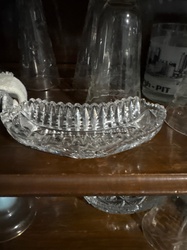
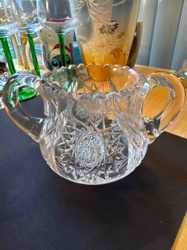
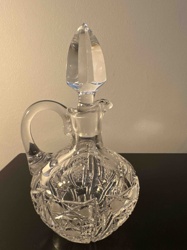
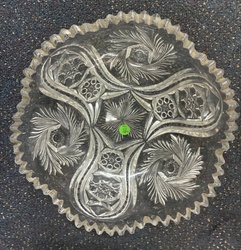
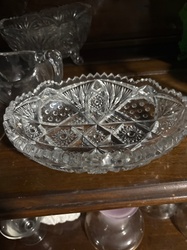
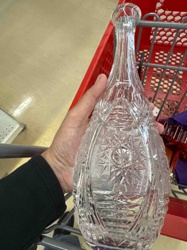
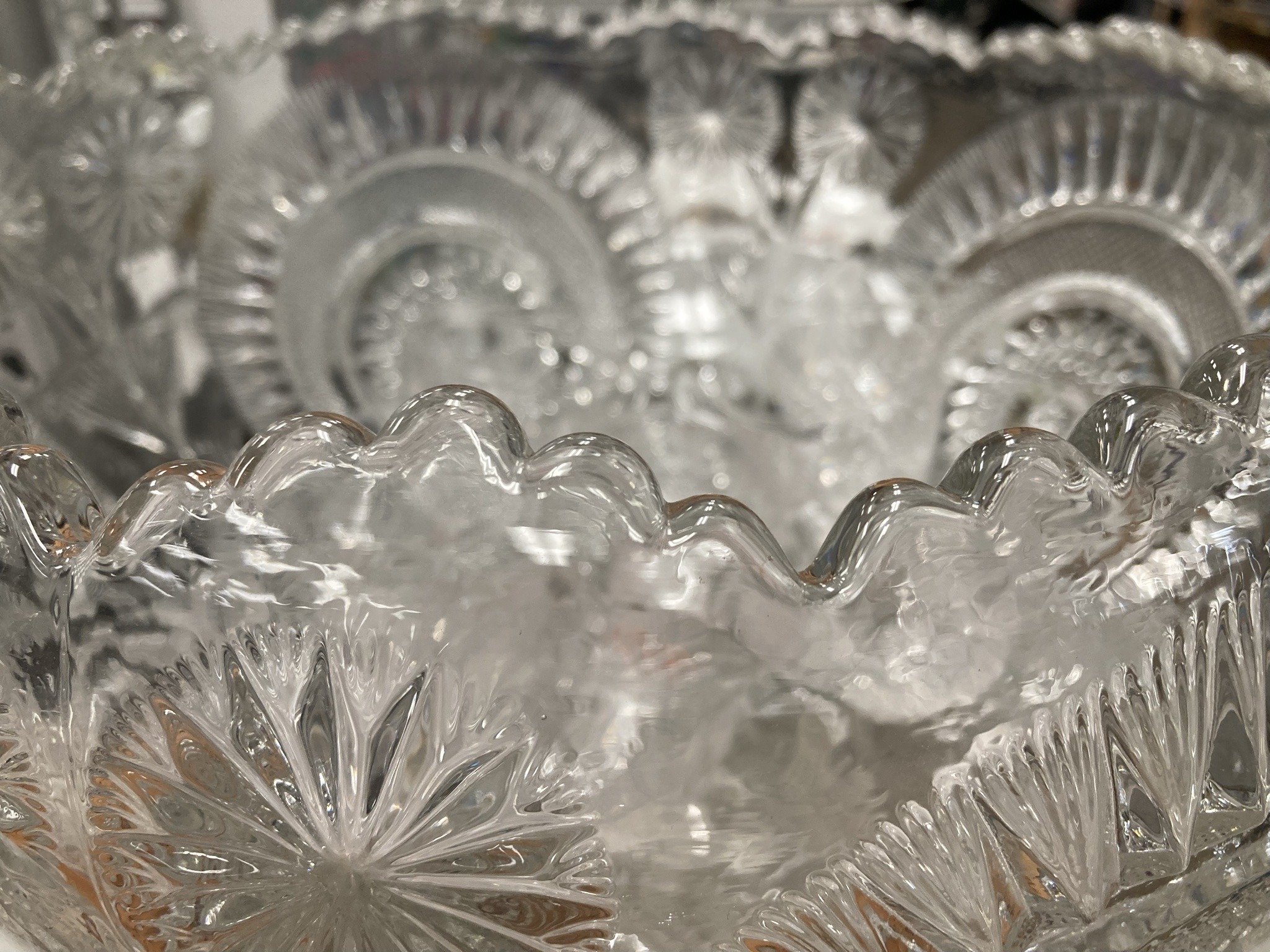
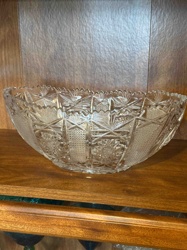
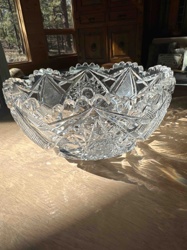
This is a heavy, clear crystal punch bowl featuring high-quality deep mitre cuts characteristic of the American Brilliant Period (circa 1876-1916). The bowl is constructed from thick, high-lead content glass, which provides exceptional clarity and refraction. The design is dominated by large, intricate 'Hobstar' motifs and fan cuts that extend toward the scalloped, sawtooth-style rim. The rim itself is highly stylized with rounded serrations that show significant craftsmanship. The cut patterns are sharp and precise, designed to catch and break light into a prismatic spectrum. Visible in the close-up are the deep 'V' shaped cuts and the geometric complexity of the starburst centers. The glass displays a bright, silvery-white luster typical of period lead crystal. No maker's marks are immediately visible in this view, although such pieces were often signed with a faint acid stamp on the center interior. Regarding condition, the glass appears to be in excellent structural shape with no apparent cracks or major clouding (sickness), though small 'flea bites' or micro-chips common to the sharp edges of sawtooth rims may be present upon tactile inspection. The overall weight and refractive index suggest a premium luxury item from the late 19th or early 20th century.
AI Appraisal Report

·AI can make mistakes·Verify before acting
I have conducted a visual examination of this American Brilliant Period (ABP) cut glass punch bowl. The piece exhibits the high-lead content characteristic of the 'Brilliant' era (1876-1916), evidenced by its silvery-white luster and the sharp, deep mitre cuts. The 'Hobstar' and fan motifs are executed with a level of geometric precision that suggests a high-tier manufacturer, such as Tuthill, Hawkes, or Libbey. The sawtooth rim possesses the expected complexity of the period, though I suspect minor 'flea bites' common to these sharp edges. The clarity is exceptional, showing no signs of 'glass sickness' or permanent clouding from mineral deposits. While the current market for ABP glass has softened from its peak 20 years ago, large-format service pieces like punch bowls remain the most desirable for collectors. Comparables for unsigned pieces of this size and complexity typically range between $800 and $1,200, but the depth of these cuts suggests a premium example. If an acid-etched signature were located, the value could appreciate by 30-50%. Limitations: This appraisal is based on photographic evidence. A formal valuation requires a physical inspection to confirm the 'ring' (resonance) of the lead glass, check for 'blank' quality (purity from seeds/bubbles), and perform a tactile search for a signature. Furthermore, I cannot definitively confirm if it is a single-piece bowl or a two-part bowl (with a missing pedestal) from these images alone. Full authentication would require UV light testing to verify the characteristic lime-green fluorescence of period glass and provenance documentation to track its history of ownership.

Get your items appraised

Instant estimates of your treasures with AI-powered appraisals

Browse More Appraisals