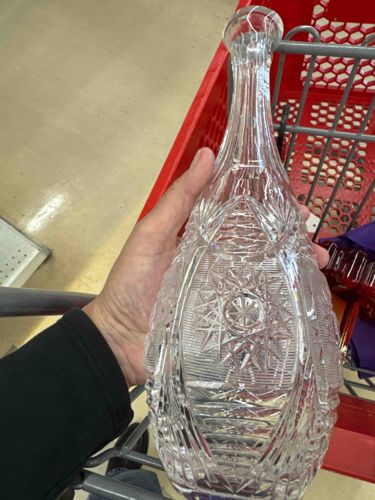
American Brilliant Period Cut Glass Decanter
Antique Glassware / Collectibles

American Brilliant Period Cut Glass Decanter

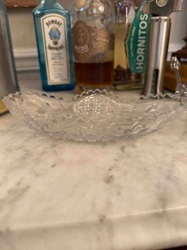
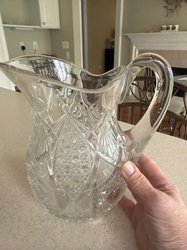
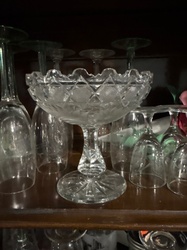
This is a tall, elegant decanter crafted from heavy lead crystal, characteristic of the American Brilliant Period (ABP), which peaked between 1876 and 1917. The vessel features a teardrop or ovoid body that tapers into a long, slender fluted neck, terminating in a flared rim. The exterior is intricately decorated with deeply hand-cut geometric patterns, most notably large Brunswick stars or pinwheels centered within hobstar motifs. The fields between the primary stars are filled with secondary cuts including fine cross-hatching, strawberry diamonds, and fan motifs, which serve to maximize light refraction and create the 'brilliant' prismatic effect for which the period is named. The glass appears to have a high lead content, indicated by its clarity and the crispness of the miter cuts. While the matching glass stopper is missing in this image, the neck remains intact. Based on the craftsmanship and deep miters, it likely dates to the late 19th or early 20th century. Condition-wise, the glass shows excellent clarity without significant clouding (sickness), though typical flea bites or minor chips may be present along the sharpest edges of the cut patterns due to age and handling. No visible maker's marks are discernible in the photo, which is common for ABP glass, though top-tier manufacturers like Libby or Hawkes often etched their signatures subtly.
Estimated Value

$175 - $250

Basic Information

Category

Antique Glassware / Collectibles

Appraised On

April 7, 2026

Estimated Value

$175 - $250

Item Description

This is a tall, elegant decanter crafted from heavy lead crystal, characteristic of the American Brilliant Period (ABP), which peaked between 1876 and 1917. The vessel features a teardrop or ovoid body that tapers into a long, slender fluted neck, terminating in a flared rim. The exterior is intricately decorated with deeply hand-cut geometric patterns, most notably large Brunswick stars or pinwheels centered within hobstar motifs. The fields between the primary stars are filled with secondary cuts including fine cross-hatching, strawberry diamonds, and fan motifs, which serve to maximize light refraction and create the 'brilliant' prismatic effect for which the period is named. The glass appears to have a high lead content, indicated by its clarity and the crispness of the miter cuts. While the matching glass stopper is missing in this image, the neck remains intact. Based on the craftsmanship and deep miters, it likely dates to the late 19th or early 20th century. Condition-wise, the glass shows excellent clarity without significant clouding (sickness), though typical flea bites or minor chips may be present along the sharpest edges of the cut patterns due to age and handling. No visible maker's marks are discernible in the photo, which is common for ABP glass, though top-tier manufacturers like Libby or Hawkes often etched their signatures subtly.
Get Your Items Appraised

Instant estimates of your treasures with AI-powered instant appraisals

Browse More Appraisals