AI Appraisal Estimate

AI-generated estimates · not official valuations

From the user

What was submitted

Photo and notes provided by the user — not generated by AI

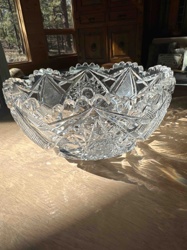
Submitted item photo
Submitted photo · June 1, 2026

User's notes

Heavy glass manganese bowl.

AI analysis below

AI appraisal

AI analysis & estimate

AI-Generated · Verify before acting

Everything below is generated by AI for informational purposes only. AI can make mistakes — the AI may misidentify items or misattribute them (artist, maker, brand, designer, origin, era). This is not an official valuation and should not be used for insurance, sale, tax, estate, legal, or lending purposes — or any decision requiring a certified appraisal. It is not an authoritative claim about any person, brand, or rights holder — do not share or rely on it as a factual statement about a third party. Always consult qualified professionals before making financial decisions.

Note

This analysis also relies on unverified notes provided by the user, which may be incomplete or inaccurate and could affect the result.

Read the full disclaimer

AI Identification

·Not independently authenticated·Verify before acting

American Brilliant Period Style Cut Glass Bowl

Antique Glassware / American Brilliant Period Cut Glass

AI Estimated Value

·Not an official valuation·Verify before acting

$150-$250

As of June 1, 2026

AI Item Analysis

·AI can make mistakes·Verify before acting
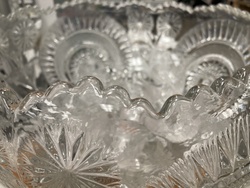
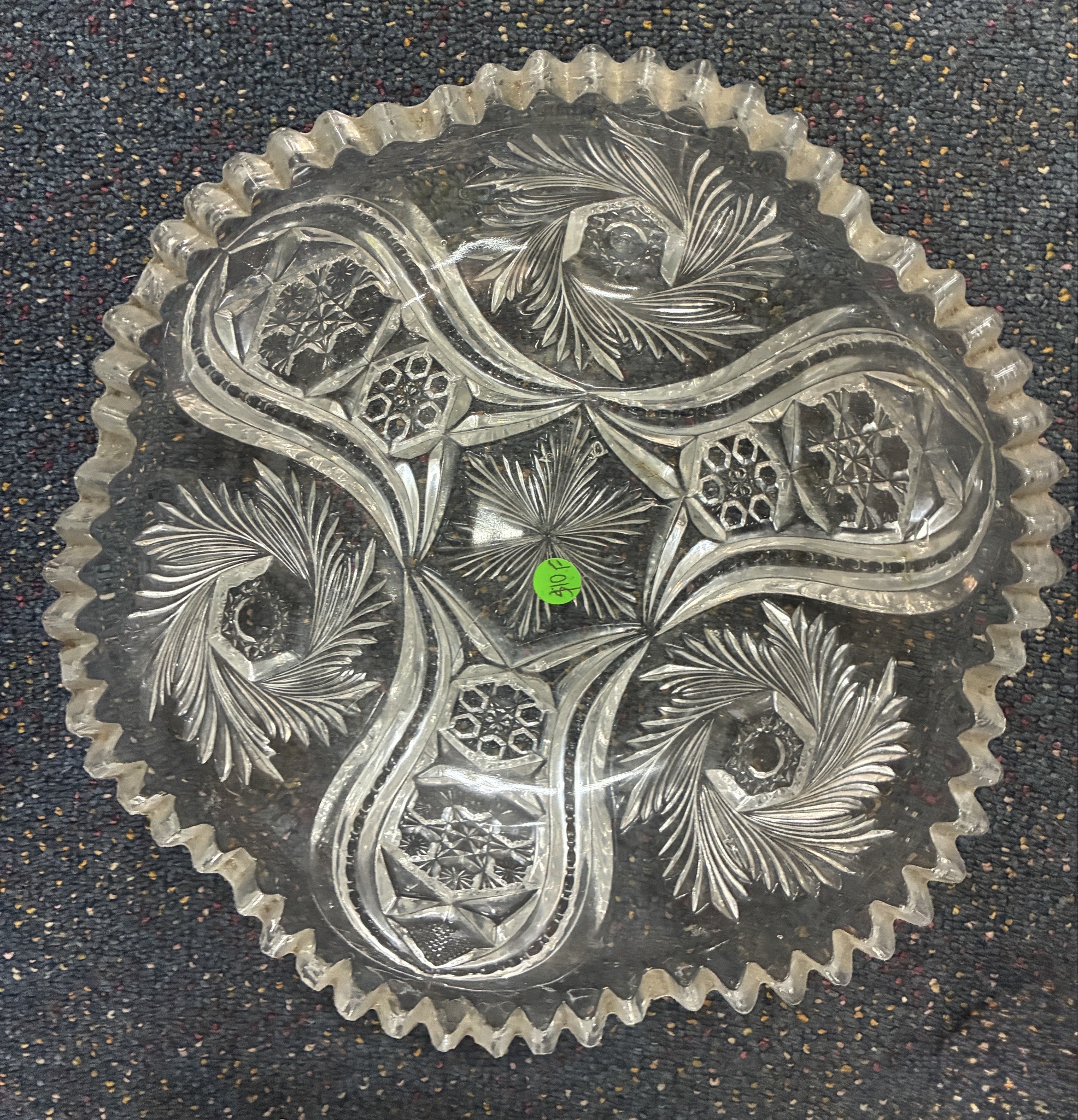
This is a heavy, circular cut-glass bowl featuring a complex geometric pattern characteristic of the American Brilliant Period (ABP) style. The bowl is constructed from thick, high-clarity manganese glass, which often exhibits a faint yellow or green tint under certain lighting conditions. The central motif consists of a multi-pointed starburst, surrounded by three large bifurcated 'arms' that organize the field. These sections contain intricate hobnail, strawberry diamond, and fan-shaped cutting patterns. Three large whirled rosettes or 'pinwheels' are positioned between the arms, adding a sense of dynamic movement to the design. The rim is finished with a rhythmic sawtooth or scalloped edge, providing a sharp tactile quality to the piece. The craftsmanship shows high-quality intaglio and deep relief cutting, which creates significant light refraction. Regarding condition, there is visible surface grime and dust within the deep crevices, and the sawtooth rim appears to have minor flea bites or small chips, which is common for glassware of this age and style. There are no visible maker's marks or signatures in the provided image, but the weight and complexity suggest late 19th-century to early 20th-century production. A small green price tag is adhered to the interior center.
AI Appraisal Report

·AI can make mistakes·Verify before acting
Based on my visual examination of this cut-glass bowl, I have identified it as a high-quality piece of American Brilliant Period (ABP) style glassware, dating roughly between 1890 and 1915. The use of manganese glass, confirmed by the faint yellow-green tint and high clarity, indicates a high lead content typical of the era's premium 'blanks.' The complexity of the pinwheel rosettes and the depth of the intaglio cutting reflect superior craftsmanship from a period where skilled artisans used stone wheels to carve these intricate geometric motifs. The condition report notes 'flea bites' on the sawtooth rim. While expected in glass of this age, these imperfections significantly impact the value, as collectors prioritize pristine edges. The market for ABP glass has softened over the last decade, transitioning from a high-demand investment category to a more niche collector's market. Current auction results for unsigned bowls of this size and pattern complexity typically fall within the $150 to $250 range. If a signature (such as Libby or Hawkes) were discovered near the center or within the cutting, the value could increase by 30-50%. Limitations: This appraisal is based strictly on visual data. A physical inspection is required to check for 'ringing' (quality of lead glass), verify the presence of an acid-etched signature, and ensure the surface wear is consistent with age rather than modern reproduction. I would also recommend a UV light test; true ABP manganese glass should fluoresce a strong lime green. Provenance documentation or original purchase records from reputable glass dealers would be necessary to elevate this valuation for insurance purposes.

Get your items appraised

Instant estimates of your treasures with AI-powered appraisals

Browse More Appraisals