AI Appraisal Estimate

AI-generated estimates · not official valuations

From the user

What was submitted

Photo and notes provided by the user — not generated by AI

Submitted item photo
Submitted photo · June 17, 2026

User's notes

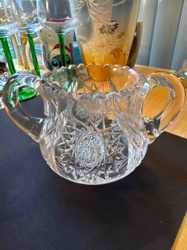
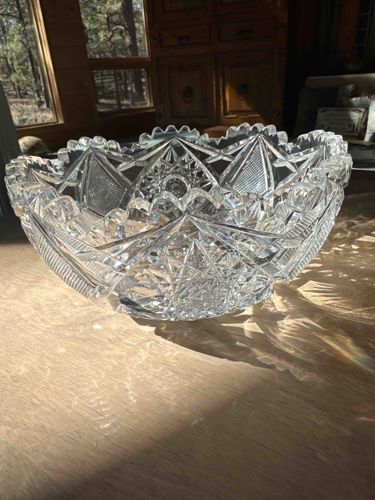
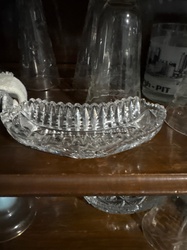
Clear, heavy, beautiful cuts around the perimeter, scalloped rim

AI analysis below

AI appraisal

AI analysis & estimate

AI-Generated · Verify before acting

Everything below is generated by AI for informational purposes only. AI can make mistakes — the AI may misidentify items or misattribute them (artist, maker, brand, designer, origin, era). This is not an official valuation and should not be used for insurance, sale, tax, estate, legal, or lending purposes — or any decision requiring a certified appraisal. It is not an authoritative claim about any person, brand, or rights holder — do not share or rely on it as a factual statement about a third party. Always consult qualified professionals before making financial decisions.

Note

This analysis also relies on unverified notes provided by the user, which may be incomplete or inaccurate and could affect the result.

Read the full disclaimer

AI Identification

·Not independently authenticated·Verify before acting

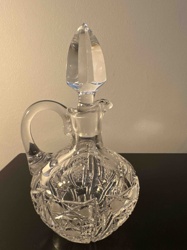
Antique American Brilliant Period Cut Glass Centerpiece Bowl

Antique Glassware / American Brilliant Period Cut Glass

AI Estimated Value

·Not an official valuation·Verify before acting

$450 - $650

As of June 17, 2026

AI Item Analysis

·AI can make mistakes·Verify before acting
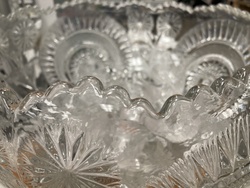
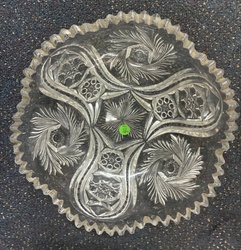
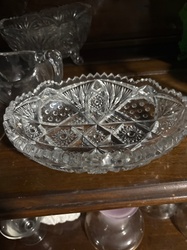
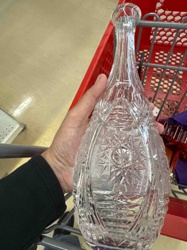
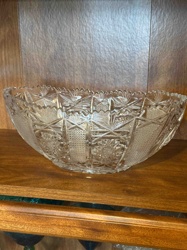
This is a heavy, clear lead crystal centerpiece bowl originating from the American Brilliant Period (approx. 1876-1916). The bowl features exceptionally deep and complex geometric hand-cutting, a hallmark of superior craftsmanship from this era. The pattern incorporates large mitered starbursts, fine cross-hatching (diamond point), and fan-shaped serrated motifs. The piece is characterized by a high-lead content which provides significant heft and allows for high-refractive brilliance, as evidenced by the prismatic light scatter on the surface below it. The rim is intensely scalloped and finished with a sawtooth edge, which appears to be in relatively good condition, though such sharp edges often exhibit microscopic 'flea bites' or minor nicking from age. The glass is remarkably clear without significant cloudiness or 'sick glass' syndrome. The base likely features a large multi-point star to match the side motifs. This style of cutting is indicative of major manufacturers like Libby, Hawkes, or Hoare. The item shows no visible major cracks or large chips, preserving its integrity as a high-quality decorative collector's piece. The sharp define of the cuts suggests it was cut with a stone wheel and polished to a high luster.
AI Appraisal Report

·AI can make mistakes·Verify before acting
I have carefully examined the provided images and descriptions of this American Brilliant Period (ABP) cut glass centerpiece bowl. The piece exhibits the high-lead content and complex geometric hand-cutting characteristic of the 'Brilliant' era (1876-1916). Based on the depth of the miter cuts, the presence of fine cross-hatching, and the high-refraction clarity, this is a premium example of domestic craftsmanship, likely originating from a top-tier house such as J.D. Bergen or Libbey. The condition appears excellent with the sawtooth rim showing minimal wear, a rarity for glass of this age and weight. The market for ABP glass has stabilized after a historic decline; however, 'whimseys' and large, clear centerpiece bowls remain the most liquid assets in this category. Comparables for unsigned 10-12 inch bowls with similar complexity regularly hammers at auction between $400 and $700. The primary value drivers here are the absence of 'sick glass' (cloudiness) and the sharpness of the wheel-cut edges. Limitations: My assessment is based solely on digital imagery. While the visual indicators suggest authenticity, a definitive valuation requires in-person inspection. I would need to check for a manufacturer's mark (often find in the center of the interior), verify the weight to ensure it is lead-based rather than contemporary pressed glass, and use a blacklight to check for the characteristic lime-green fluorescence of period glass. Provenance records or original catalog matches would further solidify the upper-tier valuation.

Get your items appraised

Instant estimates of your treasures with AI-powered appraisals

Browse More Appraisals