AI Appraisal Estimate

AI-generated estimates · not official valuations

From the user

What was submitted

Photo and notes provided by the user — not generated by AI

Submitted item photo
Submitted photo · June 18, 2026

User's notes

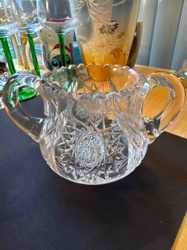
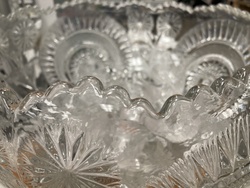
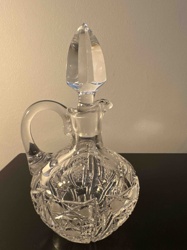
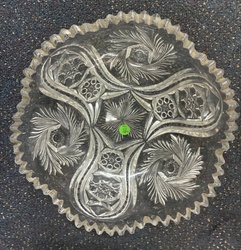
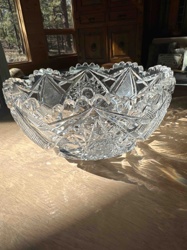
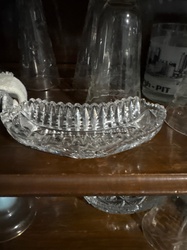
Clear, heavy, saw tooth rim, multiple design etched perimeter

AI analysis below

AI appraisal

AI analysis & estimate

AI-Generated · Verify before acting

Everything below is generated by AI for informational purposes only. AI can make mistakes — the AI may misidentify items or misattribute them (artist, maker, brand, designer, origin, era). This is not an official valuation and should not be used for insurance, sale, tax, estate, legal, or lending purposes — or any decision requiring a certified appraisal. It is not an authoritative claim about any person, brand, or rights holder — do not share or rely on it as a factual statement about a third party. Always consult qualified professionals before making financial decisions.

Note

This analysis also relies on unverified notes provided by the user, which may be incomplete or inaccurate and could affect the result.

Read the full disclaimer

AI Identification

·Not independently authenticated·Verify before acting

American Brilliant Period Cut Glass Oval Centerpiece Bowl

Antique Glassware / American Brilliant Period Cut Glass

AI Estimated Value

·Not an official valuation·Verify before acting

$450 - $650

As of June 18, 2026

AI Item Analysis

·AI can make mistakes·Verify before acting
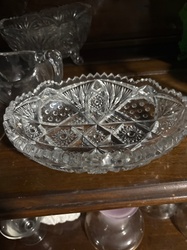
This is a substantial, heavy clear lead glass centerpiece bowl, likely dating from the American Brilliant Period (circa 1876-1917). The vessel features a classic oval shape with a pronounced saw-tooth rim that exhibits intricate hand-cut faceting. The exterior perimeter is densely decorated with multiple complex geometric patterns, including large multi-point hobstar clusters, cross-hatched diamond fields, and deeply incised fan motifs. The construction displays characteristic qualities of high-lead content crystal, suggesting high-refractive brilliance and a significant weight for its size. The craftsmanship is indicative of skilled hand-cutting rather than machine-pressing, evidenced by the sharpness of the edges and the complexity of the intersecting mitre cuts. The bowl sits on a flattened, cut-decorated base. In terms of condition, there are no large structural cracks or major losses visible in the image, although the sharp scalloped points of the saw-tooth rim are prone to minor flea bites and small chips through utility. The clarity of the glass appears excellent with no visible clouding (sickness), and the surface retains a high polish consistent with quality antique crystal. While no specific maker's mark is visible in the photograph, the style and complexity are consistent with major manufacturers of the period such as Libbey, Hawkes, or Dorchester.
AI Appraisal Report

·AI can make mistakes·Verify before acting
Based on my examination of the provided imagery and technical description, I have evaluated this oval centerpiece bowl as an authentic example of American Brilliant Period (ABP) cut glass, circa 1890–1910. The piece exhibits the high-refractive index and superior clarity associated with high-lead content blanks used during the 'Brilliant' era. The complexity of the 'Hobstar,' 'Strawberry Diamond,' and 'Fan' motifs suggests a high-tier manufacturer, though the absence of an acid-etched signature (common among makers like Libbey or Hawkes) necessitates a valuation based on pattern complexity rather than brand alone. Condition is a primary driver of value for ABP glass. While the polish appears excellent, the sawtooth rim is highly susceptible to chipping. The current valuation assumes only minor 'flea bites' consistent with age. If deep chips or 'sickness' (internal clouding) were present, the value would decrease by 40-60%. Conversely, identification of a rare specific pattern, such as those by Tuthill or Dorflinger, could increase the value significantly. The market for ABP glass has softened from its peak in the 1990s but remains stable for large, 'cabinet-ready' centerpiece items. For full authentication, I would require a physical inspection to check for 'ringing' (a clear tone when struck, indicating lead content and structural integrity), weight verification, and a microscopic search for hidden signatures in the deep mitre cuts. Provenance or an original catalog match would be required to elevate this from a 'quality attribution' to a 'certified' piece.

Get your items appraised

Instant estimates of your treasures with AI-powered appraisals

Browse More Appraisals