AI Appraisal Estimate

AI-generated estimates · not official valuations

From the user

What was submitted

Photo and notes provided by the user — not generated by AI

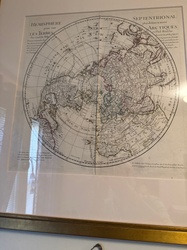
Submitted item photo
Submitted photo · June 16, 2026

User's notes

No additional notes provided.

AI analysis below

AI appraisal

AI analysis & estimate

AI-Generated · Verify before acting

Everything below is generated by AI for informational purposes only. AI can make mistakes — the AI may misidentify items or misattribute them (artist, maker, brand, designer, origin, era). This is not an official valuation and should not be used for insurance, sale, tax, estate, legal, or lending purposes — or any decision requiring a certified appraisal. It is not an authoritative claim about any person, brand, or rights holder — do not share or rely on it as a factual statement about a third party. Always consult qualified professionals before making financial decisions.

Read the full disclaimer

AI Identification

·Not independently authenticated·Verify before acting

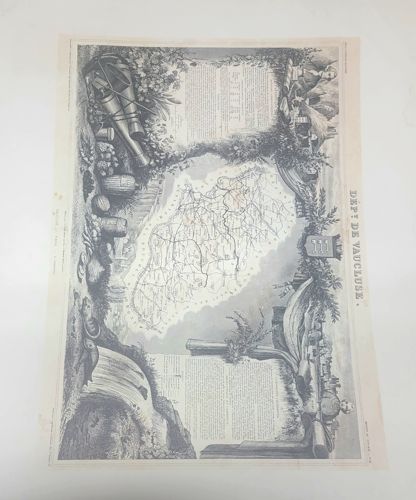
Victor Levasseur's Cartographic Engraving of the Département de Vaucluse

Antique Cartography and Art Prints

AI Estimated Value

·Not an official valuation·Verify before acting

$150 - $250

As of June 16, 2026

AI Item Analysis

·AI can make mistakes·Verify before acting
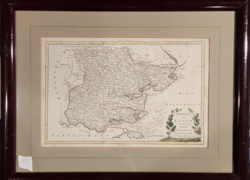
This item is an original steel engraving by the French cartographer Victor Levasseur, titled 'Dépt de Vaucluse,' originating from the mid-19th century (circa 1850). The piece is printed on cream-colored woven paper and features a central cartographic map of the Vaucluse department in France, showing road networks and topography. The map is surrounded by an extraordinarily intricate, decorative border—a hallmark of Levasseur's work—comprising allegorical figures, agricultural bounty (grapes, honeycombs, silks), regional weaponry, and a coat of arms. The engraving exhibits fine-line hatching and stippling techniques which provide significant depth and detail. Notable features include a portrait of a local figure in the upper right and a waterfall landscape in the lower left. Regarding condition, the paper shows light foxing concentrated on the left margin and moderate yellowing consistent with an age of approximately 170 years. The edges remain intact with a wide border, though slight undulation occurs across the surface. No major tears or repairs are visible. This piece serves as a prime example of the Romantic style of cartography, blending geographical accuracy with artistic embellishment typical of Levasseur's 'Atlas National Illustré.'
AI Appraisal Report

·AI can make mistakes·Verify before acting
I have carefully examined the provided images of this steel engraving by Victor Levasseur, depicting the Département de Vaucluse. The piece exhibits the characteristic 'Atlas National Illustré' style (c. 1850), featuring his signature blend of precise cartography and ornate, allegorical borders. Based on visual inspection, the plate mark remains distinct, and the fine-line hatching and stippling techniques are consistent with mid-19th-century steel-plate printing on woven paper. The condition is fair to good; while the wide margins are desirable, the visible foxing in the left margin and moderate toning (oxidation) are typical aging factors that slightly temper the value. The market for Levasseur prints remains steady due to their decorative appeal, though they are not exceptionally rare as his atlases were widely distributed. Values for individual departments typically range between $100 and $300 depending on the region's popularity and color state. This specific example is uncolored (monochrome), which is preferred by purists for showing the engraving's detail but often commands a lower price than professionally hand-colored versions. The Vaucluse region, known for its wine and silk history shown in the border, has moderate regional demand. Limitations: This appraisal is based on digital images alone and cannot definitively confirm authenticity. A physical examination is required to verify paper fibers, watermarks, and the absence of modern photomechanical reproduction signs. For full authentication, I would need to inspect the paper's weight, check for acidity levels, and confirm provenance or a history of prior ownership. Scientific testing of the ink's chemical composition would only be necessary if suspicion of a high-quality modern facsimile arose.

Get your items appraised

Instant estimates of your treasures with AI-powered appraisals

Browse More Appraisals