AI Appraisal Estimate

AI-generated estimates · not official valuations

From the user

What was submitted

Photo and notes provided by the user — not generated by AI

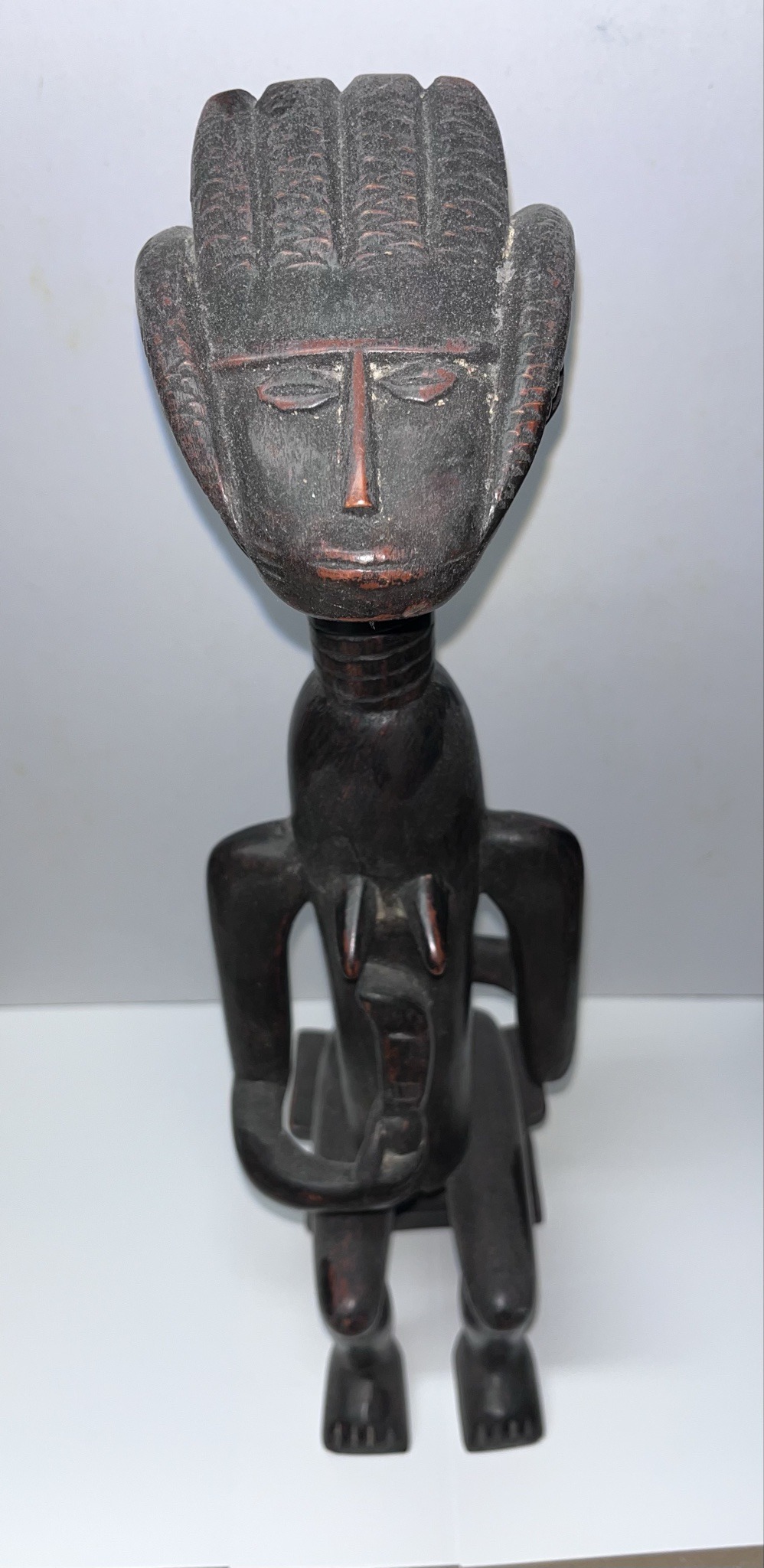
Submitted item photo
Submitted photo · June 13, 2026

User's notes

African Tribal Art, 17"x 5" x 6", mid century, Ghana

AI analysis below

AI appraisal

AI analysis & estimate

AI-Generated · Verify before acting

Everything below is generated by AI for informational purposes only. AI can make mistakes — the AI may misidentify items or misattribute them (artist, maker, brand, designer, origin, era). This is not an official valuation and should not be used for insurance, sale, tax, estate, legal, or lending purposes — or any decision requiring a certified appraisal. It is not an authoritative claim about any person, brand, or rights holder — do not share or rely on it as a factual statement about a third party. Always consult qualified professionals before making financial decisions.

Note

This analysis also relies on unverified notes provided by the user, which may be incomplete or inaccurate and could affect the result.

Read the full disclaimer

AI Identification

·Not independently authenticated·Verify before acting

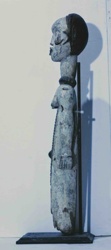
Asante Akua'ba Fertility Figure Variant

African Tribal Art - Ethnographic Sculpture

AI Estimated Value

·Not an official valuation·Verify before acting

$450.00 - $700.00

As of June 13, 2026

AI Item Analysis

·AI can make mistakes·Verify before acting
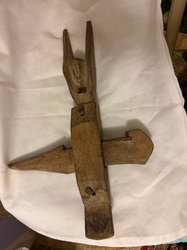
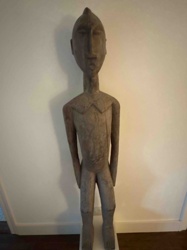
This is a hand-carved wooden fertility figure originating from the Asante (Ashanti) people of Ghana, dating to the mid-20th century. Measuring approximately 17 inches tall, 5 inches wide, and 6 inches deep, it represents a stylistic evolution of the traditional Akua'ba doll. Unlike the standard flat disc-headed Akua'ba, this figure features a semi-cylindrical head with a distinctive four-lobed crest at the top, suggesting a more sculptural and possibly modern interpretation (mid-century). The wood is a dense hardwood, finished with a dark, blackened patina that shows reddish-brown undertones where the finish has thinned. The face displays the classic long, narrow nose meeting a single arched brow line, with coffee-bean-shaped eyes and a small, pursed mouth. Horizontal scarification marks are visible on the neck. The body is rendered with small, pointed breasts and a protruding navel, typical of the genre. Condition-wise, the piece exhibits surface abrasions and dust accumulation in the carved crevices, along with some minor chipping on the base. There is a visible dry patina on the forehead and crest, but no structural cracks are apparent from this view. The craftsmanship displays deliberate hand-tool marks on the hair's texture, indicating traditional artisanal methods applied to a stylized form.
AI Appraisal Report

·AI can make mistakes·Verify before acting
I have examined the images and descriptions of this mid-20th-century Asante Akua'ba variant. The 17-inch figure is a distinctive departure from the standard flat-disc Akua'ba, showcasing a sculptural, semi-cylindrical head and a four-lobed crest. The dark, blackened patina with reddish-brown undertones is consistent with traditional finishing techniques, and the 'coffee-bean' eye morphology and arched brow line align with Asante stylistic canons. The condition is generally good; while surface abrasions and minor chipping at the base are present, they are consistent with ethnographic pieces of this age. The dry patina and visible hand-tool marks suggest a genuine artisanal origin rather than mass-produced tourist ware. Market demand for African tribal art remains stable, though mid-century pieces without documented ritual use are often valued as decorative ethnographic objects rather than high-value 'masterpieces.' Comparable items at auction for mid-size Asante figures typically fall within the $400 to $800 range. The value of this specific piece is bolstered by its unusual hair/crest treatment, which adds a layer of rarity for collectors of Ashanti forms. However, a definitive assessment of authenticity is limited by the digital format. To verify the piece's age and ritual use versus 20th-century decorative production, an in-person examination is required to check for 'natural wear' patterns—specifically inside the piercings and at the base. Provenance documentation (prior ownership history) and wood density testing would be necessary to elevate this appraisal to a 'fine art' valuation. Without these, the value reflects its status as a high-quality mid-century ethnographic sculpture.

Get your items appraised

Instant estimates of your treasures with AI-powered appraisals

Browse More Appraisals