AI Appraisal Estimate

AI-generated estimates · not official valuations

From the user

What was submitted

Photo and notes provided by the user — not generated by AI

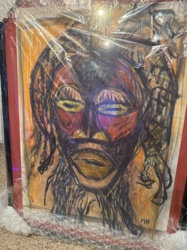
Submitted item photo
Submitted photo · June 21, 2026

User's notes

Unknown artist, untitled sculpture

AI analysis below

AI appraisal

AI analysis & estimate

AI-Generated · Verify before acting

Everything below is generated by AI for informational purposes only. AI can make mistakes — the AI may misidentify items or misattribute them (artist, maker, brand, designer, origin, era). This is not an official valuation and should not be used for insurance, sale, tax, estate, legal, or lending purposes — or any decision requiring a certified appraisal. It is not an authoritative claim about any person, brand, or rights holder — do not share or rely on it as a factual statement about a third party. Always consult qualified professionals before making financial decisions.

Note

This analysis also relies on unverified notes provided by the user, which may be incomplete or inaccurate and could affect the result.

Read the full disclaimer

AI Identification

·Not independently authenticated·Verify before acting

Carved Wood Figural Sculpture - African Tribal Style

Fine Art / African Tribal Art

AI Estimated Value

·Not an official valuation·Verify before acting

$150 - $350

As of June 21, 2026

AI Item Analysis

·AI can make mistakes·Verify before acting
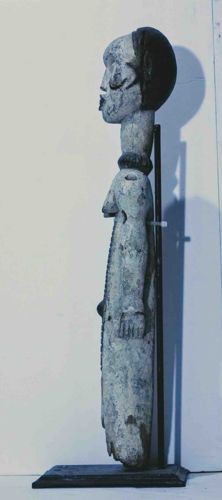
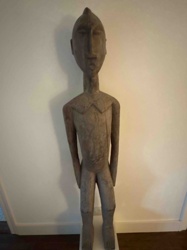
A vertical, hand-carved wooden sculpture depicting a stylized human figure, likely of mid-20th-century African origin or influenced by the aesthetic traditions of West African ethnic groups. The figure stands approximately 12 to 18 inches tall and is mounted on a modern metal display stand with a tiered wooden base. The sculpture features a prominent, ellipsoidal head with a darkened coiffure or cap area, an elongated neck adorned with a ringed collar, and a simplified torso with small, high breasts. The surface is heavily textured with a light, chalky pigment or kaolin clay finish, showing significant age-related patina. Distinguishing features include a series of raised, beaded markings or scarification running down the front of the abdomen and a pronounced navel. The arms are carved in low relief against the torso, ending in square-cut fingers. Visible condition issues include various surface cracks, wood checking, and significant erosional loss at the base of the wood where the feet would be located. There are no visible maker's marks or signatures, consistent with traditional ritual or community-based utilitarian art. The craftsmanship is characterized by bold, subtractive carving techniques and a geometric reduction of the human form, typical of mid-century ethnographic art.
AI Appraisal Report

·AI can make mistakes·Verify before acting
After a detailed visual examination of the images provided, I have assessed this carved wooden figural sculpture. The piece mimics the stylistic conventions of West African sculpture, possibly referencing Baule or Senufo aesthetic traditions, particularly with the elongated neck, coiffure details, and kaolin pigment finish. The mounting on a modern metal stand suggests it was prepared for a decorative market or collection. Condition is a significant factor here; the sculpture exhibits heavy weathering, substantial wood checking, and major erosional loss at the base. While such wear can sometimes indicate authentic ritual use and age, in this specific instance, the uniformity of the 'distressing' and the lack of specific, documented tribal provenance raises concerns that this may be a mid-to-late 20th-century piece created for the export or tourist market (often termed 'airport art') rather than a ritual object used within a specific culture. The simplified carving of the hands and the generalized geometric reduction lack the specific, nuanced iconography usually found in high-value museum-quality pieces. The current market for African tribal art is highly polarized. Provenance is paramount. Without a collection history dating back to the mid-20th century or earlier, or specific attribution to a master carver or workshop, value is driven primarily by decorative appeal. Definitive authentication would require physical inspection to test the wood's oxidation, analyze the pigment composition, and verify if the tool marks are consistent with traditional adze carving versus modern tools. Consequently, I have valued this strictly as a decorative ethnographic object.

Get your items appraised

Instant estimates of your treasures with AI-powered appraisals

Browse More Appraisals