AI Appraisal Estimate

AI-generated estimates · not official valuations

From the user

What was submitted

Photo and notes provided by the user — not generated by AI

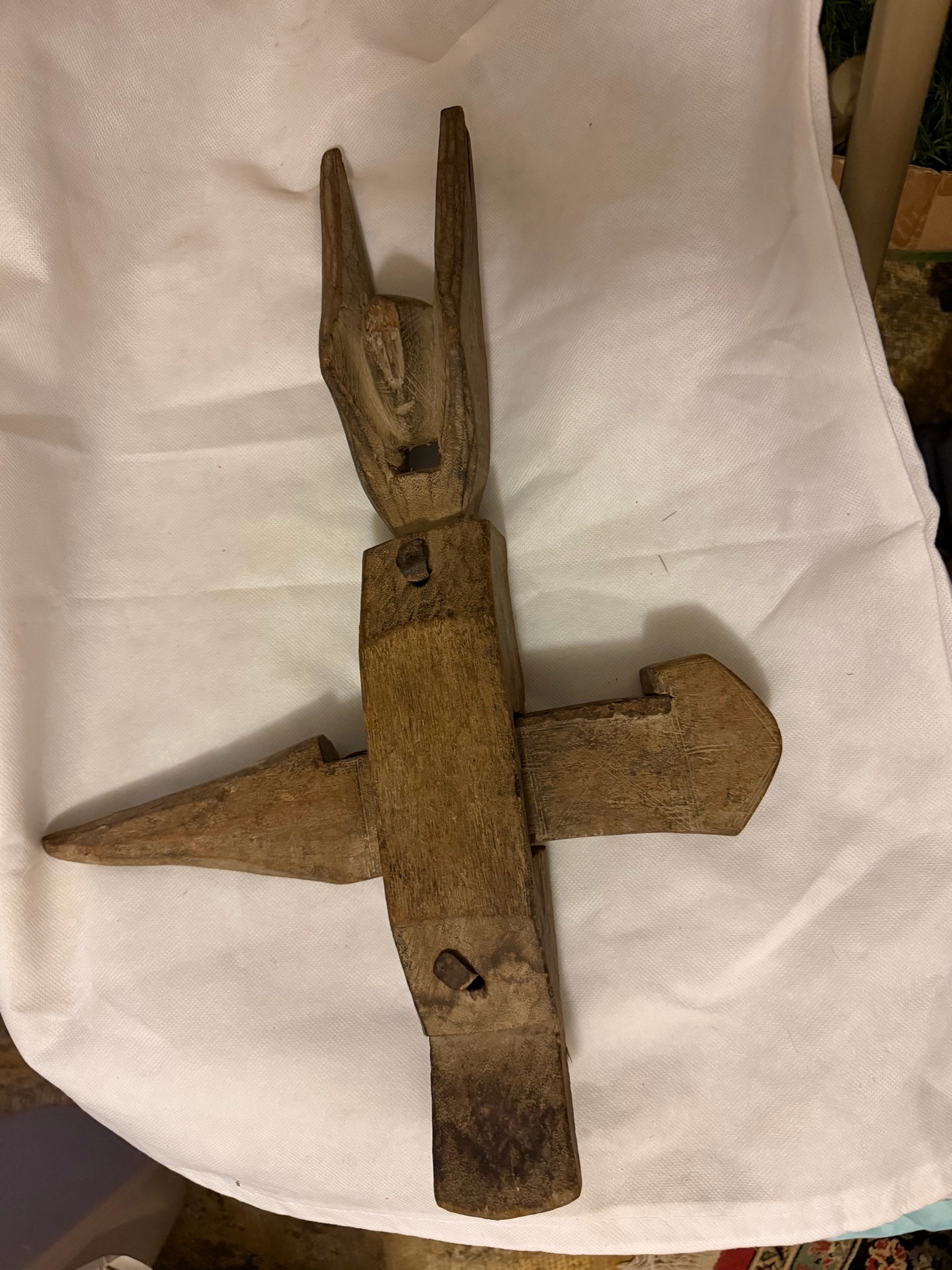
Submitted item photo
Submitted photo · May 27, 2026

User's notes

No additional notes provided.

AI analysis below

AI appraisal

AI analysis & estimate

AI-Generated · Verify before acting

Everything below is generated by AI for informational purposes only. AI can make mistakes — the AI may misidentify items or misattribute them (artist, maker, brand, designer, origin, era). This is not an official valuation and should not be used for insurance, sale, tax, estate, legal, or lending purposes — or any decision requiring a certified appraisal. It is not an authoritative claim about any person, brand, or rights holder — do not share or rely on it as a factual statement about a third party. Always consult qualified professionals before making financial decisions.

Read the full disclaimer

AI Identification

·Not independently authenticated·Verify before acting

Folk art wooden sculpture in the manner of West African Chiwara

Folk Art & Ethnographic Carvings

AI Estimated Value

·Not an official valuation·Verify before acting

$150 - $350

As of May 27, 2026

AI Item Analysis

·AI can make mistakes·Verify before acting
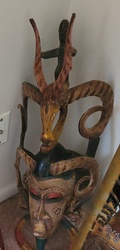
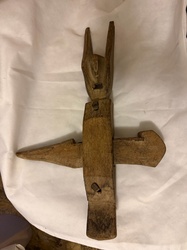
This object is a carved wooden sculpture that appears to be stylistically consistent with Chiwara (Bamana) headdresses. It features a central vertical body with an integrated horizontal element, culminating in a head with two tall, upright ears or horns. The item is constructed from a medium-brown wood with a visible grain and a matte, worn finish. There are two visible dark, possibly metal or wooden pegs or dowels securing the central joinery. The carving is somewhat rustic and simplified, lacking the intricate openwork patterns found on many high-ceremonial examples, which may suggest a more contemporary or utilitarian interpretation. Condition-wise, the piece shows significant signs of age or intentional weathering, including abrasions, deep grain fissures, and darkening at the base. No maker's marks, signatures, or collection labels are visible in the image. This attribution is based purely on its zoomorphic profile and structural composition, which resembles the traditional antelope iconography of the Bamana people of Mali; however, without in-person material analysis or provenance documentation, the exact origin and age cannot be established.

AI Appraisal Report

·AI can make mistakes·Verify before acting
Based on the provided imagery, I have examined this carved wooden sculpture which appears stylistically consistent with the Chiwara (Bamana) headdresses of Mali. The object's zoomorphic form and vertical orientation are characteristic of these ethnographic works; however, several factors lead me to treat this attribution as a hypothesis rather than a confirmed identification. From what I can see, the carving exhibits a simplified, rustic execution lacking the refined openwork typical of high-ceremonial pieces. The visible grain fissures and surface abrasions suggest age, but I cannot verify from a photo whether this is natural patination or intentional weathering designed to simulate antiquity. The use of visible dowels for joinery is noted, though their material and age would need physical inspection to confirm. My valuation of $150 to $350 reflects the current market for ethnographic-style folk art or contemporary interpretations with decorative appeal. The market for verified Bamana artifacts is highly specialized; if this piece were documented as an early 20th-century ceremonial object with established provenance, its value could increase significantly. Conversely, if it is a late 20th-century souvenir or a commercial reproduction 'in the style of' West African art, the value would likely sit at the lower end of the range. To advance the valuation, an in-person examination by a specialist in African art is required to assess wood density, tool marks, and subsurface wear. Lacking maker's marks or provenance documentation, the current estimate is based on the item's aesthetic presence and its potential as a mid-century or contemporary ethnographic carving.

Get your items appraised

Instant estimates of your treasures with AI-powered appraisals

Browse More Appraisals