AI Appraisal Estimate

AI-generated estimates · not official valuations

From the user

What was submitted

Photo and notes provided by the user — not generated by AI

Submitted item photo
Submitted photo · June 21, 2026

User's notes

Unknown artist, untitled sculpture

AI analysis below

AI appraisal

AI analysis & estimate

AI-Generated · Verify before acting

Everything below is generated by AI for informational purposes only. AI can make mistakes — the AI may misidentify items or misattribute them (artist, maker, brand, designer, origin, era). This is not an official valuation and should not be used for insurance, sale, tax, estate, legal, or lending purposes — or any decision requiring a certified appraisal. It is not an authoritative claim about any person, brand, or rights holder — do not share or rely on it as a factual statement about a third party. Always consult qualified professionals before making financial decisions.

Note

This analysis also relies on unverified notes provided by the user, which may be incomplete or inaccurate and could affect the result.

Read the full disclaimer

AI Identification

·Not independently authenticated·Verify before acting

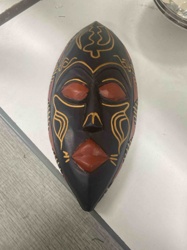
West African Style Carved Wooden Mask

Art and Collectibles / Ethnographic Art

AI Estimated Value

·Not an official valuation·Verify before acting

$150 - $300

As of June 21, 2026

AI Item Analysis

·AI can make mistakes·Verify before acting
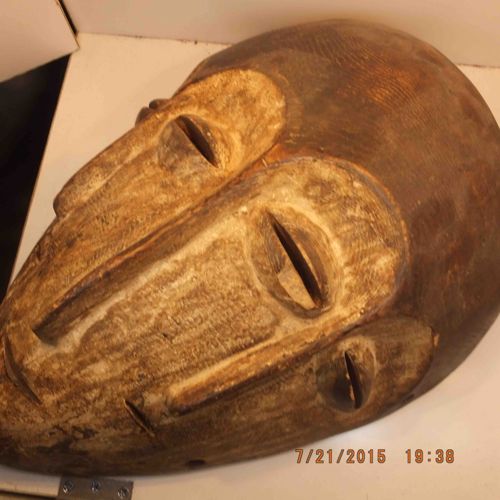
This is a hand-carved wooden mask, evocative of West African tribal art traditions, specifically bearing stylistic similarities to the Fang or Ogoni people. The mask features an elongated, ovoid facial structure with a prominent, high forehead and a tapered chin. The facial features are highly stylized, characterized by narrow, slit-like eyes set within large, lighter-pigmented concave eye sockets. A long, thin, straight nose bridges the face, leading down to a small, horizontal slit representing the mouth. The mask is carved from a single block of dense hardwood and exhibits a two-toned finish: a dark, reddish-brown patina on the upper crown and perimeter, contrasting with a lighter, buff-colored textured surface on the main facial plane. Visible chisel marks and hand-tooling across the surface indicate traditional craftsmanship rather than industrial production. Condition-wise, the piece shows significant signs of age and handling, including surface abrasions, small nicks along the edges, and a naturally aged patina with some accumulation of dust in the recessed areas. There are no visible maker's marks or signatures, which is common for ethnographic-style ritual or decorative objects. The overall aesthetic suggests a 20th-century creation intended for the decorative or 'airport art' market, though it maintains a high level of expressive sculptural quality.

AI Appraisal Report

·AI can make mistakes·Verify before acting
Based on my examination of the photographs provided, this West African-style mask appears to be a mid-to-late 20th-century decorative piece rather than an authentic, ritually used tribal artifact. While it exhibits stylistic elements reminiscent of the Fang or Ogoni peoples—particularly the elongated heart-shaped face and articulated brow—the craftsmanship and finish suggest production for the export or 'airport art' market. The two-tone pigmentation and intentional texturing are common in pieces created for Western collectors during the 1960s–80s to simulate age and enhance aesthetic appeal. The condition is fair, showing appropriate surface wear, light abrasions, and a moderate patina, though the uniformity of this aging raises questions about genuine ethnographic use. Authentic ritual masks of this region generally have specific hole placements for attachment and internal wear patterns from contact with a dancer's face, neither of which are clearly observable here. In the current market, demand for mid-century African decorative carvings remains steady but modest compared to provenanced antiquities. The value is driven primarily by its decorative sculptural quality rather than historical rarity. To determine if this piece holds higher value as a genuine ethnographically significant artifact, I would require a physical inspection to check for specific oxidation patterns inside the carving marks, ancient insect damage, and DNA/residue analysis on the interior. Without provenance linking it to a specific field collection date or renowned collector, it is appraised as a decorative object.

Get your items appraised

Instant estimates of your treasures with AI-powered appraisals

Browse More Appraisals