AI estimate as of June 19, 2025 · verify with a professional before acting
AI-Generated · Verify before acting
Everything on this page is generated by AI for informational purposes only. AI can make mistakes — the AI may misidentify items or misattribute them (artist, maker, brand, designer, origin, era). This is not an official valuation and should not be used for insurance, sale, tax, estate, legal, or lending purposes — or any decision requiring a certified appraisal. It is not an authoritative claim about any person, brand, or rights holder — do not share or rely on it as a factual statement about a third party. Always consult qualified professionals before making financial decisions.
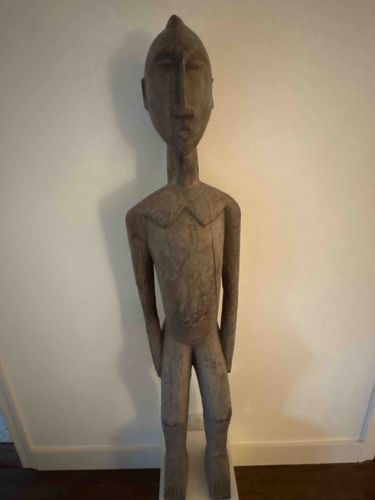
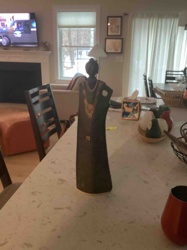
This is a hand-carved wooden statue of a standing figure, likely representing a deity or ancestor figure from an African culture. The figure is standing upright with arms resting by the sides. The head features an elongated face with carved eyes, nose, and mouth, and is topped with a pointed coiffure. A decorative element, possibly representing clothing or ornamentation, is carved around the neck and upper chest in a zigzag pattern. The body is slender, and the legs are slightly bent at the knees. The feet are large and flat. The wood appears to be aged, showing a light greyish-brown patina and visible signs of hand carving, with some tool marks still discernible on the surface. There are cracks along the grain of the wood, particularly in the legs and torso, indicating the age and handling of the piece. The surface is somewhat rough due to the carving process and wear over time. No specific maker's marks or stamps are immediately visible in the provided images.
AI Appraisal Report
Based on my visual examination of the provided image, this African tribal figure carving exhibits characteristics consistent with a hand-carved wooden statue, likely intended as a deity or ancestor figure. The wood shows signs of age, including a greyish-brown patina and natural cracks along the grain, particularly in the legs and torso. Tool marks are visible, indicative of traditional carving techniques. The overall condition shows expected wear given the apparent age and material.
Determining authenticity and tribal origin is significantly limited without in-person examination, provenance documentation, or scientific testing (such as wood species identification or radiocarbon dating). While the style appears consistent with certain sub-Saharan African carving traditions, attributing it to a specific culture or artist is impossible from images alone. Without provenance (history of ownership) or expert physical inspection, it is challenging to distinguish a genuine, historically significant artifact from a later tourist piece or reproduction.
The market for African tribal art varies widely based on authenticity, origin, age, condition, and provenance. Pieces with documented history from known regions and verified authenticity command significantly higher values. Assuming, based solely on the image, that this is an authentic, albeit undocumented, older carving, its value falls into a more modest range. Comparable, undocumented wood carvings of this style and condition typically sell within the range of $80-$150 in the current market, often through online platforms or smaller antique shops.
Factors impacting value include the lack of provenance, the inability to verify tribal origin or age definitively, and the presence of cracks. Full authentication would require a physical examination by an expert, wood analysis to confirm age and origin, and detailed provenance research.