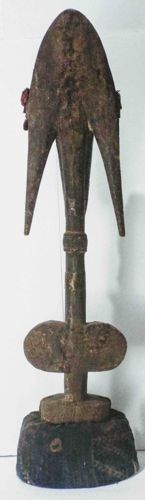
Traditional Bambara Kono Society Power Figure (Boli)
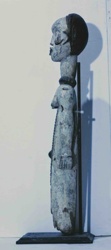
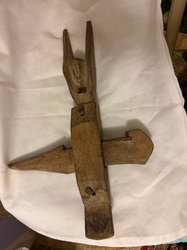
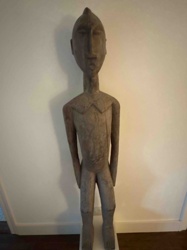
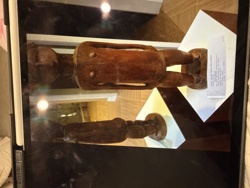
This zoomorphic wooden sculpture is a highly stylized ritual object, characteristic of the Bambara (Bamana) people of Mali, specifically associated with the Kono or Komo secret societies. The piece features a vertical orientation with a tripartite head or crown element, characterized by slender, downward-pointing projections. The central shaft is punctuated by a horizontal, rounded cross-section element, possibly representing stylized limbs or a torso, resting upon a layered pedestal base. The material appears to be a dense, hand-carved wood covered in a thick, encrusted patina. This sacrificial patina is a hallmark of Boli figures, created through the repeated application of organic materials like earth, blood, and herbal decoctions over many years. The texture is rough, matte, and dark brown to charcoal in color. There are visible red accents, possibly cloth fragments or concentrated pigments, on the left upper projection. The condition shows significant age, with surface abrasions, minor chipping along the edges, and a weathered profile consistent with mid-20th-century ritual use. The craftsmanship is intentionally abstract and powerful, favoring spiritual potency over anatomical realism. No maker’s marks are visible, as these items are traditionally created by initiated blacksmiths (numu) for communal rather than individual recognition.
AI-Generated Appraisal Disclaimer
Estimated Value
$600 - $900
Basic Information
Category
African Tribal Art & Ethnographic Sculpture
Appraised On
March 23, 2026
Estimated Value
$600 - $900
Additional Details Provided By Owner
User Provided Information
Unknown artist, untitled sculpture
Item Description
This zoomorphic wooden sculpture is a highly stylized ritual object, characteristic of the Bambara (Bamana) people of Mali, specifically associated with the Kono or Komo secret societies. The piece features a vertical orientation with a tripartite head or crown element, characterized by slender, downward-pointing projections. The central shaft is punctuated by a horizontal, rounded cross-section element, possibly representing stylized limbs or a torso, resting upon a layered pedestal base. The material appears to be a dense, hand-carved wood covered in a thick, encrusted patina. This sacrificial patina is a hallmark of Boli figures, created through the repeated application of organic materials like earth, blood, and herbal decoctions over many years. The texture is rough, matte, and dark brown to charcoal in color. There are visible red accents, possibly cloth fragments or concentrated pigments, on the left upper projection. The condition shows significant age, with surface abrasions, minor chipping along the edges, and a weathered profile consistent with mid-20th-century ritual use. The craftsmanship is intentionally abstract and powerful, favoring spiritual potency over anatomical realism. No maker’s marks are visible, as these items are traditionally created by initiated blacksmiths (numu) for communal rather than individual recognition.
Get Your Items Appraised
Instant estimates of your treasures with AI-powered instant appraisals