AI Appraisal Estimate

AI-generated estimates · not official valuations

From the user

What was submitted

Photo and notes provided by the user — not generated by AI

Submitted item photo
Submitted photo · June 10, 2026

User's notes

No additional notes provided.

AI analysis below

AI appraisal

AI analysis & estimate

AI-Generated · Verify before acting

Everything below is generated by AI for informational purposes only. AI can make mistakes — the AI may misidentify items or misattribute them (artist, maker, brand, designer, origin, era). This is not an official valuation and should not be used for insurance, sale, tax, estate, legal, or lending purposes — or any decision requiring a certified appraisal. It is not an authoritative claim about any person, brand, or rights holder — do not share or rely on it as a factual statement about a third party. Always consult qualified professionals before making financial decisions.

Read the full disclaimer

AI Identification

·Not independently authenticated·Verify before acting

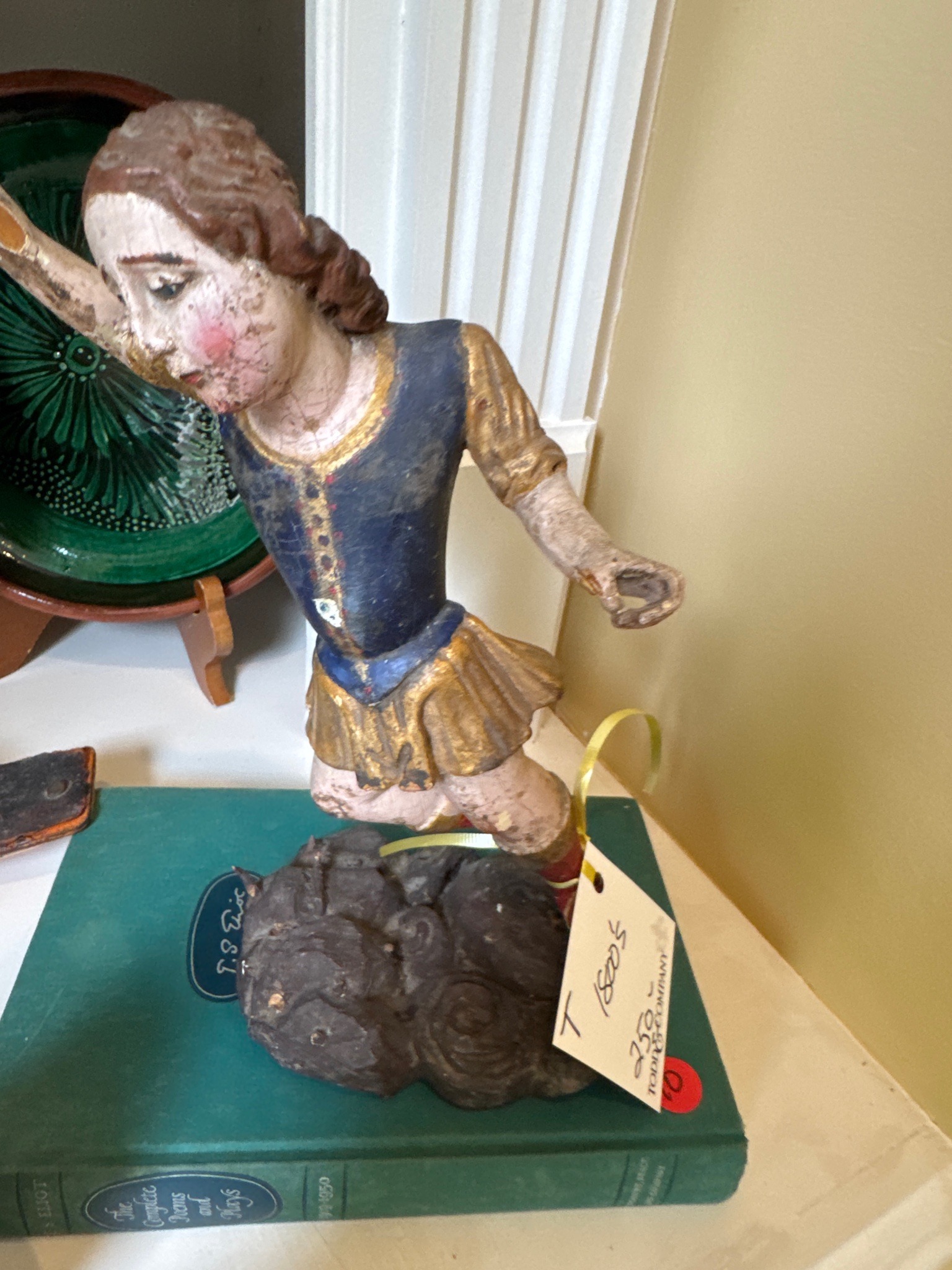
Spanish Colonial Polychrome and Gilt Carved Wood Saint Michael (San Miguel Arcángel) Figure

Religious Art & Antiquities

AI Estimated Value

·Not an official valuation·Verify before acting

$1,200 - $1,800

As of June 10, 2026

AI Item Analysis

·AI can make mistakes·Verify before acting
This is a hand-carved wooden devotional figure, likely representing Saint Michael the Archangel, crafted in the Spanish Colonial style, possibly from the 18th or 19th century. The figure is depicted in a dynamic, lunging pose atop a dark, cloud-like or rocky base. It is constructed from solid wood with a polychrome (multi-colored) paint finish and significant gold leaf (gilt) accents. The figure is clad in a blue breastplate embellished with gilded trim and a row of gold buttons down the center, paired with a short, pleated gold-leaf skirt or tunic. The hair is carved in tight, brunette curls, and the face shows remnants of rosy-toned paint on the cheeks. Notably, the figure is missing its wings and whatever weapon (usually a sword or spear) was originally held in its hands, which is common for antique devotional pieces. The condition shows heavy age-related wear, including significant paint flake, loss of gesso, and visible craquelure throughout the surfaces of the skin and clothing. There is a visible loss to the fingers of the left hand and the right arm appears to be broken or intentionally truncated. The craftsmanship reflects traditional religious folk art with expressive, albeit worn, facial features and spirited movement. A retail tag suggests a contemporary secondary market placement. The base is irregular and dark, contrasting with the vibrant but weathered pigments of the saint.
AI Appraisal Report

·AI can make mistakes·Verify before acting
I have conducted a visual examination of the Spanish Colonial polychrome and gilt wood carving of San Miguel Arcángel. Based on the stylistic execution—specifically the dynamic contrapposto pose, the 'estofado' technique on the tunic, and the distinct craquelure in the gesso layer—this piece appears to be a late 18th to early 19th-century devotional work, likely originating from a Guatemalan or Mexican workshop. The craftsmanship is of high quality, evidenced by the intricate carving of the hair and the expressive facial features. The item displays significant condition issues common to altar-bound antiquities: the loss of the original wings, sword, and dragon/demon base, as well as digital losses on the left hand. While these missing elements and the extensive pigment flaking detract from the value, the remaining original gilding and the spirited movement of the figure maintain its desirability among collectors of 'Arte Sacro.' The contemporary retail tag suggests a previous secondary market history, which aids in establishing its provenance as a vetted antiquity rather than a modern reproduction. While the visual age markers (oxidized pigments and wood shrinkage) appear authentic, a definitive valuation is limited by the digital nature of this inspection. A full authentication would require physical examination to verify the wood species (typically cedar or ayacahuite) and the presence of hand-forged nails or historic joinery. Microscopic analysis of the pigment layers or UV fluorescence testing would be necessary to confirm the absence of modern synthetic overpaints. Given the current market’s strong demand for authentic Spanish Colonial folk art, this piece holds significant decorative and historical value despite its losses.

Get your items appraised

Instant estimates of your treasures with AI-powered appraisals

Browse More Appraisals