19th Century Mexican Tin Ex-Voto Retablo
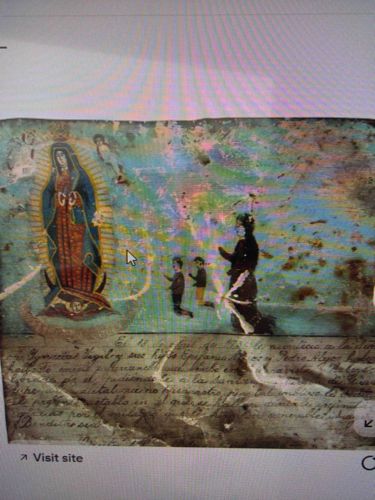
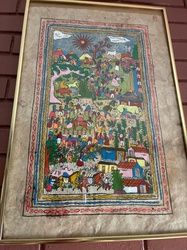
This is a 19th-century Mexican devotional folk art painting known as a 'retablo' or more specifically an 'ex-voto'. The artwork is executed in oil or tempera on a thin sheet of tinned iron (tin). The composition features the Virgin of Guadalupe on the left, depicted with her traditional iconography including a blue-starry mantle, a red gown, and radiating golden mandorla. To her right, three figures—likely a father and two sons—are shown kneeling in prayer, indicating an act of gratitude for a perceived miracle. Beneath the pictorial scene is a significant block of handwritten Spanish text, which documents the specific names, date, and nature of the event for which the petitioner is giving thanks. The primitive yet expressive style is characteristic of late 19th-century Mexican folk piety. The physical condition shows significant signs of age and exposure, including extensive oxidation (rust) spots, localized paint loss, flaking, and surface abrasions. The tin substrate exhibits warping and creasing, particularly in the lower half across the text block. The color palette remains vibrant in the turquoise sky, though a yellowed aged patina/varnish covers much of the surface. No specific maker's mark is visible, as these were typically created by anonymous itinerant artists ('retableros').
AI-Generated Appraisal Disclaimer
Estimated Value
$450 - $650
Basic Information
Category
Religious Folk Art / Latin American Antiquities
Appraised On
February 23, 2026
Estimated Value
$450 - $650
Item Description
This is a 19th-century Mexican devotional folk art painting known as a 'retablo' or more specifically an 'ex-voto'. The artwork is executed in oil or tempera on a thin sheet of tinned iron (tin). The composition features the Virgin of Guadalupe on the left, depicted with her traditional iconography including a blue-starry mantle, a red gown, and radiating golden mandorla. To her right, three figures—likely a father and two sons—are shown kneeling in prayer, indicating an act of gratitude for a perceived miracle. Beneath the pictorial scene is a significant block of handwritten Spanish text, which documents the specific names, date, and nature of the event for which the petitioner is giving thanks. The primitive yet expressive style is characteristic of late 19th-century Mexican folk piety. The physical condition shows significant signs of age and exposure, including extensive oxidation (rust) spots, localized paint loss, flaking, and surface abrasions. The tin substrate exhibits warping and creasing, particularly in the lower half across the text block. The color palette remains vibrant in the turquoise sky, though a yellowed aged patina/varnish covers much of the surface. No specific maker's mark is visible, as these were typically created by anonymous itinerant artists ('retableros').
Get Your Items Appraised
Instant estimates of your treasures with AI-powered instant appraisals