Tibetan Thangka Representing White Tara
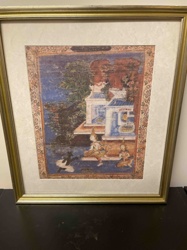
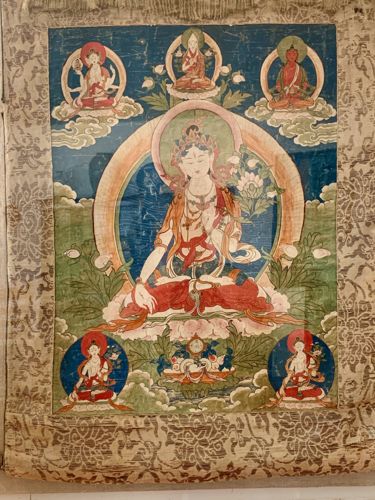
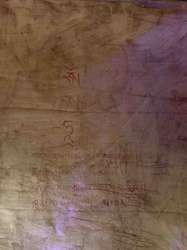
This is a traditional Tibetan thangka depicting the female bodhisattva Sitatara, better known as White Tara. The central figure is shown seated in a meditative padmasana posture on a lotus throne, rendered with fair skin, seven eyes (including those on her palms and soles), and holding a blue utpala lotus. She is surrounded by a multi-colored halo and a large mandorla. The composition includes five smaller deities or lineage masters at the top and bottom corners, set against a landscape of stylised clouds, mountains, and greenery. The piece is hand-painted on a treated textile, likely cotton or linen, using mineral and vegetable-based pigments in a palette dominated by deep lapis blue, malachite green, and cinnabar red. The central painting is mounted on a patterned silk brocade border featuring traditional floral and vine motifs in earth tones. Notable features include the fine line work in the deities' features and the symbolic placement of the secondary figures. Condition analysis reveals significant signs of age and wear: there is visible creasing across the central image where the scroll has been rolled, some pigment loss and flaking (especially in the sky region), and fraying along the edges of the brocade border. The mounting shows heavy patina and structural weakening at the top. Based on the stylistic execution and the level of wear, this piece likely dates from the late 19th to early 20th century. The craftsmanship is professional, indicating a workshop-level production intended for religious devotion.
AI-Generated Appraisal Disclaimer
Estimated Value
$1,800 - $2,500
Basic Information
Category
Religious Art / Asian Antiquities
Appraised On
February 20, 2026
Estimated Value
$1,800 - $2,500
Item Description
This is a traditional Tibetan thangka depicting the female bodhisattva Sitatara, better known as White Tara. The central figure is shown seated in a meditative padmasana posture on a lotus throne, rendered with fair skin, seven eyes (including those on her palms and soles), and holding a blue utpala lotus. She is surrounded by a multi-colored halo and a large mandorla. The composition includes five smaller deities or lineage masters at the top and bottom corners, set against a landscape of stylised clouds, mountains, and greenery. The piece is hand-painted on a treated textile, likely cotton or linen, using mineral and vegetable-based pigments in a palette dominated by deep lapis blue, malachite green, and cinnabar red. The central painting is mounted on a patterned silk brocade border featuring traditional floral and vine motifs in earth tones. Notable features include the fine line work in the deities' features and the symbolic placement of the secondary figures. Condition analysis reveals significant signs of age and wear: there is visible creasing across the central image where the scroll has been rolled, some pigment loss and flaking (especially in the sky region), and fraying along the edges of the brocade border. The mounting shows heavy patina and structural weakening at the top. Based on the stylistic execution and the level of wear, this piece likely dates from the late 19th to early 20th century. The craftsmanship is professional, indicating a workshop-level production intended for religious devotion.
Get Your Items Appraised
Instant estimates of your treasures with AI-powered instant appraisals