AI Appraisal Estimate

AI-generated estimates · not official valuations

From the user

What was submitted

Photo and notes provided by the user — not generated by AI

Submitted item photo
Submitted photo · June 21, 2026

User's notes

Unknown artist, untitled sculpture

AI analysis below

AI appraisal

AI analysis & estimate

AI-Generated · Verify before acting

Everything below is generated by AI for informational purposes only. AI can make mistakes — the AI may misidentify items or misattribute them (artist, maker, brand, designer, origin, era). This is not an official valuation and should not be used for insurance, sale, tax, estate, legal, or lending purposes — or any decision requiring a certified appraisal. It is not an authoritative claim about any person, brand, or rights holder — do not share or rely on it as a factual statement about a third party. Always consult qualified professionals before making financial decisions.

Note

This analysis also relies on unverified notes provided by the user, which may be incomplete or inaccurate and could affect the result.

Read the full disclaimer

AI Identification

·Not independently authenticated·Verify before acting

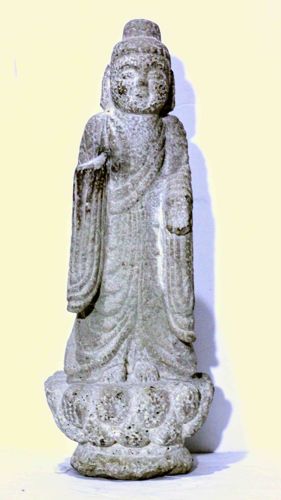
Standing Stone Buddha on Lotus Base

Asian Religious Sculpture / Antiquities

AI Estimated Value

·Not an official valuation·Verify before acting

$400 - $600 USD

As of June 21, 2026

AI Item Analysis

·AI can make mistakes·Verify before acting
A vertically-oriented stone sculpture depicting a standing Buddha figure, carved from a porous, light-gray volcanic or sedimentary stone. The figure is represented in a traditional posture, standing atop a double-lobed lotus pedestal. Physically, the sculpture features a rounded head with a prominent ushnisha (topknot) and elongated earlobes, characteristic of Buddhist iconography. The figure is clothed in flowing monastic robes that drape over the shoulders and form u-shaped folds across the torso and legs. The stone surface displays significant weathering and a coarse texture, with a natural gray hue and darker spots of patina or biological growth in the recessed areas of the carving. In terms of condition, there is a major loss to the figure's right arm (viewer's left), which appears snapped off at the elbow, and the left hand's fingers are indistinct due to erosion. The facial features, while still visible, have softened significantly over time. This piece likely dates to the 19th or early 20th century, following traditional Asian stylistic periods. The craftsmanship is folk-style, focusing on symbolic presence rather than high-realism, indicated by the robust, thick-set proportions and the generalized carving of the toes and lotus petals. No maker's marks or signatures are visible, consistent with devotional or architectural garden statuary.
AI Appraisal Report

·AI can make mistakes·Verify before acting
Based on my visual examination from the provided images, this is a vertically standing stone Buddha, likely executed in a provincial or folk style, potentially dating to the late 19th or early 20th century. The material appears to be a porous volcanic tuff or sedimentary rock, common in garden statuary and architectural elements throughout Southeast Asia. The craftsmanship prioritizes durability and iconic silhouette over the refined anatomical precision found in high-court art, suggesting this was originally intended for an outdoor shrine or temple garden setting rather than a monastery interior. The condition significantly impacts the value. The loss of the right forearm (likely held in the Abhaya mudra) is a major detractor, as is the heavy erosion masking the facial features and the definition of the lotus petals. The surface displays consistent weathering and biological patina (lichen/algae spots), which is aesthetically pleasing and consistent with age, though it does not guarantee antiquity. The market for generic stone garden Buddhas is saturated, but pieces with genuine age character still find buyers in the decorative arts sector. Critically, without physical inspection, I cannot definitively confirm if this is an authentic antiquity or a mid-20th-century vintage production designed to look aged. To authenticate fully, I would need to examine the stone's tooling marks under magnification to distinguish between modern power tools and traditional hand chisels, and analyze the depth of the patina. Provenance documentation establishing when it left its country of origin is also vital for higher valuations. Consequently, this valuation reflects its current status as a decorative, vintage object of religious interest rather than a high-value antiquity.

Get your items appraised

Instant estimates of your treasures with AI-powered appraisals

Browse More Appraisals