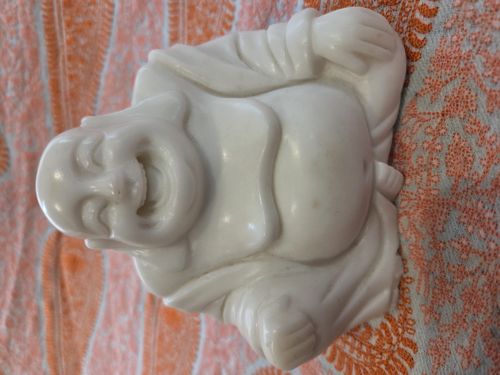
Carved White Marble Laughing Buddha (Budai) Figurine
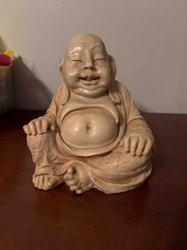
This is a solid, hand-carved figurine of the Laughing Buddha, also known as Budai or Hotei, crafted from a dense, monochromatic white marble. The piece displays a creamy, off-white hue with a soft, satin-like polish. Standing or seated in a lotus-style posture, the figure features an exaggeratedly large, exposed belly, symbolic of happiness and abundance. The facial expression is characterized by a wide, joyous grin and squinted, cheerful eyes. The folds of the monk's robes are rendered with flowing, rhythmic lines that demonstrate significant carving skill. Given the user's note that it is 'heavy,' the material is likely genuine stone rather than resin. The craftsmanship is clean, with well-defined earlobes and hands resting on the lap. There appear to be no major cracks, chips, or structural repairs, though minor surface abrasions consistent with age and handling are present. This style is characteristic of late 20th-century Asian decorative arts, likely produced in China or Vietnam as a symbol of good fortune and prosperity.
AI-Generated Appraisal Disclaimer
Estimated Value
$150 - $350
Basic Information
Category
Asian Art and Statuary
Appraised On
February 20, 2026
Estimated Value
$150 - $350
Additional Details Provided By Owner
User Provided Information
Heavy
Item Description
This is a solid, hand-carved figurine of the Laughing Buddha, also known as Budai or Hotei, crafted from a dense, monochromatic white marble. The piece displays a creamy, off-white hue with a soft, satin-like polish. Standing or seated in a lotus-style posture, the figure features an exaggeratedly large, exposed belly, symbolic of happiness and abundance. The facial expression is characterized by a wide, joyous grin and squinted, cheerful eyes. The folds of the monk's robes are rendered with flowing, rhythmic lines that demonstrate significant carving skill. Given the user's note that it is 'heavy,' the material is likely genuine stone rather than resin. The craftsmanship is clean, with well-defined earlobes and hands resting on the lap. There appear to be no major cracks, chips, or structural repairs, though minor surface abrasions consistent with age and handling are present. This style is characteristic of late 20th-century Asian decorative arts, likely produced in China or Vietnam as a symbol of good fortune and prosperity.
Get Your Items Appraised
Instant estimates of your treasures with AI-powered instant appraisals