Loro Blonyo Javanese Folk Art Wooden Figures
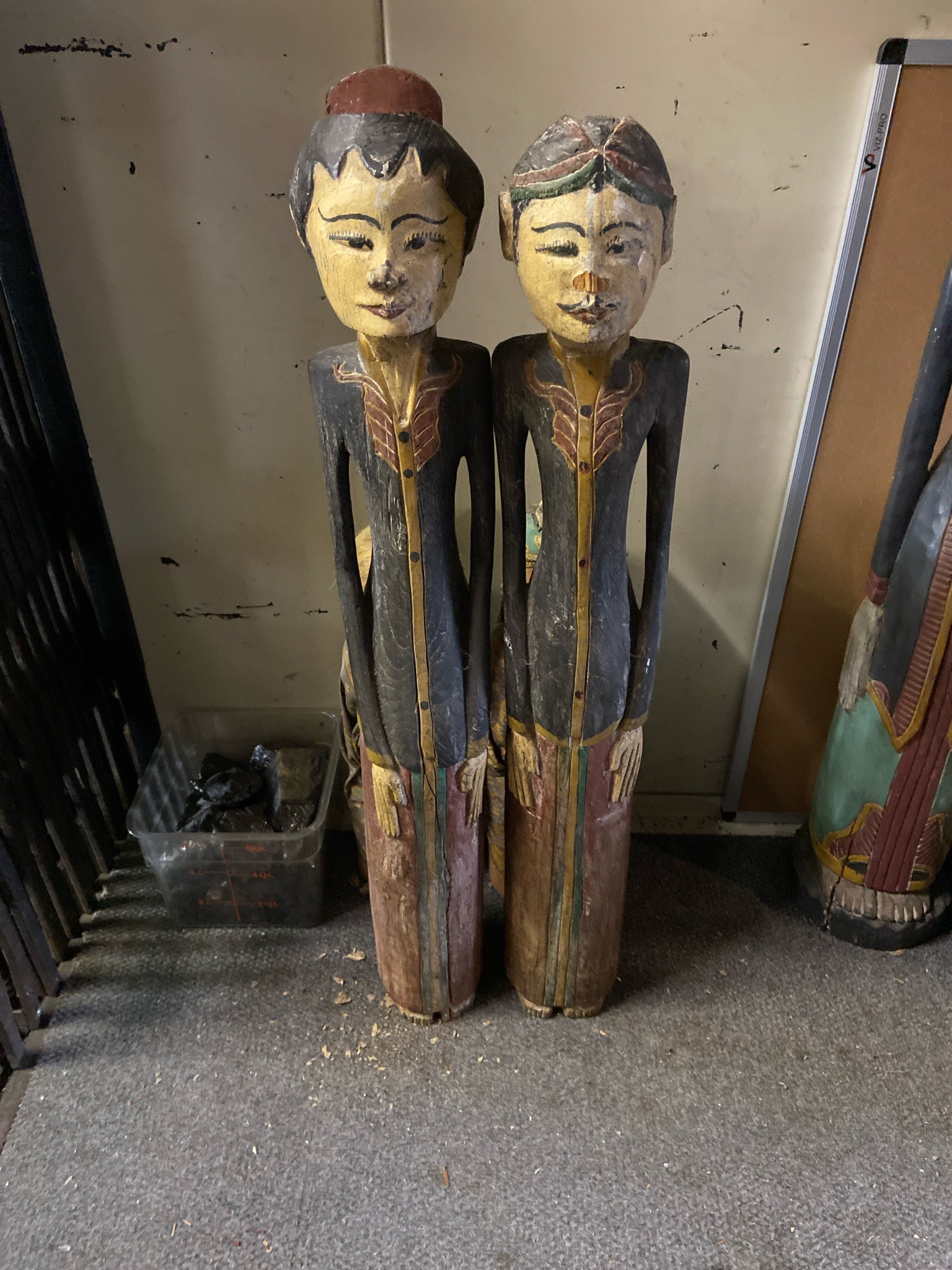
A pair of traditional Javanese 'Loro Blonyo' (Inseparable Couple) figurines, standing approximately 35 inches high and hand-carved from solid wood. The figures represent the deity Dewi Sri and her consort Raden Sadono, symbolizing fertility and domestic harmony. Specifically styled in a folk-art aesthetic, these pieces feature elongated, columnar bodies with stylized, slender arms and hand-painted facial features. The male figure is identifiable by his traditional headdress (blangkon), while the female features a distinctive bun (sanggul) with a red decorative element. Both are dressed in traditional Javanese wedding attire (basahan), consisting of painted black tunics with yellow/gold lapel detailing and long, cylindrical batik-patterned sarongs in terracotta and green tones. The color palette is earthy, utilizing muted pigments. The condition shows significant signs of age and exposure; there is visible cracking (checking) in the wood, particularly along the vertical grain of the male figure's base. Widespread paint loss/flaking is evident, especially on the faces and shoulders, revealing the light-colored wood beneath. The patina is heavy with dust and grime accumulation in the recessed carvings, suggesting a mid-to-late 20th-century origin. While no maker's marks are visible, the hand-carved nature reflects provincial Indonesian craftsmanship intended for either ritual house-placement or the mid-century export market.
AI-Generated Appraisal Disclaimer
Estimated Value
$450 - $650
Basic Information
Category
Asian Ethnographic Art / Statuary
Appraised On
April 24, 2026
Estimated Value
$450 - $650
Additional Details Provided By Owner
User Provided Information
35” high wooden
Item Description
A pair of traditional Javanese 'Loro Blonyo' (Inseparable Couple) figurines, standing approximately 35 inches high and hand-carved from solid wood. The figures represent the deity Dewi Sri and her consort Raden Sadono, symbolizing fertility and domestic harmony. Specifically styled in a folk-art aesthetic, these pieces feature elongated, columnar bodies with stylized, slender arms and hand-painted facial features. The male figure is identifiable by his traditional headdress (blangkon), while the female features a distinctive bun (sanggul) with a red decorative element. Both are dressed in traditional Javanese wedding attire (basahan), consisting of painted black tunics with yellow/gold lapel detailing and long, cylindrical batik-patterned sarongs in terracotta and green tones. The color palette is earthy, utilizing muted pigments. The condition shows significant signs of age and exposure; there is visible cracking (checking) in the wood, particularly along the vertical grain of the male figure's base. Widespread paint loss/flaking is evident, especially on the faces and shoulders, revealing the light-colored wood beneath. The patina is heavy with dust and grime accumulation in the recessed carvings, suggesting a mid-to-late 20th-century origin. While no maker's marks are visible, the hand-carved nature reflects provincial Indonesian craftsmanship intended for either ritual house-placement or the mid-century export market.
Get Your Items Appraised
Instant estimates of your treasures with AI-powered instant appraisals