AI Appraisal Estimate

AI-generated estimates · not official valuations

From the user

What was submitted

Photo and notes provided by the user — not generated by AI

Submitted item photo
Submitted photo · June 22, 2026

User's notes

No additional notes provided.

AI analysis below

AI appraisal

AI analysis & estimate

AI-Generated · Verify before acting

Everything below is generated by AI for informational purposes only. AI can make mistakes — the AI may misidentify items or misattribute them (artist, maker, brand, designer, origin, era). This is not an official valuation and should not be used for insurance, sale, tax, estate, legal, or lending purposes — or any decision requiring a certified appraisal. It is not an authoritative claim about any person, brand, or rights holder — do not share or rely on it as a factual statement about a third party. Always consult qualified professionals before making financial decisions.

Read the full disclaimer

AI Identification

·Not independently authenticated·Verify before acting

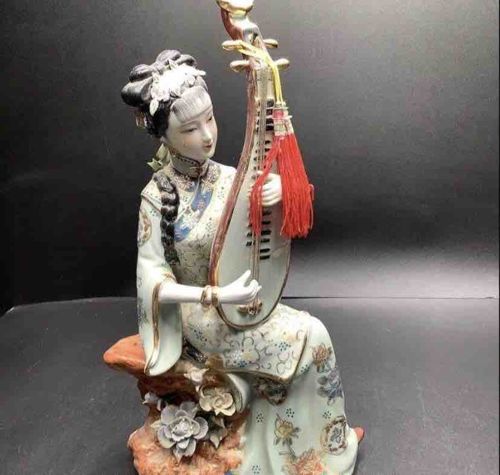
Famille Rose Polychrome Porcelain Figurine of a Lady Playing a Pipa

Fine Art / Asian Ceramics and Statuary

AI Estimated Value

·Not an official valuation·Verify before acting

$450 - $650

As of June 22, 2026

AI Item Analysis

·AI can make mistakes·Verify before acting
This is a highly detailed, hand-painted polychrome porcelain figurine depicting a seated Chinese woman in traditional dress playing a pipa (lute). The piece is characterized by its intricate 'Famille Rose' style palette, featuring soft greens, pinks, and delicate gold gilt highlights along the borders of the garments. The woman is seated on a rocky outcrop adorned with sculpted porcelain flowers, which demonstrate high levels of craftsmanship through their thin, individual petals. She wears an elaborate hairstyle with a floral headpiece and a long side braid. Her robes are decorated with traditional floral motifs and medallions. A notable feature is the red textile tassel attached to the neck of the pipa, providing a textural contrast to the hard ceramic surface. The figurine shows a refined facial expression with delicate features. Conditionwise, the piece appears to be in good vintage condition; however, figurines of this complexity often suffer from nearly invisible chips to the fragile floral elements at the base or the tips of the instrument. The style suggests it may be a mid-to-late 20th-century piece, likely from the 'Export' period or a high-quality reproduction of a Qing-style figure. There are no maker's marks visible in the photograph, but such pieces often bear stamps or signatures on the unglazed underside of the base.
AI Appraisal Report

·AI can make mistakes·Verify before acting
Upon visual examination of this Famille Rose polychrome porcelain figurine, I find it to be a high-quality example of mid-to-late 20th-century Chinese export porcelain, likely produced in Jingdezhen. The piece demonstrates the 'Wanping' style, utilizing a delicate palette of overglaze enamels. The craftsmanship on the applied porcelain flowers and the articulation of the pipa strings is indicative of skilled artisan work characteristic of the 1960s–1980s export period rather than the Qing Dynasty. The inclusion of a textile tassel is a common decorative addition for pieces intended for the Western decorative market. Condition appears excellent, though I must note that under high-magnification in-person, I would typically expect to find minor losses to the fragile 'shards' of the floral base or the fingertips, which are common in these 'bisque-and-glaze' hybrid figures. The market for mid-century Chinese porcelain remains steady among collectors of 'Chinoiserie,' though prices have softened compared to the peak demand for 18th-century originals. Limitations: This appraisal is based solely on photographic evidence. A definitive valuation and authentication would require a physical inspection to check for a 'Made in China' stamped seal or handwritten reign marks on the unglazed base. Additionally, a 'black light' (UV) test is necessary to ensure no professional restorations have been made to the neck of the pipa or the head of the figure. Provenance documentation or original import labels would further solidify the date of manufacture. As a late-century piece, the value is driven by its decorative appeal and complexity rather than historical rarity.

Get your items appraised

Instant estimates of your treasures with AI-powered appraisals

Browse More Appraisals