AI Appraisal Estimate

AI-generated estimates · not official valuations

From the user

What was submitted

Photo and notes provided by the user — not generated by AI

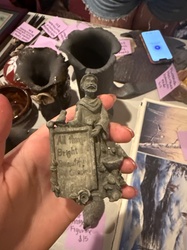
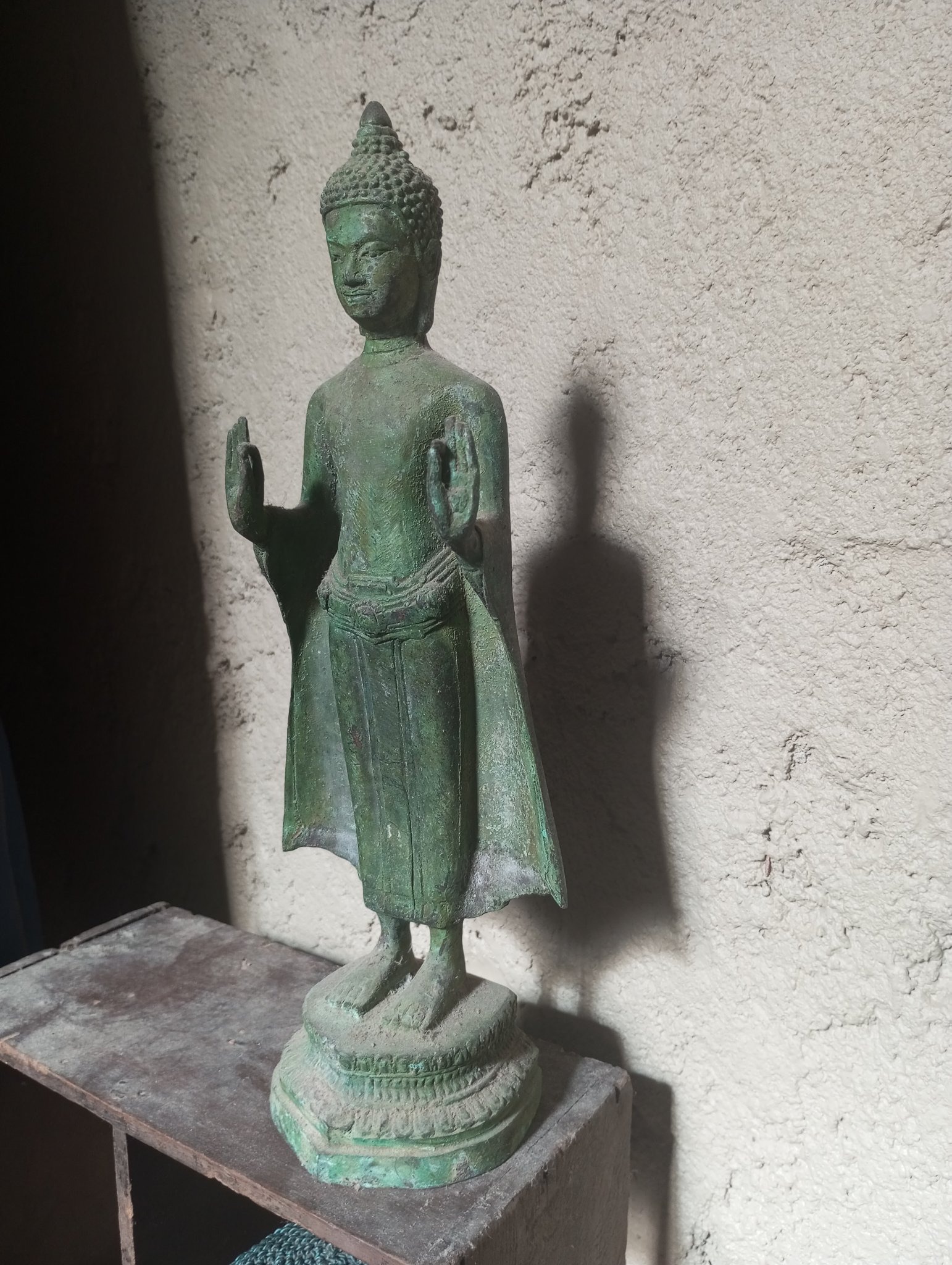
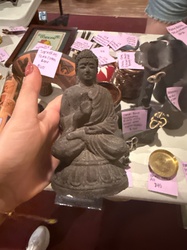
Submitted item photo
Submitted photo · June 17, 2026

User's notes

pieza metálica comprada en laos voentiane 1995 base hueca con restos de arcilla la imagen no sé si la incluyeron medida de alto 28 cm de peso un kilo 200.

AI analysis below

AI appraisal

AI analysis & estimate

AI-Generated · Verify before acting

Everything below is generated by AI for informational purposes only. AI can make mistakes — the AI may misidentify items or misattribute them (artist, maker, brand, designer, origin, era). This is not an official valuation and should not be used for insurance, sale, tax, estate, legal, or lending purposes — or any decision requiring a certified appraisal. It is not an authoritative claim about any person, brand, or rights holder — do not share or rely on it as a factual statement about a third party. Always consult qualified professionals before making financial decisions.

Note

This analysis also relies on unverified notes provided by the user, which may be incomplete or inaccurate and could affect the result.

Read the full disclaimer

AI Identification

·Not independently authenticated·Verify before acting

Laotian Bronze Standing Buddha in Abhaya Mudra

Religious Art & Statuary

AI Estimated Value

·Not an official valuation·Verify before acting

$400 - $600

As of June 17, 2026

AI Item Analysis

·AI can make mistakes·Verify before acting
This is a 28 cm tall bronze or copper-alloy sculpture of a standing Buddha, characterized by the Abhaya Mudra (gesture of fearlessness) performed with both hands raised, palms facing outward. The figure depicts the Buddha in a royal, upright posture typical of Laotian or Thai artistic traditions. The piece is cast using the lost-wax technique, evidenced by the hollow base which retains remnants of the original clay core as mentioned in the provenance. The surface displays a significant, uniform green verdigris patina, suggesting oxidation from environmental exposure or deliberate aging treatments common in the late 20th century. The Buddha wears a diaphanous robe (samghati) draped over both shoulders, falling into wing-like flares at the sides, with a decorative central belt or girdle (habbot) holding the lower garment. The facial features are serene with heavy-lidded eyes, elongated earlobes, and a tightly curled ushnisha (cranial bump) topped with a lotus-bud finial. The figure stands on a circular tiered lotus pedestal. Weighing 1.2 kg, the construction is solid and well-proportioned, though the heavy crusting and patina obscure finer engraving details. Based on the 1995 Vientiane acquisition date and stylistic elements, it is likely a 20th-century devotional or commemorative casting in the Lan Xang or Rattanakosin style.
AI Appraisal Report

·AI can make mistakes·Verify before acting
I have carefully examined the 28 cm bronze sculpture of a standing Buddha in the Abhaya Mudra gesture. While the piece exhibits stylistic hallmarks of the Lan Xang tradition, several physical characteristics suggest a mid-to-late 20th-century production date rather than an earlier period. The uniform green verdigris patina across the surface lacks the layered mineralization typically found on centuries-old bronzes, appearing more indicative of an accelerated chemical aging process. However, the presence of original clay core remnants within the hollow base confirms the use of the traditional lost-wax casting method, which adds handcrafted value. The 1.2 kg weight is consistent with a solid copper-alloy casting of this size. The 'double Abhaya' pose and wing-like samghati flares are popular in Laotian iconography, particularly for the tourist and devotional markets of the late 20th century. Current market demand for modern bronze devotional figures remains stable but is significantly lower than for authenticated 18th or 19th-century pieces. The 1995 acquisition date in Vientiane supports the assessment of a late-century commemorative piece. Please note that this appraisal is based on visual analysis; definitive authentication of age would require X-ray fluorescence (XRF) to analyze metal composition or thermoluminescence (TL) testing of the clay core. Without physical inspection, I cannot rule out the possibility that the patina obscures modern tool marks or casting flaws. This valuation reflects a decorative art market price for high-quality 20th-century Asian statuary.

Get your items appraised

Instant estimates of your treasures with AI-powered appraisals

Browse More Appraisals