AI Appraisal Estimate

AI-generated estimates · not official valuations

From the user

What was submitted

Photo and notes provided by the user — not generated by AI

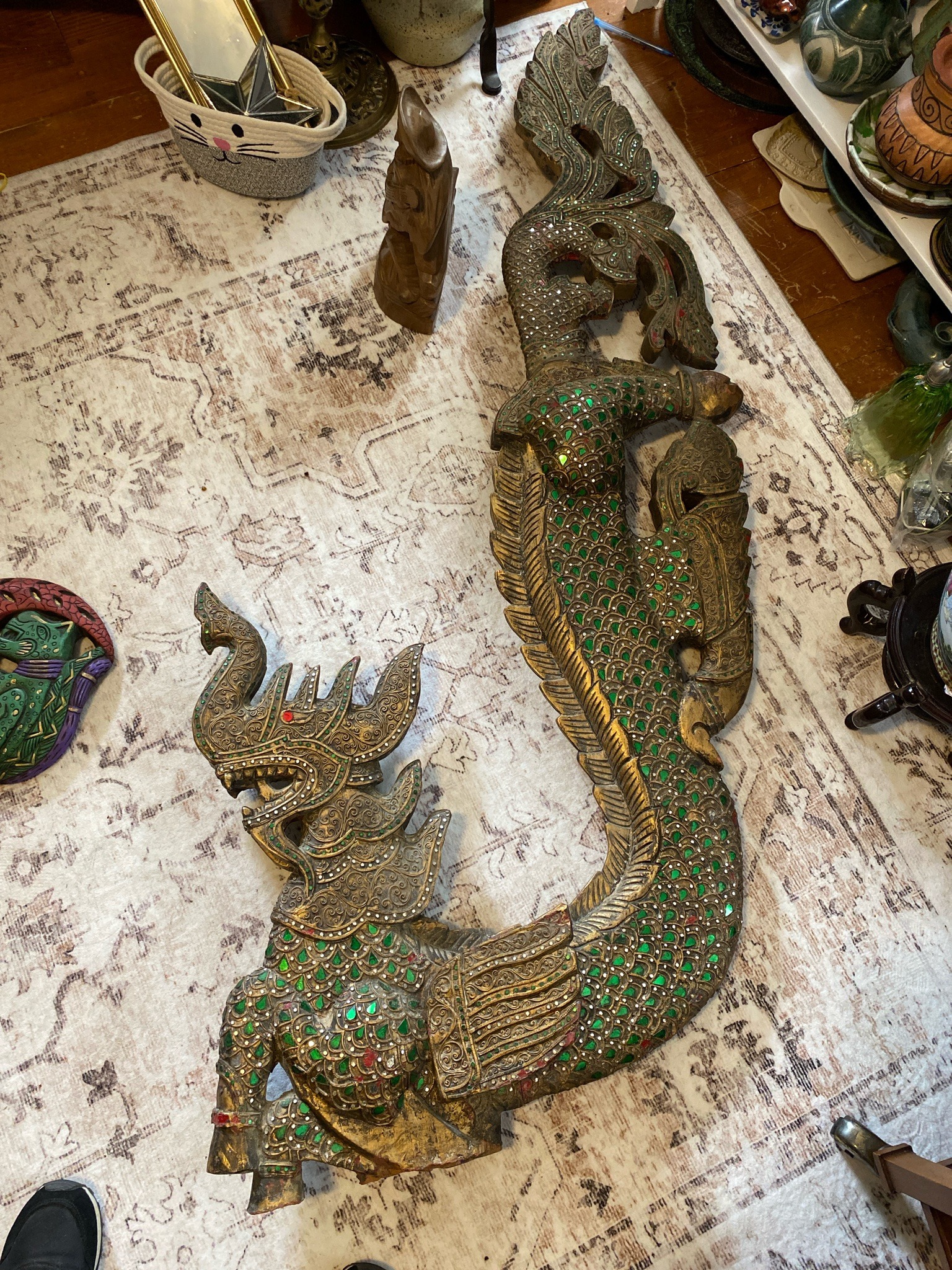
Submitted item photo
Submitted photo · June 15, 2026

User's notes

No additional notes provided.

AI analysis below

AI appraisal

AI analysis & estimate

AI-Generated · Verify before acting

Everything below is generated by AI for informational purposes only. AI can make mistakes — the AI may misidentify items or misattribute them (artist, maker, brand, designer, origin, era). This is not an official valuation and should not be used for insurance, sale, tax, estate, legal, or lending purposes — or any decision requiring a certified appraisal. It is not an authoritative claim about any person, brand, or rights holder — do not share or rely on it as a factual statement about a third party. Always consult qualified professionals before making financial decisions.

Read the full disclaimer

AI Identification

·Not independently authenticated·Verify before acting

Teak Wood Thai Naga (Serpent God) Architectural Pediment

Southeast Asian Architectural Antiques & Statuary

AI Estimated Value

·Not an official valuation·Verify before acting

$1,800 - $2,600

As of June 15, 2026

AI Item Analysis

·AI can make mistakes·Verify before acting
This is a large, hand-carved architectural element depicting a Naga, a mythical serpent-like creature prevalent in Thai and Southeast Asian mythology. The piece is crafted from teak wood and features a heavily ornate surface finished in a weathered gold or bronze-toned polychrome. It is intricately decorated with 'shinkhwa' style ornamentation, which includes thousands of individual pieces of green and clear mirrored glass mosaics (known as hman-zi-shwe-cha) embedded into a thick, molded lacquer or mastic paste called thayo. The Naga exhibits a complex, multi-tiered crest, a segmented scaly body, and a gracefully curved tail that tapers into flame-like motifs at the terminus. The craftsmanship is high-quality, showing detailed relief work on the scales and the creature's facial features. Regarding its condition, there is evident aging with a significant patina, some wearing of the gold finish, and minor losses to the glass mosaic inlays and lacquer detail, common for items of this age (likely late 20th century). No maker's marks are visible, which is standard for traditional architectural temple or residential carvings. Its substantial size suggests it was once a part of an eave, gable, or doorway ornament from a traditional Thai structure.
AI Appraisal Report

·AI can make mistakes·Verify before acting
I have examined the provided images of this hand-carved teak Naga pediment. The craftsmanship demonstrates the 'hman-zi-shwe-cha' technique, characterized by 'thayo' lacquer-work and 'shinkhwa' mirrored glass mosaic inlays. Based on the oxidation of the gold-tone finish and the wear patterns on the glass losses, I estimate this piece dates to the mid-to-late 20th century. While it successfully replicates the aesthetics of the Rattanakosin style, the lack of significant structural dry rot or severe termite damage suggests a more modern provenance rather than a 19th-century origin. Market demand for Southeast Asian architectural elements remains stable, particularly for 'statement pieces' of this scale. Comparables for high-quality teak carvings with intact mosaic work typically fall into the $2,000 range at boutique galleries, whereas auction prices may fluctuate based on buyer interest in interior design accents. The value is bolstered by the density of the glass inlay and the relative completeness of the volatile tail motifs, which are frequently damaged. However, several limitations exist: photographic evidence cannot confirm the wood's density to distinguish aged teak from lesser hardwoods, nor can I verify if the gilding is genuine gold leaf or metallic paint without a chemical test. A full authentication would require an in-person inspection of the joinery methods and carbon-dating or provenance documentation linking the piece to a specific temple or region. The value provided assumes the piece is structurally sound and the surface remains stable without active flaking of the lacquer substrate.

Get your items appraised

Instant estimates of your treasures with AI-powered appraisals

Browse More Appraisals