AI Appraisal Estimate

AI-generated estimates · not official valuations

From the user

What was submitted

Photo and notes provided by the user — not generated by AI

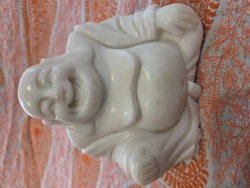
Submitted item photo
Submitted photo · June 8, 2026

User's notes

No additional notes provided.

AI analysis below

AI appraisal

AI analysis & estimate

AI-Generated · Verify before acting

Everything below is generated by AI for informational purposes only. AI can make mistakes — the AI may misidentify items or misattribute them (artist, maker, brand, designer, origin, era). This is not an official valuation and should not be used for insurance, sale, tax, estate, legal, or lending purposes — or any decision requiring a certified appraisal. It is not an authoritative claim about any person, brand, or rights holder — do not share or rely on it as a factual statement about a third party. Always consult qualified professionals before making financial decisions.

Read the full disclaimer

AI Identification

·Not independently authenticated·Verify before acting

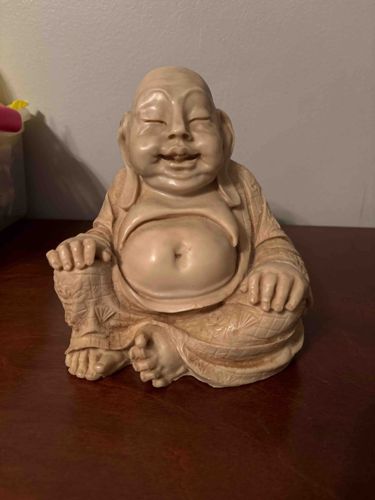
Seated Laughing Buddha (Budai/Hotei) Figurine

Decorative Collectibles / Asian Statuary

AI Estimated Value

·Not an official valuation·Verify before acting

$45.00 - $65.00

As of June 8, 2026

AI Item Analysis

·AI can make mistakes·Verify before acting
This item is a seated figurine of the Laughing Buddha, also known as Budai or Hotei, frequently associated with happiness, abundance, and contentment. The piece is constructed from a cast synthetic material, likely a molded resin or heavy composition material, designed to imitate the appearance of aged ivory, bone, or cinnabar. It features a monochromatic cream-white to light beige color palette with decorative dark antiquing or 'patina' rubbed into the recessed areas to accentuate the details. The figure is depicted in a traditional relaxed seated pose with a protruding belly and an exuberant, smiling facial expression with elongated earlobes. His robes are intricately detailed with fine cross-hatching and floral or fan-shaped patterns carved into the lower tiers. The craftsmanship displays medium-level factory production quality, evidenced by the uniform texture and lack of organic graining found in natural materials. No specific maker's marks or signatures are visible in the primary frontal view. Regarding condition, the piece appears well-preserved with no major fractures or chips visible, though there is a subtle accumulation of dust in the deeper crevices and some uneven discoloration on the torso that likely occurred during the manufacturing process to simulate age. The style is mid-to-late 20th-century decorative art, commonly found in giftware or home decor markets.
AI Appraisal Report

·AI can make mistakes·Verify before acting
I have conducted a visual examination of the seated Laughing Buddha (Budai) figurine. The piece is a mid-to-late 20th-century decorative object made of molded resin or heavy composition material. While intended to mimic the appearance of aged ivory or bone, it lacks the characteristic Schregger lines or organic graining of natural materials. The 'patina' is a topical wash applied during manufacturing to simulate age. The overall condition is good, with only minor surface dust and typical factory-borne color variations. Market demand for mass-produced Asian-style decorative statuary remains stable but saturated. This item is not a rare antique; it is a catalog-ordered or gift-shop decorative piece. Comparable sales for molded resin Hotei figures of this size and detail typically fall within the $40 to $70 range at retail or secondary markets like eBay or local estate auctions. Factors limiting the value include its synthetic composition, lack of a maker’s mark, and the absence of hand-carved artistry. The value is strictly decorative rather than investment-grade. Limitations: My assessment is based solely on digital images. A physical inspection is required to confirm the density of the material and check for hidden mold lines or manufacturer's stamps on the base. To rule out more valuable materials like celluloid or rare early plastics, hot-needle testing or specific gravity tests would be necessary. However, based on the visual evidence of the uniform texture and surface wear, a high-value material identification is unlikely. No further provenance research is warranted for this type of decorative collectible.

Get your items appraised

Instant estimates of your treasures with AI-powered appraisals

Browse More Appraisals