AI estimate as of August 16, 2026 · verify with a professional before acting
AI-Generated · Verify before acting
Everything on this page is generated by AI for informational purposes only. AI can make mistakes — the AI may misidentify items or misattribute them (artist, maker, brand, designer, origin, era). This is not an official valuation and should not be used for insurance, sale, tax, estate, legal, or lending purposes — or any decision requiring a certified appraisal. It is not an authoritative claim about any person, brand, or rights holder — do not share or rely on it as a factual statement about a third party. Always consult qualified professionals before making financial decisions.
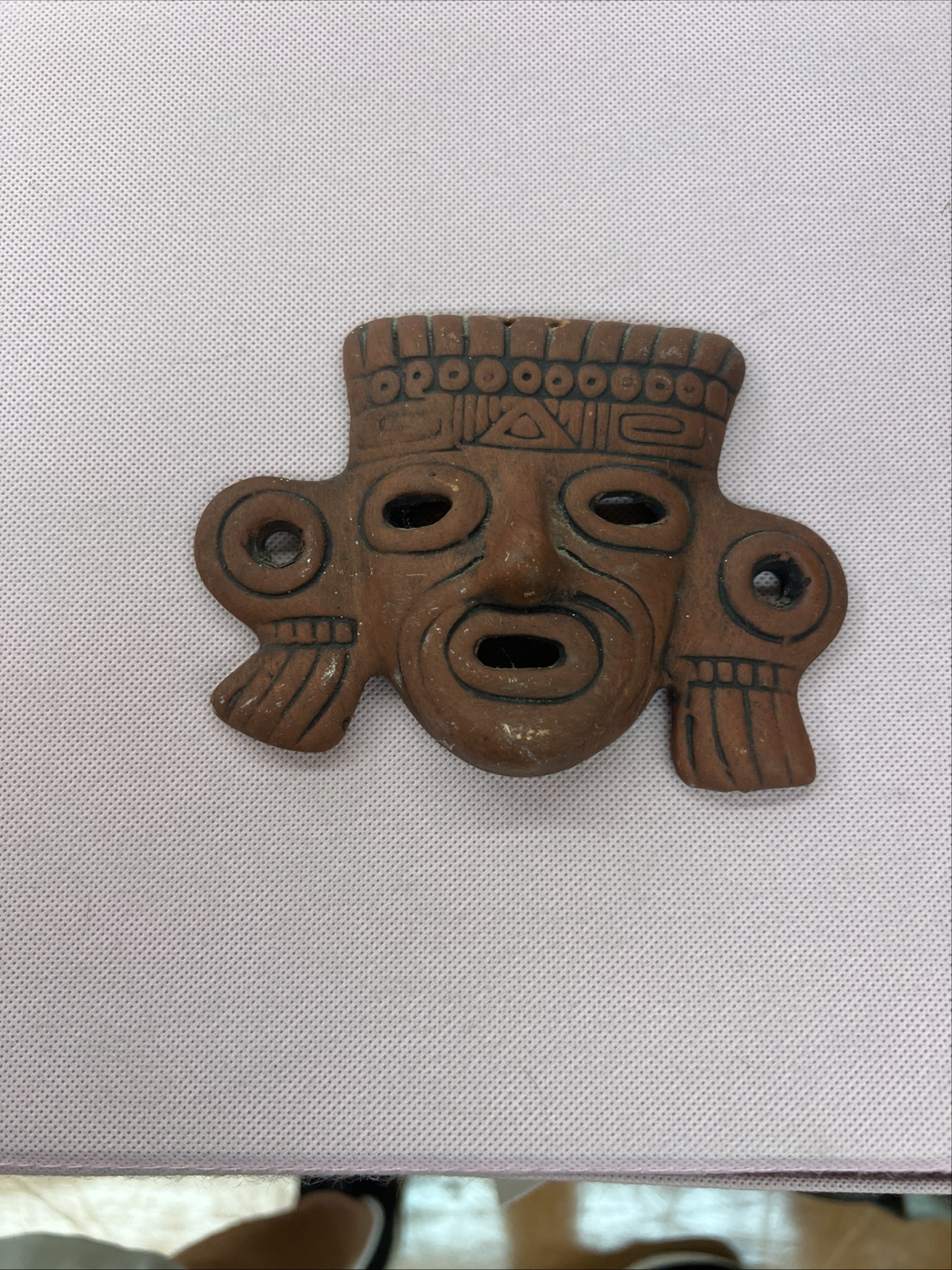
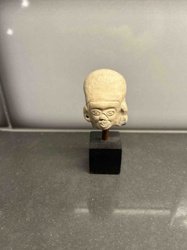
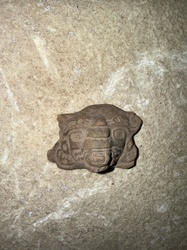
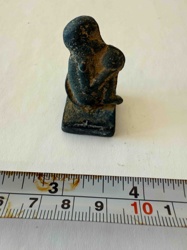
This is a terracotta or earthenware mask pendant, exhibiting stylistic features commonly associated with Mesoamerican or Pre-Columbian artifacts, such as those from the Zapotec or Teotihuacan cultures, though the item is unauthenticated and its exact age and provenance remain unknown. The object is rendered in a reddish-brown clay with incised and painted black line details that highlight the facial features and headdress motifs. The mask features a prominent nose, rounded open eyes, and an open, oval-shaped mouth. Elaborate ear spools with circular perforations and hanging elements flank the face. A structured headdress sits above the brow, decorated with a band of circles, triangular patterns, and geometric scrollwork. The reverse is not visible, but the front displays minor surface wear, slight chipping around the edges, and an accumulation of dark residue within the incised grooves, which is consistent with age or simulated aging processes. There are no visible maker's marks, signatures, or modern stamps. The identification of this object is strictly based on its visual iconography and stylistic resemblance to ancient Mesoamerican art forms, and it should not be considered a confirmed historical artifact without physical testing and expert archaeological evaluation.
AI Appraisal Report
Based on what I can see in the photograph, this item presents as a terracotta mask pendant exhibiting stylistic iconography associated with Pre-Columbian or Mesoamerican art forms, such as Zapotec or Teotihuacan cultures. I can observe the reddish-brown clay body, incised and painted black line details, prominent facial features, elaborate ear spools, and structured headdress with geometric scrollwork. However, I cannot verify from a photo alone the actual age of the clay, the chemical composition of the pigments, or the validity of the surface residue. I would need physical inspection to confirm whether these attributes reflect ancient manufacture or simulated aging processes. There are no visible maker's marks or provenance records accompanying the piece, so this visual identification must be treated strictly as a working hypothesis rather than a confirmed historical artifact. For the purposes of this estimate, assuming the attribution to a Pre-Columbian tradition is correct upon physical inspection, comparable antiquities and artifact-style mask pendants of similar size and artistic elaboration typically trade within the $800 to $1,500 range in the current secondary market. Demand for Mesoamerican-style artifacts remains steady among niche collectors, though values are heavily dependent on condition, aesthetic appeal, and legal provenance documentation. If the item were to be determined through scientific testing and expert archaeological evaluation to be a modern reproduction, replica, copy, or created merely "in the style of" the ancient cultures, the value would decrease significantly, typically falling into the $50 to $150 decorative bracket. To establish true authenticity and value, the piece would require in-person examination by a qualified antiquities expert, scientific testing such as thermoluminescence dating, and verified provenance history.