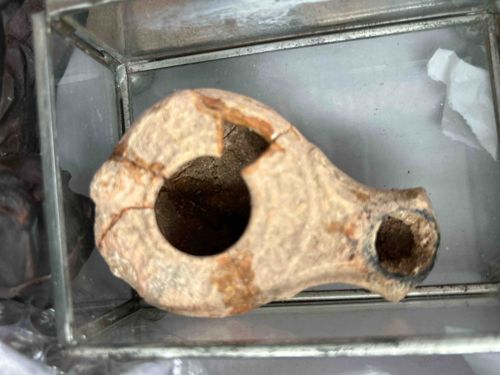
Ancient Roman or Byzantine Terracotta Oil Lamp
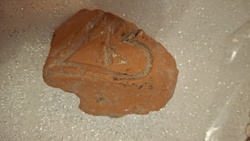
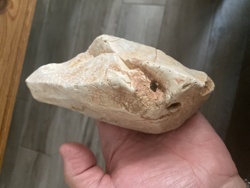
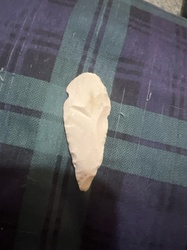
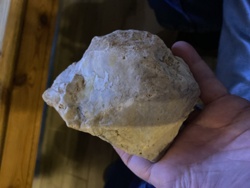
This artifact is a mold-made terracotta oil lamp, characteristic of the Roman or early Byzantine style, likely dating between the 1st and 6th centuries AD. The lamp is crafted from a coarse, buff-to-earthy-orange colored clay with a matte finish. It features a circular reservoir body with a central filling hole and an elongated nozzle containing the wick hole. The shoulder of the lamp appears to be decorated with faint, molded geometric or floral patterns, which are typical of regional workshops in the Levant or North Africa. The construction shows evidence of being joined from two separately molded halves. The condition of the item is weathered and fragmented. There is significant breakage around the central filling hole, with a large piece of the upper disk missing and a visible hairline crack extending toward the rear. The nozzle end shows dark charring or carbonization, suggesting the lamp was used in antiquity. Surfaces exhibit heavy encrustation, mineral deposits, and dirt commensurate with long-term burial. There are no clearly visible maker’s marks in the current orientation, though some lamps of this era featured stamps on the base. The quality suggests a mass-produced utilitarian object of the period rather than a high-luxury item. The overall patina is uneven, with significant surface abrasion and loss of detail due to age and environmental exposure.
AI-Generated Appraisal Disclaimer
Estimated Value
$40-75
Basic Information
Category
Antiquities / Archaeological Artifacts
Appraised On
March 14, 2026
Estimated Value
$40-75
Item Description
This artifact is a mold-made terracotta oil lamp, characteristic of the Roman or early Byzantine style, likely dating between the 1st and 6th centuries AD. The lamp is crafted from a coarse, buff-to-earthy-orange colored clay with a matte finish. It features a circular reservoir body with a central filling hole and an elongated nozzle containing the wick hole. The shoulder of the lamp appears to be decorated with faint, molded geometric or floral patterns, which are typical of regional workshops in the Levant or North Africa. The construction shows evidence of being joined from two separately molded halves. The condition of the item is weathered and fragmented. There is significant breakage around the central filling hole, with a large piece of the upper disk missing and a visible hairline crack extending toward the rear. The nozzle end shows dark charring or carbonization, suggesting the lamp was used in antiquity. Surfaces exhibit heavy encrustation, mineral deposits, and dirt commensurate with long-term burial. There are no clearly visible maker’s marks in the current orientation, though some lamps of this era featured stamps on the base. The quality suggests a mass-produced utilitarian object of the period rather than a high-luxury item. The overall patina is uneven, with significant surface abrasion and loss of detail due to age and environmental exposure.
Related Tags
Get Your Items Appraised
Instant estimates of your treasures with AI-powered instant appraisals