Fragmentary Pre-Columbian Style Terracotta Figurine
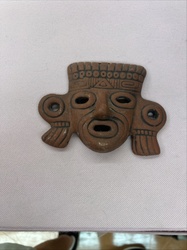
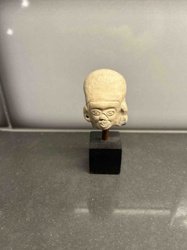
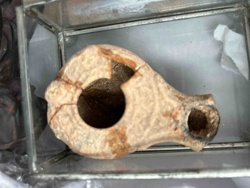
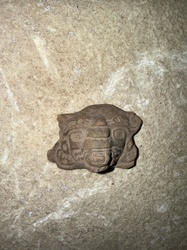
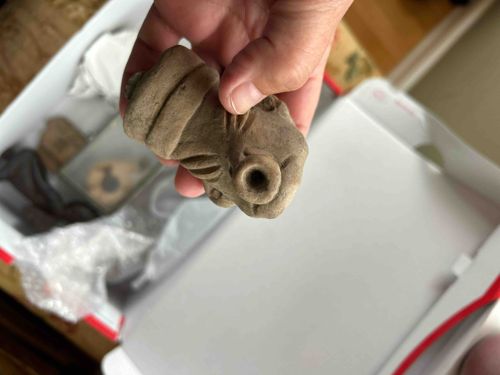
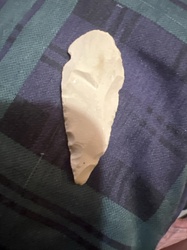
This object is a small, hand-modeled terracotta figurine or fragment, likely representing an anthropomorphic or zoomorphic figure in a style reminiscent of Pre-Columbian West Mexican or Central American ceramic traditions. The piece is approximately 3 to 4 inches in length and is crafted from a coarse-grained, buff-to-tan colored clay. Its construction features a thick, bulbous body with deep, incised linear patterns and a prominent protruding circular element that may represent a snout, a limb, or a decorative ear spool. The clay surface exhibits a matte, earthy texture with significant evidence of age and environmental exposure, including surface pitting, encrustations of dirt within the crevices, and small chips along the edges. There are no visible maker's marks or signatures, which is consistent with ancient utilitarian or votive pottery. The object appears to be a fragment of a larger vessel or a standalone figure that has suffered breakage, particularly at the extremities. The craftsmanship is characterized by bold, simple forms and deep incisions, suggesting a stylistic origin from an early formative or classic period culture. The weathered patina and irregular surface suggest it was likely a burial or refuse-site find, though modern replicas created for the tourism trade often mimic these exact characteristics.
AI-Generated Appraisal Disclaimer
Estimated Value
$40-$80
Basic Information
Category
Antiquities and Artifacts
Appraised On
March 14, 2026
Estimated Value
$40-$80
Item Description
This object is a small, hand-modeled terracotta figurine or fragment, likely representing an anthropomorphic or zoomorphic figure in a style reminiscent of Pre-Columbian West Mexican or Central American ceramic traditions. The piece is approximately 3 to 4 inches in length and is crafted from a coarse-grained, buff-to-tan colored clay. Its construction features a thick, bulbous body with deep, incised linear patterns and a prominent protruding circular element that may represent a snout, a limb, or a decorative ear spool. The clay surface exhibits a matte, earthy texture with significant evidence of age and environmental exposure, including surface pitting, encrustations of dirt within the crevices, and small chips along the edges. There are no visible maker's marks or signatures, which is consistent with ancient utilitarian or votive pottery. The object appears to be a fragment of a larger vessel or a standalone figure that has suffered breakage, particularly at the extremities. The craftsmanship is characterized by bold, simple forms and deep incisions, suggesting a stylistic origin from an early formative or classic period culture. The weathered patina and irregular surface suggest it was likely a burial or refuse-site find, though modern replicas created for the tourism trade often mimic these exact characteristics.
Related Tags
Explore similar items and categories:
Get Your Items Appraised
Instant estimates of your treasures with AI-powered instant appraisals