AI Appraisal Estimate

AI-generated estimates · not official valuations

From the user

What was submitted

Photo and notes provided by the user — not generated by AI

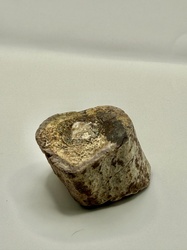
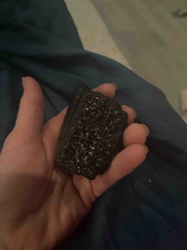
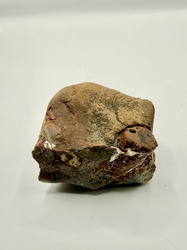
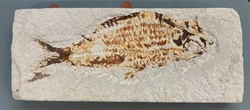
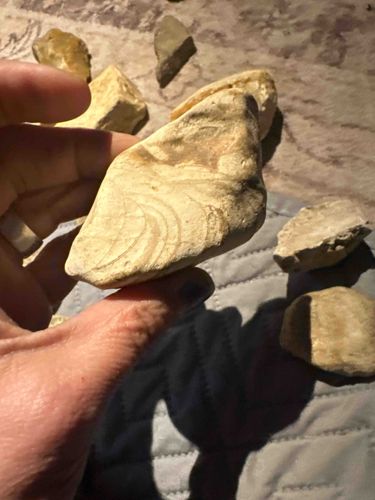
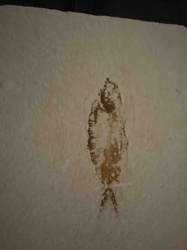
Submitted item photo
Submitted photo · June 23, 2026

User's notes

No additional notes provided.

AI analysis below

AI appraisal

AI analysis & estimate

AI-Generated · Verify before acting

Everything below is generated by AI for informational purposes only. AI can make mistakes — the AI may misidentify items or misattribute them (artist, maker, brand, designer, origin, era). This is not an official valuation and should not be used for insurance, sale, tax, estate, legal, or lending purposes — or any decision requiring a certified appraisal. It is not an authoritative claim about any person, brand, or rights holder — do not share or rely on it as a factual statement about a third party. Always consult qualified professionals before making financial decisions.

Read the full disclaimer

AI Identification

·Not independently authenticated·Verify before acting

Fossilized Bivalve Shell Fragment

Fossil

AI Estimated Value

·Not an official valuation·Verify before acting

$5 - $15

As of June 23, 2026

AI Item Analysis

·AI can make mistakes·Verify before acting
The item is a fragment of what appears to be a fossilized bivalve shell, held between a person's thumb and forefinger. Its size is such that it comfortably fits within an adult hand, suggesting dimensions of several inches in length. The material is predominantly light beige to off-white, characteristic of limestone or a similar sedimentary rock that has undergone fossilization. The fragment exhibits a layered, concentric pattern on its surface, indicative of the growth lines of a mollusk shell. These patterns are subtly defined, suggesting a degree of natural erosion or weathering. The texture appears somewhat porous and rough, consistent with a natural stone artifact or fossil. One edge shows a distinct break, revealing the interior structure, which matches the exterior in color and texture. There are no visible manufacturing markings, signatures, or stamps, which is expected for a natural fossil. The style and age are consistent with a prehistoric or ancient geological period, dating back millions of years. The overall condition is good for a natural specimen, with the visible wear being natural rather than from damage. The quality is typical of a common fossil find, exhibiting clear, albeit somewhat weathered, features without exceptional preservation detail. The item demonstrates natural geological processes.
AI Appraisal Report

·AI can make mistakes·Verify before acting
Upon visual examination of the provided image, I assess this fossilized bivalve shell fragment to be authentic. The layered, concentric growth patterns and the visible internal structure revealed by the break are consistent with genuine fossilized mollusk shells. The light beige to off-white coloration and porous texture are also typical of sedimentary fossil preservation. The condition is good for a natural specimen, showing natural erosion rather than significant damage. Market conditions for common fossilized bivalve fragments are generally modest. Comparables in similar condition often sell in the single-digit to low double-digit dollar range. Demand is stable but not high for such common finds, typically appealing to amateur collectors or for educational purposes. Rarity is low; bivalve fossils are among the most frequently discovered types of ancient marine life, especially fragments. Factors significantly impacting value include its commonality, the lack of exceptional preservation detail, and its fragmented nature. A complete, well-preserved specimen or a rare species would command a much higher price. It is crucial to note that this authenticity verification is limited to visual assessment from an image. A definitive in-person examination would allow for tactile inspection of texture, density, and a more thorough assessment of mineralogical composition. While the visual evidence strongly suggests authenticity as a fossil, scientific testing (e.g., elemental analysis) or professional geological identification would be needed for a precise species identification, exact geological age dating, or to rule out modern fabrications made to mimic fossils, though the latter is highly unlikely for such a common and low-value piece. Provenance documentation, detailing where and when it was found, would add to its academic and collector value.

Get your items appraised

Instant estimates of your treasures with AI-powered appraisals

Browse More Appraisals