Fragmented Mammal Fossil (Cebidae or Similar Order)
Paleontological Specimens / Fossils

Fragmented Mammal Fossil (Cebidae or Similar Order)

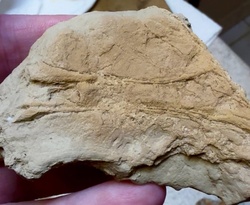
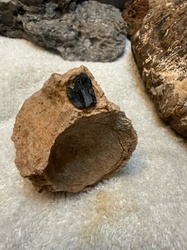
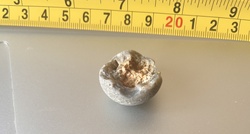
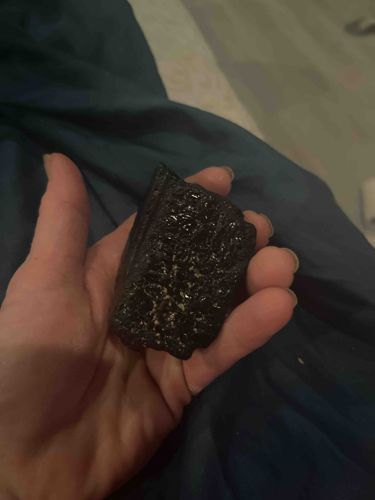
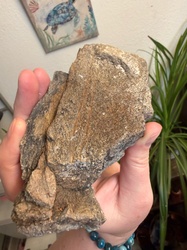
This specimen appears to be a fragmented vertebrate fossil, likely a section of a jawbone or cranial element from a mammal. The object measures approximately 2 to 3 inches in length and is held in a palm for scale. It exhibits a deep, obsidian-black or dark chocolate mineralization, characteristic of fossils found in anoxic, water-logged environments or riverbeds where iron and manganese replacement have occurred. The surface texture is highly rugose and pitted, featuring a complex network of trabecular (spongy) bone structure that has been mineralized throughout. On one edge, there appears to be a linear ridge with circular depressions that may represent the roots or alveoli of missing teeth. The glossy, vitrified appearance suggests a high degree of permineralization. There is no visible sign of modern manufacturing or marking; the item shows natural fractures and weathering consistent with geological antiquity. The state of preservation is good, though the item is a partial fragment rather than a complete bone, exhibiting jagged edges where it has split from a larger skeletal structure. This piece likely dates back to the Pleistocene era but would require geological site verification to confirm exact age. Its craftsmanship is defined by natural taphonomic processes rather than human intervention.
Estimated Value

$40 - $80

Basic Information

Category

Paleontological Specimens / Fossils

Appraised On

March 4, 2026

Estimated Value

$40 - $80

Item Description

This specimen appears to be a fragmented vertebrate fossil, likely a section of a jawbone or cranial element from a mammal. The object measures approximately 2 to 3 inches in length and is held in a palm for scale. It exhibits a deep, obsidian-black or dark chocolate mineralization, characteristic of fossils found in anoxic, water-logged environments or riverbeds where iron and manganese replacement have occurred. The surface texture is highly rugose and pitted, featuring a complex network of trabecular (spongy) bone structure that has been mineralized throughout. On one edge, there appears to be a linear ridge with circular depressions that may represent the roots or alveoli of missing teeth. The glossy, vitrified appearance suggests a high degree of permineralization. There is no visible sign of modern manufacturing or marking; the item shows natural fractures and weathering consistent with geological antiquity. The state of preservation is good, though the item is a partial fragment rather than a complete bone, exhibiting jagged edges where it has split from a larger skeletal structure. This piece likely dates back to the Pleistocene era but would require geological site verification to confirm exact age. Its craftsmanship is defined by natural taphonomic processes rather than human intervention.
Get Your Items Appraised

Instant estimates of your treasures with AI-powered instant appraisals

Browse More Appraisals