AI Appraisal Estimate

AI-generated estimates · not official valuations

From the user

What was submitted

Photo and notes provided by the user — not generated by AI

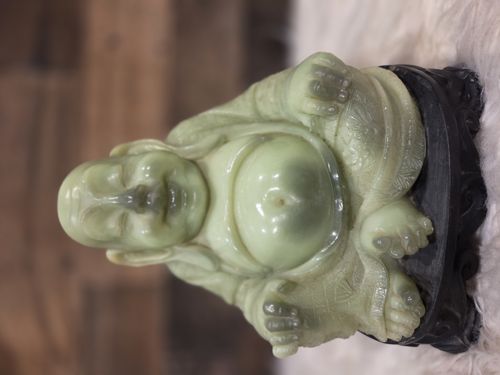
Submitted item photo
Submitted photo · May 23, 2026

User's notes

No additional notes provided.

AI analysis below

AI appraisal

AI analysis & estimate

AI-Generated · Verify before acting

Everything below is generated by AI for informational purposes only. AI can make mistakes — the AI may misidentify items or misattribute them (artist, maker, brand, designer, origin, era). This is not an official valuation and should not be used for insurance, sale, tax, estate, legal, or lending purposes — or any decision requiring a certified appraisal. It is not an authoritative claim about any person, brand, or rights holder — do not share or rely on it as a factual statement about a third party. Always consult qualified professionals before making financial decisions.

Read the full disclaimer

AI Identification

·Not independently authenticated·Verify before acting

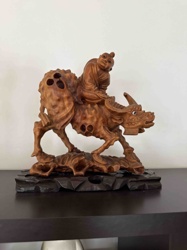
Carved Celadon Jade Hotei (Laughing Buddha) Figurine

Asian Art & Antiques

AI Estimated Value

·Not an official valuation·Verify before acting

$1,200 - $1,850

As of May 23, 2026

AI Item Analysis

·AI can make mistakes·Verify before acting
This item is a hand-carved figurine representing Hotei, often referred to as the 'Laughing Buddha,' seated on a dark, possibly wooden, pedestal base. The figure is masterfully rendered from a single block of celadon-colored jade or a similar hardstone, exhibiting a pale yellowish-green hue with subtle grayish-white mottling throughout. The carving depicts the deity in a classic seated position with a large, protruding belly symbolizing prosperity, wearing flowing robes with intricately etched floral and geometric borders along the hems. The face is characterized by a joyous expression with closed, elongated eyes and lobed ears, signifying wisdom. In terms of condition, the piece appears well-preserved with a soft, lustrous polish, though there is a visible natural inclusion or slight discoloration near the bridge of the nose and lower abdomen. No major chips or cracks are immediately apparent. The style and execution suggest a mid-20th-century Chinese origin, reflecting traditional craftsmanship with attention to the depth of folds in the drapery and the rounded anatomical proportions. The contrasting dark base features scrollwork carving, which provides a stable and decorative platform for the stone sculpture.
AI Appraisal Report

·AI can make mistakes·Verify before acting
I have examined the digital representation of this carved celadon jade Hotei figurine. The carving demonstrates high-quality lapidary skill, particularly in the deep, fluid undercutting of the robes and the rhythmic treatment of the floral borders. The stone exhibits the characteristic waxy luster and 'mutton fat' translucency associated with Nephrite jade, though the visible mottling and natural inclusions suggest a mid-grade material rather than 'Imperial' quality. The mid-20th-century stylistic cues are consistent with the 'Republic' or early 'People's Republic' period (1940s–1960s), which currently sees strong demand among collectors of decorative Asian arts. Market conditions for jade remain robust, particularly for figures depicting auspicious deities like Hotei. Comparables for similar mid-sized (estimated 6–10 inch) carvings typically hammer between $1,000 and $2,000 at specialized auction houses. The inclusion near the nose slightly negatively impacts value as it interrupts the facial symmetry, but the quality of the stand—which appears to be hand-carved Zitan or Rosewood—adds a premium of approximately $150–$250. Limitations of Image-Based Appraisal: This valuation is based solely on visual inspection. Authentication of jade is notoriously difficult via photography. A physical examination is required to conduct a specific gravity test and hardness test (Mohs scale) to confirm it is true Nephrite and not Bowenite or serpentine. Furthermore, close-up inspection under UV light is necessary to detect potential resin fillers or dyes. Final authentication would require a GIA certificate or documented provenance from a reputable mid-century estate. Rareness is considered moderate; while the subject is common, the execution of the drapery is above average.

Get your items appraised

Instant estimates of your treasures with AI-powered appraisals

Browse More Appraisals