AI Appraisal Estimate

AI-generated estimates · not official valuations

From the user

What was submitted

Photo and notes provided by the user — not generated by AI

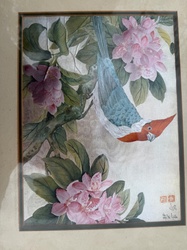
Submitted item photo
Submitted photo · June 22, 2026

User's notes

No additional notes provided.

AI analysis below

AI appraisal

AI analysis & estimate

AI-Generated · Verify before acting

Everything below is generated by AI for informational purposes only. AI can make mistakes — the AI may misidentify items or misattribute them (artist, maker, brand, designer, origin, era). This is not an official valuation and should not be used for insurance, sale, tax, estate, legal, or lending purposes — or any decision requiring a certified appraisal. It is not an authoritative claim about any person, brand, or rights holder — do not share or rely on it as a factual statement about a third party. Always consult qualified professionals before making financial decisions.

Read the full disclaimer

AI Identification

·Not independently authenticated·Verify before acting

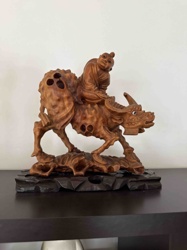
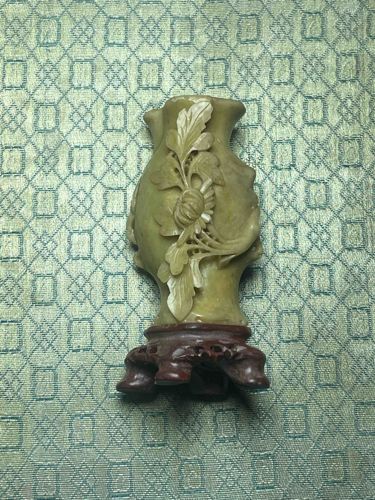
Chinese Hand-Carved Soapstone Vase with Floral High-Relief

Asian Art & Antiques

AI Estimated Value

·Not an official valuation·Verify before acting

$45 - $85

As of June 22, 2026

AI Item Analysis

·AI can make mistakes·Verify before acting
This is a small decorative vase, estimated to be approximately 4 to 6 inches in height, hand-carved from a single block of polychrome soapstone (steatite). The piece exhibits a muted olive-green to tan ground color with lighter, cream-toned inclusions utilized for the decorative elements. The central motif features a deeply undercut, high-relief carving of a blooming chrysanthemum flower accompanied by broad, feathery foliage that wraps around the body of the vase. The craftsmanship demonstrates traditional Chinese stone-carving techniques, particularly the 'Qingtian' or 'Shoushan' style, where the natural color variations in the stone are exploited to define the subject matter. The vase has an asymmetrical, organic form with a flaring rim and sit atop an integrated or separate carved dark reddish-brown soapstone base. The base is expertly pierced and carved into a tripod lattice pattern to mimic an ornate wooden stand. Visible condition issues include some surface wear consistent with age, minor abrasions on the high points of the floral carving, and some dusty accretion in the crevices. There are no obvious maker's marks visible in the image, which is common for these artisanal workshop pieces crafted during the mid-20th century (c. 1940s-1970s). The waxy luster and relative softness of the material are characteristic of high-quality soapstone rather than harder jadeite.
AI Appraisal Report

·AI can make mistakes·Verify before acting
I have examined the digital representations of this hand-carved soapstone vase. This specimen is a classic example of Chinese export craft from the mid-20th century, likely produced between 1950 and 1970. The piece utilizes polychrome steatite, leveraging the lighter cream inclusions for the chrysanthemum relief against a darker ground. The 'Qingtian' style of high-relief undercutting is well-executed, though the surface wear and dust accretion suggests a period of domestic display without professional cleaning. The integrated tripod lattice base is characteristic of these artisanal workshop pieces. The current market for mid-century Chinese soapstone is highly saturated. While these pieces demonstrate impressive technical skill, they were mass-produced for the tourist and export markets, which limits their rarity and investment potential. Comparables at auction and in antique malls consistently realize prices under $100, unless the scale is significantly larger or the carving is attributed to a known master carver. The minor abrasions noted on the floral high points slightly depress the value but are expected for a material with a Mohs hardness of 1–2. Final valuation is limited by the digital nature of this inspection. Because soapstone can be imitated by resin casts or soapstone-dust composites, an in-person examination is required to confirm the 'waxy' tactile feel and cool temperature of natural stone. A full authentication would also require checking the underside for specific 'Made in China' etchings or paper labels which often dictate specific export windows. Without provenance documenting a pre-war origin, this remains a decorative artisanal object rather than a high-value antiquity.

Get your items appraised

Instant estimates of your treasures with AI-powered appraisals

Browse More Appraisals