AI Appraisal Estimate

AI-generated estimates · not official valuations

From the user

What was submitted

Photo and notes provided by the user — not generated by AI

Submitted item photo
Submitted photo · June 8, 2026

User's notes

No additional notes provided.

AI analysis below

AI appraisal

AI analysis & estimate

AI-Generated · Verify before acting

Everything below is generated by AI for informational purposes only. AI can make mistakes — the AI may misidentify items or misattribute them (artist, maker, brand, designer, origin, era). This is not an official valuation and should not be used for insurance, sale, tax, estate, legal, or lending purposes — or any decision requiring a certified appraisal. It is not an authoritative claim about any person, brand, or rights holder — do not share or rely on it as a factual statement about a third party. Always consult qualified professionals before making financial decisions.

Read the full disclaimer

AI Identification

·Not independently authenticated·Verify before acting

Japanese Bird and Flower Silk Embroidery (Kacho-ga)

Asian Art & Antiques

AI Estimated Value

·Not an official valuation·Verify before acting

$1,200 - $1,800

As of June 8, 2026

AI Item Analysis

·AI can make mistakes·Verify before acting
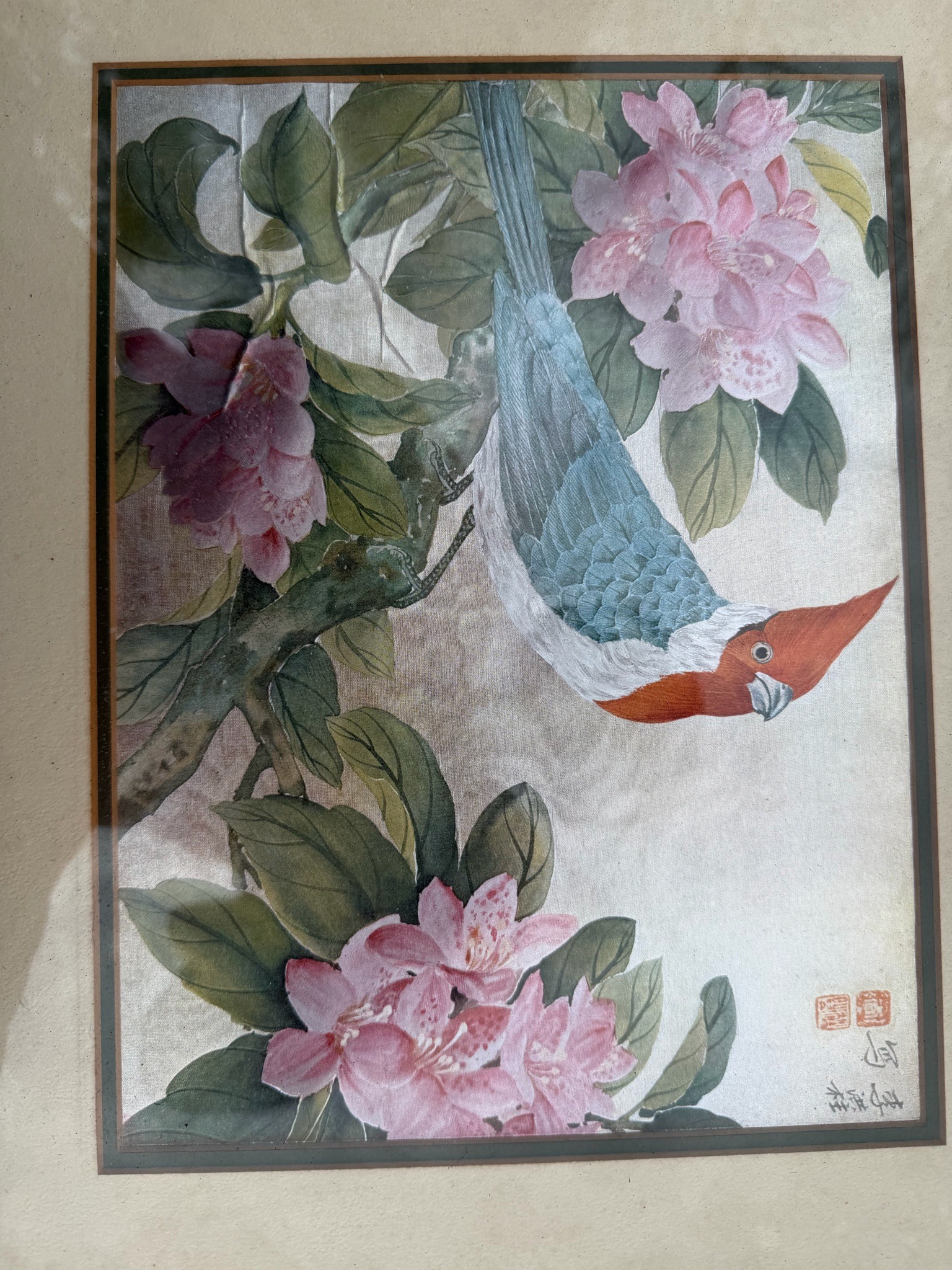
This is a meticulously crafted Japanese textile work, likely an embroidery or a hybrid of embroidery and fine silk painting, depicting a bird among rhododendron or azalea blossoms. The composition features a crested bird with a vibrant orange-red head, a white neck, and teal-blue feathered wings and tail plumage, positioned upside down in a dynamic 'hanging' pose. The background is a silvery-white silk substrate with a visible horizontal grain. The floral elements consist of pink and mauve blossoms with delicate stippled details in the centers, accompanied by leaves in various shades of muted green and olive. The craftsmanship displays high-level detail, particularly in the individual layering of the bird's feathers and the fine transitions of color in the petals. In the lower-right corner, there are two vermillion square artist seals (hanko) and handwritten calligraphic characters, typical of Meiji or early Showa period works. Regarding condition, the silk shows signs of age-related rippling or cockling along the left edge and some pale foxing or oxidative staining in the lower-right quadrant near the signature. The piece is housed in a simple dark wooden frame with a neutral mat, although some reflections on the protective glass indicate it is currently under standard glazing. The style is classic Kacho-ga (bird and flower motif), emphasizing naturalistic observation paired with decorative elegance.
AI Appraisal Report

·AI can make mistakes·Verify before acting
I have examined the digital image of the Japanese silk embroidery (Kacho-ga) depicting a bird and rhododendron blossoms. The work exhibits the technical excellence characteristic of the late Meiji period (1868–1912) to early Showa period, likely originating from a Kyoto-based workshop such as Nishimura Sozayemon or Iida Shinshichi (Takashimaya). The use of varicolored silk threads and the 'shishu' needlework technique to simulate the texture of feathers and the transparency of petals is of high caliber. The presence of two vermillion seals and calligraphy suggests an established artist, though full identification requires higher-resolution scrutiny of the kanji. Condition-wise, the visible cockling on the left edge indicates moisture-related movement in the silk substrate, and the foxing in the lower-right quadrant suggests minor oxidative damage from acidic backing materials. In the current market, Meiji-era textiles remain highly collectible, particularly those with dynamic compositions. Comparable sold examples of similar size and detail generally fetch between $1,000 and $2,500 at specialist auctions. Limitations: My assessment is based solely on digital imagery. While the craftsmanship appears authentic to the period, I cannot definitively rule out high-quality mid-century reproductions without a physical inspection. A full authentication would require opening the frame to check the reverse of the silk for thread tension and hand-knotting, assessing the wood for age-consistent oxidation, and verifying the specific artist via signature databases. I strongly recommend an in-person examination by a textile conservator to address the foxing and ensure the mounting is acid-free to prevent further degradation of the value.

Get your items appraised

Instant estimates of your treasures with AI-powered appraisals

Browse More Appraisals