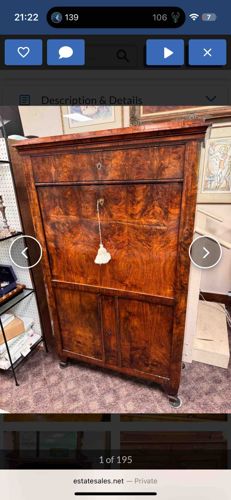
Biedermeier Walnut Burled Veneer Secretaire a Abattant
This is a substantial 19th-century Biedermeier-style secretaire a abattant, characterized by its architectural form and stunning book-matched walnut burl veneers. The piece features a drop-front (fall-front) writing surface that likely opens to reveal a fitted interior of small drawers and cubbyholes. Above the fall-front is a single frieze drawer, and below are two large cabinet doors, all showcasing highly figured, swirling grain patterns in a deep honey-to-warm-brown finish. The construction is rectilinear with a prominent overhanging cornice and a solid plinth base supported by small, possibly added, caster wheels for mobility. Each section is fitted with a central brass escutcheon, and the drop-front currently retains a key with a decorative white tassel hanging from it. The craftsmanship is evident in the seamless application of the veneers, which are the primary decorative element, as is typical for the Biedermeier period (c. 1820-1850). Condition-wise, the piece appears to be in good antique condition with a rich aged patina. There are minor visible scuffs along the base and edges, consistent with age and use. The caster feet are likely a later addition to the original design. The sheer scale and high-quality burl wood suggest a refined piece of continental European furniture, likely of German or Austrian origin.

AI-Generated Appraisal Disclaimer
Estimated Value
$4,500 - $6,500
Basic Information
Category
Antique Furniture / Case Goods
Appraised On
January 14, 2026
Estimated Value
$4,500 - $6,500
Item Description
This is a substantial 19th-century Biedermeier-style secretaire a abattant, characterized by its architectural form and stunning book-matched walnut burl veneers. The piece features a drop-front (fall-front) writing surface that likely opens to reveal a fitted interior of small drawers and cubbyholes. Above the fall-front is a single frieze drawer, and below are two large cabinet doors, all showcasing highly figured, swirling grain patterns in a deep honey-to-warm-brown finish. The construction is rectilinear with a prominent overhanging cornice and a solid plinth base supported by small, possibly added, caster wheels for mobility. Each section is fitted with a central brass escutcheon, and the drop-front currently retains a key with a decorative white tassel hanging from it. The craftsmanship is evident in the seamless application of the veneers, which are the primary decorative element, as is typical for the Biedermeier period (c. 1820-1850). Condition-wise, the piece appears to be in good antique condition with a rich aged patina. There are minor visible scuffs along the base and edges, consistent with age and use. The caster feet are likely a later addition to the original design. The sheer scale and high-quality burl wood suggest a refined piece of continental European furniture, likely of German or Austrian origin.
Related Tags
Explore similar items and categories:
Get Your Items Appraised
Instant estimates of your treasures with AI-powered instant appraisals