AI Appraisal Estimate

AI-generated estimates · not official valuations

From the user

What was submitted

Photo and notes provided by the user — not generated by AI

Submitted item photo
Submitted photo · June 10, 2026

User's notes

This can out of Otto Kahn’s mansion.

AI analysis below

AI appraisal

AI analysis & estimate

AI-Generated · Verify before acting

Everything below is generated by AI for informational purposes only. AI can make mistakes — the AI may misidentify items or misattribute them (artist, maker, brand, designer, origin, era). This is not an official valuation and should not be used for insurance, sale, tax, estate, legal, or lending purposes — or any decision requiring a certified appraisal. It is not an authoritative claim about any person, brand, or rights holder — do not share or rely on it as a factual statement about a third party. Always consult qualified professionals before making financial decisions.

Note

This analysis also relies on unverified notes provided by the user, which may be incomplete or inaccurate and could affect the result.

Read the full disclaimer

AI Identification

·Not independently authenticated·Verify before acting

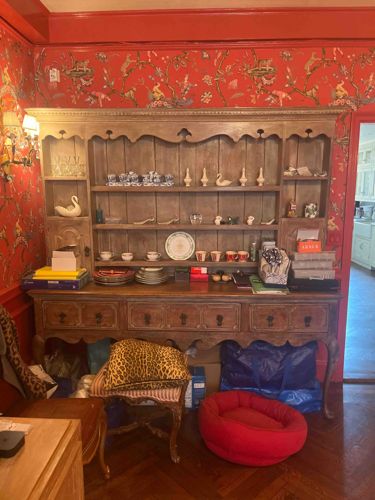
George II Style Carved Oak Welsh Dresser

Antique Furniture / Case Goods

AI Estimated Value

·Not an official valuation·Verify before acting

$4,500 - $6,500

As of June 10, 2026

AI Item Analysis

·AI can make mistakes·Verify before acting
This is a large-scale, two-part carved oak Welsh dresser or hutch, likely dating from the late 19th to early 20th century, executed in a traditional George II provincial style. The upper section features an open-shelved plate rack with a heavily molded and dentil-carved cornice above an elaborately shaped, scalloped frieze. The rack sits on a base unit featuring three large frieze drawers, each embellished with recessed panels and dual brass drop-handles. The piece is supported on four elegant cabriole legs terminating in pad feet, connected by a shaped lower apron. The wood possesses a medium-brown oak finish with a visible grain and a soft aged patina. Notably, the back of the rack consists of vertical wide-planked boards typical of higher-quality woodworking. The provenance linking it to the Otto Kahn mansion is a significant value factor, suggesting it was part of a grand scale interior design project. The construction displays high-quality joinery with robust proportions. Though in functional condition, visible surface wear consistent with age and use is present, particularly on the countertop and drawer edges. The scale suggests a custom-built or high-end commissioned piece designed for a formal dining hall or large servant's pantry.
AI Appraisal Report

·AI can make mistakes·Verify before acting
I have conducted a formal visual examination of the George II Style Carved Oak Welsh Dresser. This piece is a high-quality late 19th to early 20th-century revival work, characterized by Victorian or Edwardian craftsmanship. The wide-planked backboards and dentil-carved cornice indicate a superior build compared to mass-produced furniture of the era. The cabriole legs and pad feet are well-proportioned, though the surface wear on the countertop and drawer edges is consistent with its age and utilitarian history. The market for large-scale English-style case goods is currently stable for 'statement pieces.' While standard revival dressers typically fetch $1,500-$2,500, the association with the Otto Kahn estate significantly elevates its value. Kahn’s commissions were historically handled by top-tier decorators, often sourcing through firms like Duveen Brothers or high-end custom workshops. This provenance adds a 'pedigree' factor that appeals to collectors of Gilded Age memorabilia. However, there are limitations to this digital appraisal. I cannot verify joinery techniques (such as hand-cut dovetails or pegging), the presence of any secret repairs, or the exact age of the brass hardware without a physical inspection. To finalize this valuation, I would require a certified bill of sale or an inventory tag linking the piece directly to the Kahn mansion (Oheka Castle or his 5th Ave residence). Without verified documentation, the 'Kahn factor' remains speculative, and the value would lean toward the lower end of the estimate. A physical touch-test of the patina and an ultraviolet light examination of the finish would further confirm if the piece is an 18th-century original or a 19th-century revival.

Get your items appraised

Instant estimates of your treasures with AI-powered appraisals

Browse More Appraisals