Antique Carved Wood Damchiya (Indian Dowry Chest or Sideboard)
Antique Furniture / Case Goods

Antique Carved Wood Damchiya (Indian Dowry Chest or Sideboard)

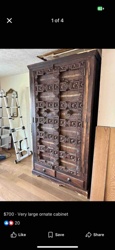
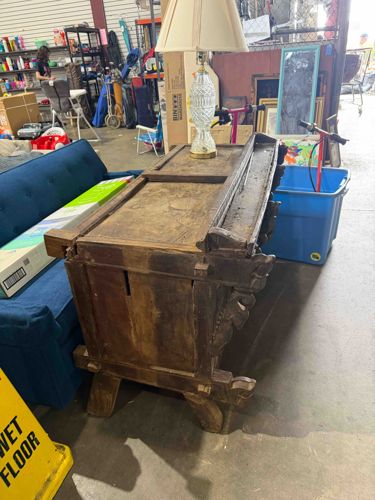
This is a large, hand-carved Damchiya, a traditional Indian dowry chest typically originating from the Gujarat or Rajasthan regions. The piece is constructed from heavy solid wood, likely teak or rosewood, following an architectural form with a flat top surface and a recessed or framed secondary ledge along the front edge. It features ornate hand-carved frontal supports and decorative structural elements, including scrolled or zoomorphic motifs on the lower front brackets. The construction utilizes traditional mortise and tenon joinery with visible protruding pegs, indicative of rustic provincial craftsmanship from the late 19th to early 20th century. The wood displays a dark, aged patina with significant evidence of historical use; visible condition issues include heavy surface wear, staining on the top panel, various scuffs, and areas of dry-rot or wood loss at the base of the legs. Some components show minor splitting consistent with climate changes. Despite the wear, the piece retains its structural integrity and showcases intricate folk-art carving that distinguishes it as an authentic piece of Indian vernacular furniture rather than a modern reproduction.
Estimated Value

$1,400 - $1,800

Basic Information

Category

Antique Furniture / Case Goods

Appraised On

January 9, 2026

Estimated Value

$1,400 - $1,800

Item Description

This is a large, hand-carved Damchiya, a traditional Indian dowry chest typically originating from the Gujarat or Rajasthan regions. The piece is constructed from heavy solid wood, likely teak or rosewood, following an architectural form with a flat top surface and a recessed or framed secondary ledge along the front edge. It features ornate hand-carved frontal supports and decorative structural elements, including scrolled or zoomorphic motifs on the lower front brackets. The construction utilizes traditional mortise and tenon joinery with visible protruding pegs, indicative of rustic provincial craftsmanship from the late 19th to early 20th century. The wood displays a dark, aged patina with significant evidence of historical use; visible condition issues include heavy surface wear, staining on the top panel, various scuffs, and areas of dry-rot or wood loss at the base of the legs. Some components show minor splitting consistent with climate changes. Despite the wear, the piece retains its structural integrity and showcases intricate folk-art carving that distinguishes it as an authentic piece of Indian vernacular furniture rather than a modern reproduction.
Get Your Items Appraised

Instant estimates of your treasures with AI-powered instant appraisals

Browse More Appraisals