American Antique Walnut Corner Cupboard
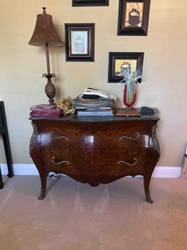
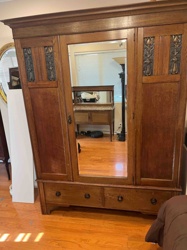
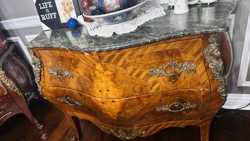
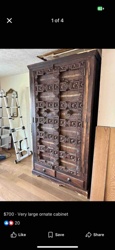
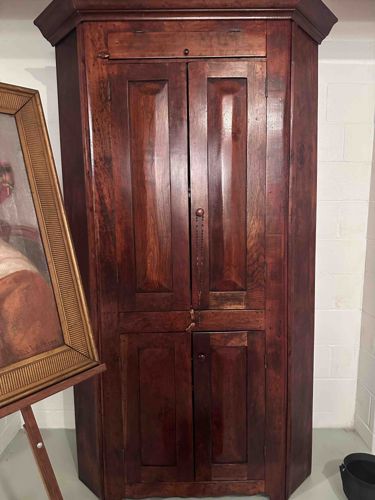
This is a large, floor-standing corner cupboard, likely of American origin dating to the early-to-mid 19th century. The piece is constructed primarily of walnut with a rich, dark patina and a semi-gloss finish. It features a two-part construction: a tall upper section with two long cupboard doors and a shorter lower section with matching doors. The doors are designed with recessed panels that exhibit beveling, common in Federal or late Georgian styles. The cupboard is crowned with a prominent, multi-stepped cove-style cornice. Above the upper doors is a small horizontal blind header panel. The hardware appears minimal, with simple wooden pull knobs and traditional butt hinges. The base features a subtle scalloped or wavy apron. Condition-wise, the piece shows age-appropriate wear including minor surface scratches, some localized wood loss on the lower-left door panel edge, and a visible horizontal line where the two sections meet. The rich grain of the walnut is a hallmark of high-quality vernacular craftsmanship from the 1800s. There are no immediate visible maker's marks, which is typical for furniture of this period crafted by local cabinetmakers.
AI-Generated Appraisal Disclaimer
Estimated Value
$2,200 - $3,500
Basic Information
Category
Antique Furniture / Case Goods
Appraised On
March 17, 2026
Estimated Value
$2,200 - $3,500
Item Description
This is a large, floor-standing corner cupboard, likely of American origin dating to the early-to-mid 19th century. The piece is constructed primarily of walnut with a rich, dark patina and a semi-gloss finish. It features a two-part construction: a tall upper section with two long cupboard doors and a shorter lower section with matching doors. The doors are designed with recessed panels that exhibit beveling, common in Federal or late Georgian styles. The cupboard is crowned with a prominent, multi-stepped cove-style cornice. Above the upper doors is a small horizontal blind header panel. The hardware appears minimal, with simple wooden pull knobs and traditional butt hinges. The base features a subtle scalloped or wavy apron. Condition-wise, the piece shows age-appropriate wear including minor surface scratches, some localized wood loss on the lower-left door panel edge, and a visible horizontal line where the two sections meet. The rich grain of the walnut is a hallmark of high-quality vernacular craftsmanship from the 1800s. There are no immediate visible maker's marks, which is typical for furniture of this period crafted by local cabinetmakers.
Related Tags
Get Your Items Appraised
Instant estimates of your treasures with AI-powered instant appraisals