AI Appraisal Estimate

AI-generated estimates · not official valuations

From the user

What was submitted

Photo and notes provided by the user — not generated by AI

Submitted item photo
Submitted photo · May 17, 2026

User's notes

No additional notes provided.

AI analysis below

AI appraisal

AI analysis & estimate

AI-Generated · Verify before acting

Everything below is generated by AI for informational purposes only. AI can make mistakes — the AI may misidentify items or misattribute them (artist, maker, brand, designer, origin, era). This is not an official valuation and should not be used for insurance, sale, tax, estate, legal, or lending purposes — or any decision requiring a certified appraisal. It is not an authoritative claim about any person, brand, or rights holder — do not share or rely on it as a factual statement about a third party. Always consult qualified professionals before making financial decisions.

Read the full disclaimer

AI Identification

·Not independently authenticated·Verify before acting

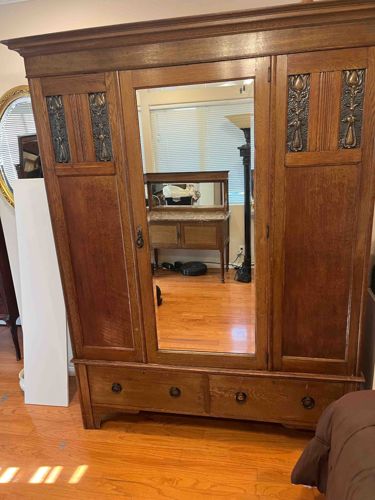
Edwardian Arts and Crafts Style Oak Compendium Wardrobe

Antique Furniture / Case Goods

AI Estimated Value

·Not an official valuation·Verify before acting

$1,400 - $1,800

As of May 17, 2026

AI Item Analysis

·AI can make mistakes·Verify before acting
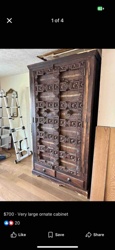
This is a substantial antique wardrobe, appearing to date from the early 20th century (circa 1900-1915), showcasing strong Edwardian Arts and Crafts design influences. The piece is constructed from oak with a visible prominent grain, featuring a medium honey-to-nut-brown finish. The architectural structure consists of a protruding molded cornice atop a triple-bay configuration. The central door is fitted with a large beveled mirror plate that reflects the surrounding room. Flanking the mirror are two solid wood panels, each uniquely accented with decorative Art Nouveau-inspired copper or patinated metal repoussé inserts depicting stylized botanical tulip motifs. The bottom section comprises two wide, full-width drawers with circular drop-ring hardware. The construction indicates high-quality cabinet making, typical of the English Arts and Crafts movement, emphasizing verticality and functional form. Condition-wise, the piece appears well-preserved with a natural aged patina and minor surface scuffing near the base and corners. There is some slight darkening of the metalwork, which is desirable in period furniture. The silvering on the mirror appears clear with no significant desilvering visible in the primary central area. This type of furniture, often referred to as a compendium wardrobe, was designed as a comprehensive storage solution for clothing and linens in a master bedroom.
AI Appraisal Report

·AI can make mistakes·Verify before acting
I have virtually examined this Edwardian Arts and Crafts oak compendium wardrobe, circa 1905. The piece is a quintessential example of English production from the turn of the century, demonstrating high-quality joinery and characteristic oak graining. The aesthetic value is significantly enhanced by the twin copper repoussé panels featuring stylized Art Nouveau botanical motifs, which appear to be original and retain a desirable aged patina. The construction—featuring a beveled mirror, solid oak panels, and circular drop-ring hardware—is consistent with the regional styles of the period. The condition appears excellent for its age; while minor scuffing is present near the base, the silvering of the mirror remains intact, and the timber shows no signs of major splitting or structural failure. Market demand for Arts and Crafts furniture remains steady, particularly for 'compendium' units that offer functional storage. Comparables for similar oak wardrobes with decorative metalwork typically achieve between $1,200 and $2,000 at specialized antique auctions. Factors limiting value include the inherent bulk of the item, which affects transportability, and the lack of a prominent maker's mark (such as Liberty & Co or Shapland & Petter). Please note that this appraisal is based on photographic evidence. For definitive authentication, I would require an in-person inspection to examine the drawer joinery (hand-cut vs. machine-cut dovetails), the underside of the carcass for maker stamps, and the backboard construction. Verification of provenance or original sales documentation would be necessary to elevate this piece into a higher 'designer-attributed' valuation tier.

Get your items appraised

Instant estimates of your treasures with AI-powered appraisals

Browse More Appraisals