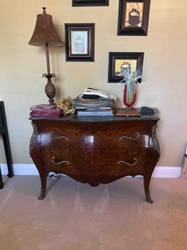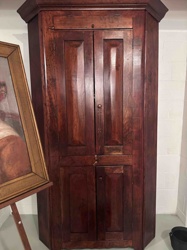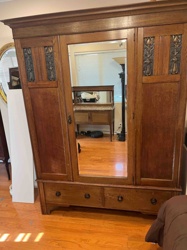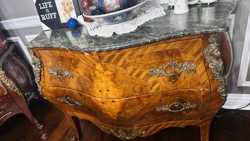
Antique Indian Haveli Style Carved Wood Armoire
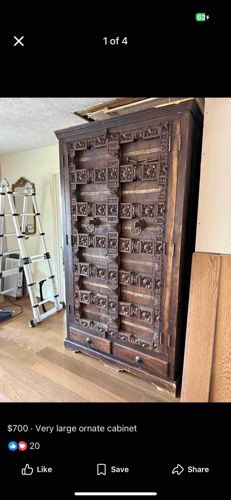
This is a large, tall freestanding armoire or cabinet, likely of Indian origin, inspired by traditional Haveli architectural elements. The piece is constructed from a dark-stained solid hardwood, potentially teak or sheesham, common in South Asian furniture. The most striking feature is the two full-length doors, which are heavily embellished with intricate hand-carved floral and geometric rosettes arranged in a grid pattern. These doors include heavy metal hardware, specifically circular iron pull rings and decorative iron banding or strapping, giving it a rustic, fortified appearance. Below the main compartment are two side-by-side drawers with simple knob pulls. The cabinet sits on a slightly flared plinth base. In terms of condition, there is visible surface wear consistent with age, including some scuffing and minor wood loss near the base and edges. The patina is deep and dark, though some areas show unevenness in the finish. The style suggests a late 19th to early 20th-century aesthetic, common in colonial-era or regional Indian craftsmanship. The scale is substantial, likely exceeding six feet in height, making it a focal point piece. The craftsmanship shows high-relief carving and traditional joinery techniques, characteristic of items made for grand residences or export during the British Raj period.
AI-Generated Appraisal Disclaimer
Estimated Value
$2,200 - $3,500
Basic Information
Category
Antique Furniture / Case Goods
Appraised On
January 10, 2026
Estimated Value
$2,200 - $3,500
Item Description
This is a large, tall freestanding armoire or cabinet, likely of Indian origin, inspired by traditional Haveli architectural elements. The piece is constructed from a dark-stained solid hardwood, potentially teak or sheesham, common in South Asian furniture. The most striking feature is the two full-length doors, which are heavily embellished with intricate hand-carved floral and geometric rosettes arranged in a grid pattern. These doors include heavy metal hardware, specifically circular iron pull rings and decorative iron banding or strapping, giving it a rustic, fortified appearance. Below the main compartment are two side-by-side drawers with simple knob pulls. The cabinet sits on a slightly flared plinth base. In terms of condition, there is visible surface wear consistent with age, including some scuffing and minor wood loss near the base and edges. The patina is deep and dark, though some areas show unevenness in the finish. The style suggests a late 19th to early 20th-century aesthetic, common in colonial-era or regional Indian craftsmanship. The scale is substantial, likely exceeding six feet in height, making it a focal point piece. The craftsmanship shows high-relief carving and traditional joinery techniques, characteristic of items made for grand residences or export during the British Raj period.
Related Tags
Get Your Items Appraised
Instant estimates of your treasures with AI-powered instant appraisals