AI estimate as of October 24, 2025 · verify with a professional before acting
AI-Generated · Verify before acting
Everything on this page is generated by AI for informational purposes only. AI can make mistakes — the AI may misidentify items or misattribute them (artist, maker, brand, designer, origin, era). This is not an official valuation and should not be used for insurance, sale, tax, estate, legal, or lending purposes — or any decision requiring a certified appraisal. It is not an authoritative claim about any person, brand, or rights holder — do not share or rely on it as a factual statement about a third party. Always consult qualified professionals before making financial decisions.
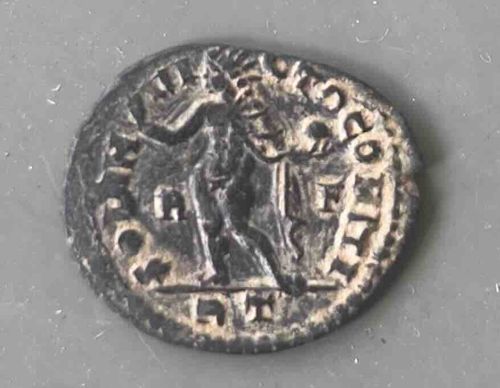
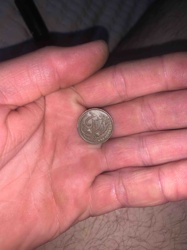
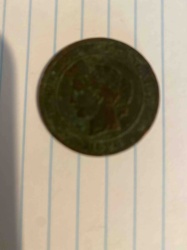
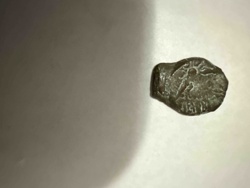
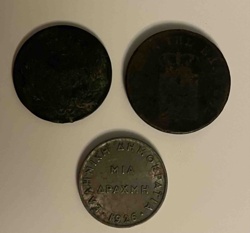
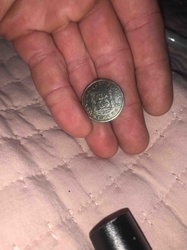
This item is an ancient Roman bronze or copper alloy follis coin, likely from the Tetrarchy period, depicting a figure on the reverse. The coin exhibits a generally circular but irregular shape, typical of ancient hand-struck coinage, with a diameter that appears to be around 20-25mm, though precise measurements are not available from the image. The metal shows a dark, possibly greenish-brown patina, consistent with age and environmental exposure over centuries, suggesting it has not been aggressively cleaned. The relief of the figures and legends is somewhat worn but still discernible, indicating a state of 'Fine' to 'Very Fine' condition for its age. On the reverse, a standing figure, possibly Hercules or another deity/personification, is depicted, holding an object in their left hand and possibly another in their right. Surrounding this figure are partial inscriptions in Latin capital letters. Visible letters include segments such as 'C O H E' or similar on the right side and 'G A' or 'A T' near the bottom. These fragmented legends are crucial for specific identification, often referring to the emperor, mint mark, or allegorical theme. The overall craftsmanship, while robust, shows the characteristic lack of perfect geometric symmetry inherent in ancient numismatics, which contributes to its authenticity and historical charm. The edges appear worn and somewhat uneven, and there are no clear manufacturing defects visible other than the expected wear.
AI Appraisal Report
I have examined the provided image of this Ancient Roman AE Follis Coin (Maximian Herculius). Based on the visual evidence, I assess its condition to be 'Fine' to 'Very Fine' for a coin of this age, consistent with typical wear on ancient hand-struck coinage. The dark, greenish-brown patina appears stable and authentic, indicating it has not been over-cleaned. The general circular but irregular shape and somewhat worn relief are characteristic of genuine antique Roman issues. The visible elements on the reverse, a standing figure with partial Latin inscriptions, align with known types for Maximian Herculius folles, particularly those depicting Hercules.
In terms of market conditions, ancient Roman bronze folles, while historically significant, are generally quite common. Comparables for Maximian folles in similar 'Fine' to 'Very Fine' condition, with readable but not crystal-clear details and fragmented legends, typically trade in the $40-$80 range. The specific iconography and legible portions of the reverse legend ('C O H E' or similar, 'G A' or 'A T') are important for precise identification of the reverse type and mint, which can slightly influence value within this range. However, without a clear mint mark or a more complete legend, it is difficult to identify a particularly rare variant. Demand for such common types is steady among collectors of ancient bronze coinage.
Factors impacting this value include the overall state of preservation of the patina and the clarity of the remaining details. A significantly clearer legend or a rarer reverse type would increase its value.
It is crucial to note the limitations of authenticating from images alone. While everything visible is consistent with authenticity, a definitive verification requires physical examination to assess weight, thickness, edge characteristics, and specific metallurgic properties. Furthermore, provenance documentation would provide additional assurance. Scientific testing, such as XRF analysis, could confirm metallic composition, while a thorough in-hand inspection by a numismatist would verify manufacturing techniques and micro-details not apparent in photographs.