AI estimate as of September 21, 2025 · verify with a professional before acting
AI-Generated · Verify before acting
Everything on this page is generated by AI for informational purposes only. AI can make mistakes — the AI may misidentify items or misattribute them (artist, maker, brand, designer, origin, era). This is not an official valuation and should not be used for insurance, sale, tax, estate, legal, or lending purposes — or any decision requiring a certified appraisal. It is not an authoritative claim about any person, brand, or rights holder — do not share or rely on it as a factual statement about a third party. Always consult qualified professionals before making financial decisions.
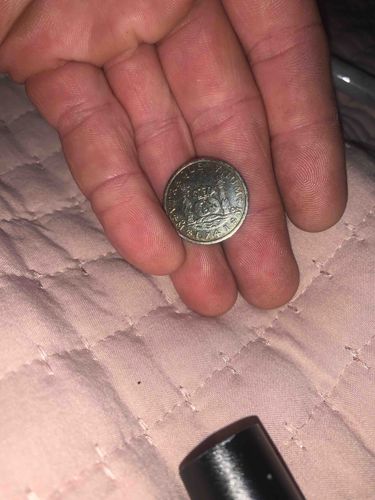
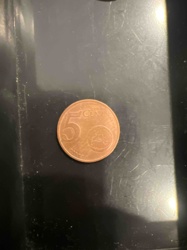
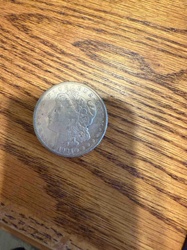
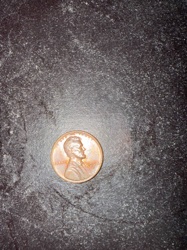
The item is a silver-colored metallic coin, approximately the size of a standard circulating coin, held in the palm of a hand. The coin features what appears to be the Coat of Arms of Ethiopia on its obverse side, prominently displaying a crowned lion walking left, holding a cross flag staff. Around the central image, there is an inscription in Ge'ez script, which is partially visible but difficult to fully decipher due to the image resolution and angle. Below the lion, the word "ETHIOPIA" is discernible in Latin script, further confirming its origin. The coin exhibits some visible wear consistent with circulation, including minor scratches and dulling of the metallic luster, suggesting a used or circulated condition rather than pristine. The edges appear reeded based on subtle light reflections, a common feature for security and ease of handling. The precise denomination or year is not clearly visible from the provided images, but the design is indicative of Ethiopian currency from the mid to late 20th century. The quality of the strike appears fine for a circulating coin, with legible details where visible. No prominent damage, such as bends or significant gouges, is apparent, only general surface wear. The exact material composition cannot be determined with certainty from visual inspection alone but is likely a base metal alloy common for coinage of its estimated era.
AI Appraisal Report
I have visually examined the provided image of what appears to be an Ethiopian Birr coin. Based on the iconography, specifically the crowned lion holding the cross flag staff and the visible “ETHIOPIA” inscription in Latin script, this coin is consistent with Ethiopian coinage, likely from the mid to late 20th century. The silver-colored metallic appearance suggests it could be a base metal alloy such as a nickel-brass or copper-nickel, common for circulating coinage of that period.
The condition appears to be 'Fine' to 'Very Fine' (F-VF) based on the visible wear, including minor scratches and dulling of luster, consistent with extended circulation. Details of the Ge'ez script are partially obscured, and the precise denomination and year are not discernible, which are crucial for exact identification and valuation. The edges appear reeded, which is standard for security and handling. There are no signs of significant damage like bends or gouges, only general surface wear.
Market conditions for common circulating Ethiopian coins from this era generally see modest values. Demand is primarily from world coin collectors. Rarity is low for most definitive issues of this type unless it's a key date or error variety, which cannot be determined from the image. Comparables for similar circulated Ethiopian Birr or cents from the mid to late 20th century typically range from a few dollars to twenty dollars, depending on the specific year, denomination, and actual grade.
Significantly impacting the value is the indeterminate year and denomination. Without these, pinpointing a specific catalog value is impossible. While I can authenticate the coin as being of Ethiopian origin based on visual cues, full authentication, including specific denomination, year, and precise metal composition, requires in-person examination. A physical inspection would allow for accurate measurement, weight determination, detailed examination of inscriptions and mint marks, and potentially spectroscopic analysis to confirm metal content. Provenance documentation could also support its history, though typically not necessary for common circulating coins.