AI Item Analysis
·AI can make mistakes·Verify before actingFrom the user
What was submitted
Photo and notes provided by the user — not generated by AI

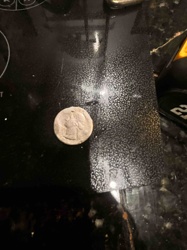
Submitted photo · May 15, 2026
User's notes
No additional notes provided.
AI analysis below
AI appraisal
AI analysis & estimate
AI-Generated · Verify before acting
Everything below is generated by AI for informational purposes only. The AI may misidentify items or misattribute them (artist, maker, brand, designer, origin, era). This is not an official valuation and is not an authoritative claim about any person, brand, or rights holder — do not share or rely on it as a factual statement about a third party. Always consult qualified professionals before making financial decisions.
AI Identification
·Not independently authenticated·Verify before actingAncient Roman Silver Denarius of the Republic Style
Numismatics / Ancient CoinsAI Estimated Value
·Not an official valuation·Verify before acting$5 - $15
As of May 15, 2026
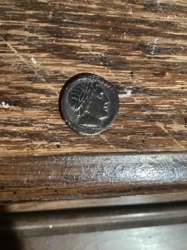
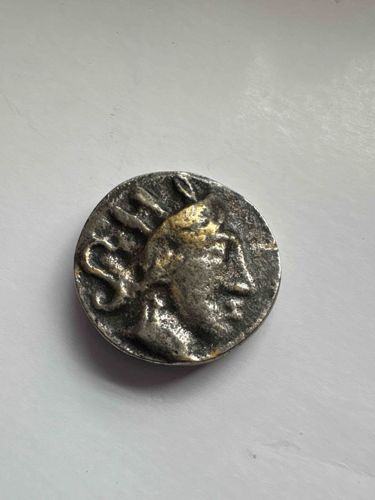
This item is a small, circular coin-like object appearing to be a Roman Republican denarius or a modern reproduction. The obverse features a relief of a profile head facing right, wearing a radiate crown or possibly a winged helmet representative of Roma. The material appears to be a silver-toned base metal or low-grade silver alloy, displaying a heavy dark grey patina consistent with oxidation. The strike is somewhat off-center and features crude, rounded edges. The surface exhibits significant pitting and granular texture, which could indicate casting rather than striking if it is a reproduction, or severe environmental corrosion if authentic. There is visible wear on the high points of the relief, such as the cheekbone and crown, where a lighter, yellowish metallic substrate (possibly brass or bronze) is beginning to show through, suggesting this may be a plated replica rather than solid silver. The lack of sharp detail in the hair and peripheral lettering further indicates significant wear or a soft strike. While it captures the aesthetic of the 2nd to 1st century BCE Roman coinage, the porous surface and visible base metal are key factors for further scientific testing to determine authenticity.
AI Appraisal Report
·AI can make mistakes·Verify before actingBased on a visual inspection of the provided image, I have examined this Roman Republican style denarius. My primary finding is that the item appears to be a modern base-metal reproduction or a contemporary counterfeit rather than a genuine ancient silver issue. The most significant red flag is the 'bleeding' of a yellowish base metal through the silver-colored surface on high-relief areas like the cheek and crown. Genuine Roman denarii were struck from solid silver; the presence of an underlying brass or bronze substrate indicates a plated surface consistent with a tourist souvenir or a modern cast replica. Furthermore, the granular surface texture and soft, rounded edges suggest a casting process rather than the sharp strike of an ancient die. From a market perspective, authentic silver denarii from the Republic era generally command between $100 and $600 depending on the magistrate and condition. However, as this appears to be a replica, its value is purely decorative or educational. Factors negatively impacting the value include the visible wear revealing base metal, the off-center strike that obscures potential legends, and the porous 'pitted' surface. Limitations: While visual indicators strongly suggest a non-authentic origin, a definitive verdict requires physical testing. I would recommend a specific gravity test to determine metal density and a microscopic edge inspection to look for casting seams. Without a provenance history or a professional grading (NGC/PCGS), this item cannot be marketed as a genuine antiquity.
Get your items appraised
Instant estimates of your treasures with AI-powered appraisals