Human Gallstone (Calculus)
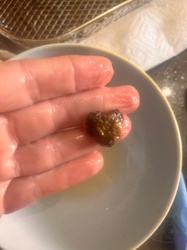
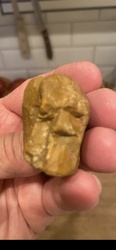
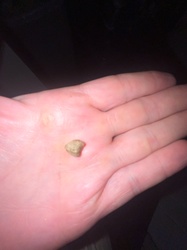
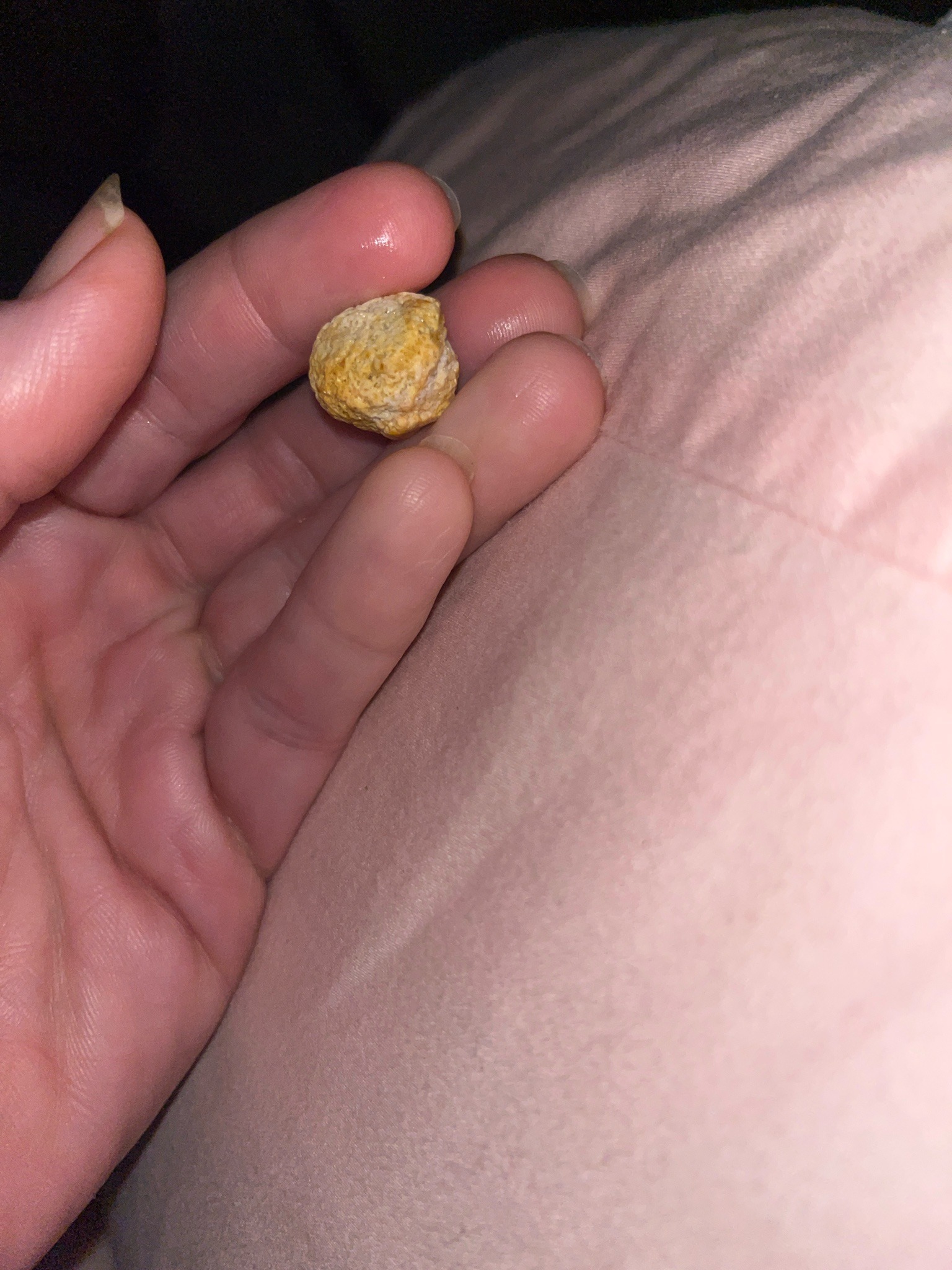
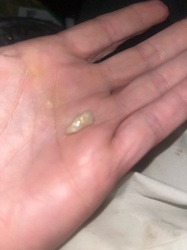
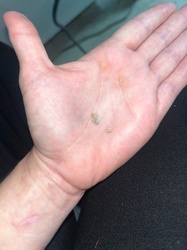
This specimen is a small, roughly spherical to ovoid object approximately 1 to 1.5 centimeters in diameter. It displays a highly textured, irregular surface that is characteristic of a 'mulberry' morphology often seen in human gallstones. The color is predominantly a medium to light yellow-ochre with creamy-white undertones, suggesting a high cholesterol content or a mixed composition of cholesterol and calcium salts. The exterior is craggy and multifaceted with no visible industrial markings, signatures, or synthetic finishing, establishing it as a biological formation rather than a man-made object. Its condition appears stable, though the surface shows typical crystalline fragility and microscopic pitting. There are no signs of external repair, though the natural discoloration (patina) is consistent with chemical exposure within the gallbladder. The craftsmanship is entirely natural, dictated by crystallographic growth patterns. This specimen likely dates from the contemporary period, as it is being held by a hand. Its unique value lies in its biological origin, serving as a physical manifestation of a common medical condition, and its specific color profile indicates the chemical environment in which it was formed.
AI-Generated Appraisal Disclaimer
Estimated Value
$45 - $85
Basic Information
Category
Biological Specimens / Medical Curiosities
Appraised On
April 15, 2026
Estimated Value
$45 - $85
Item Description
This specimen is a small, roughly spherical to ovoid object approximately 1 to 1.5 centimeters in diameter. It displays a highly textured, irregular surface that is characteristic of a 'mulberry' morphology often seen in human gallstones. The color is predominantly a medium to light yellow-ochre with creamy-white undertones, suggesting a high cholesterol content or a mixed composition of cholesterol and calcium salts. The exterior is craggy and multifaceted with no visible industrial markings, signatures, or synthetic finishing, establishing it as a biological formation rather than a man-made object. Its condition appears stable, though the surface shows typical crystalline fragility and microscopic pitting. There are no signs of external repair, though the natural discoloration (patina) is consistent with chemical exposure within the gallbladder. The craftsmanship is entirely natural, dictated by crystallographic growth patterns. This specimen likely dates from the contemporary period, as it is being held by a hand. Its unique value lies in its biological origin, serving as a physical manifestation of a common medical condition, and its specific color profile indicates the chemical environment in which it was formed.
Related Tags
Get Your Items Appraised
Instant estimates of your treasures with AI-powered instant appraisals