Cholelith (Gallstone)
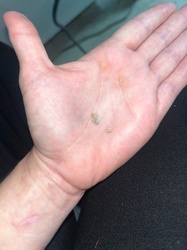
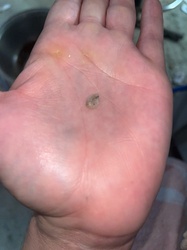
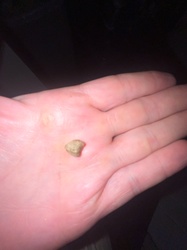
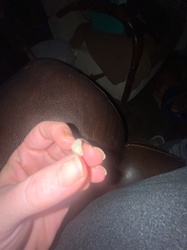
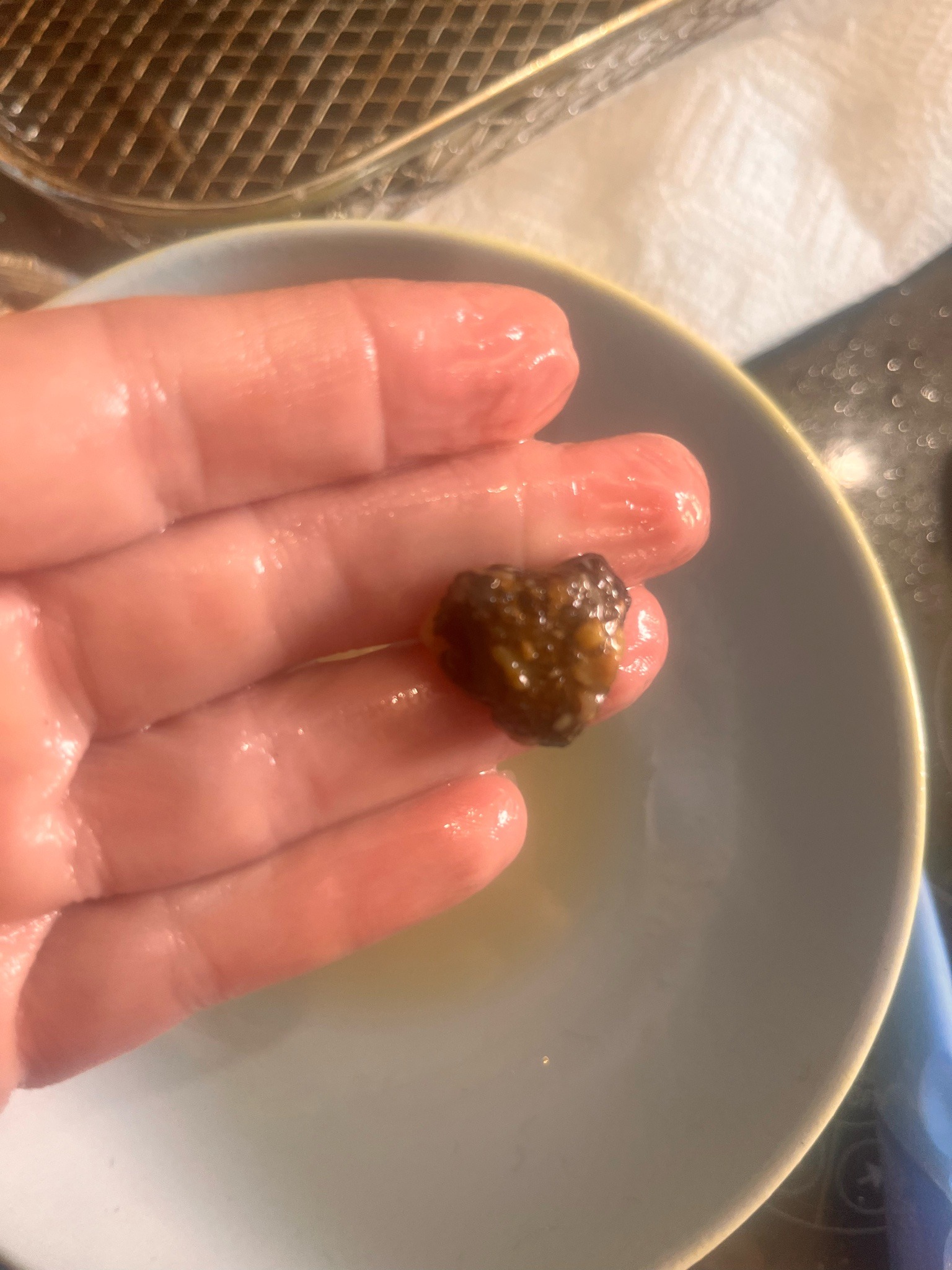
This item is a biological specimen, specifically a large gallstone (cholelith) recently passed or surgically removed. Measuring approximately 1 to 1.5 centimeters in width, it exhibits a distinct 'mulberry' or faceted shape common to mixed-composition biliary calculi. The color palette is dominated by dark brown and umber tones, likely due to bilirubin pigmentation, with visible lighter yellowish-tan crystalline inclusions suggesting a high cholesterol content mixed with calcium salts. The surface texture is notably irregular and mammillated, appearing wet or glossy in the photograph, which highlights its lumpy, polycrystalline construction. There is no evidence of artificial manufacturing or craftsmanship; rather, the specimen shows the natural, slow accretion of mineral and organic matter typical of biological development over months or years. The condition appears intact with no signs of fragmentation or shattering, which often occurs during mechanical extraction. This specimen serves as an organic example of pathological mineralization within the human gallbladder.
AI-Generated Appraisal Disclaimer
Estimated Value
$40-$85
Basic Information
Category
Biological Specimens / Medical Pathology
Appraised On
April 30, 2026
Estimated Value
$40-$85
Item Description
This item is a biological specimen, specifically a large gallstone (cholelith) recently passed or surgically removed. Measuring approximately 1 to 1.5 centimeters in width, it exhibits a distinct 'mulberry' or faceted shape common to mixed-composition biliary calculi. The color palette is dominated by dark brown and umber tones, likely due to bilirubin pigmentation, with visible lighter yellowish-tan crystalline inclusions suggesting a high cholesterol content mixed with calcium salts. The surface texture is notably irregular and mammillated, appearing wet or glossy in the photograph, which highlights its lumpy, polycrystalline construction. There is no evidence of artificial manufacturing or craftsmanship; rather, the specimen shows the natural, slow accretion of mineral and organic matter typical of biological development over months or years. The condition appears intact with no signs of fragmentation or shattering, which often occurs during mechanical extraction. This specimen serves as an organic example of pathological mineralization within the human gallbladder.
Related Tags
Explore similar items and categories:
Get Your Items Appraised
Instant estimates of your treasures with AI-powered instant appraisals