AI identification & appraisal estimate

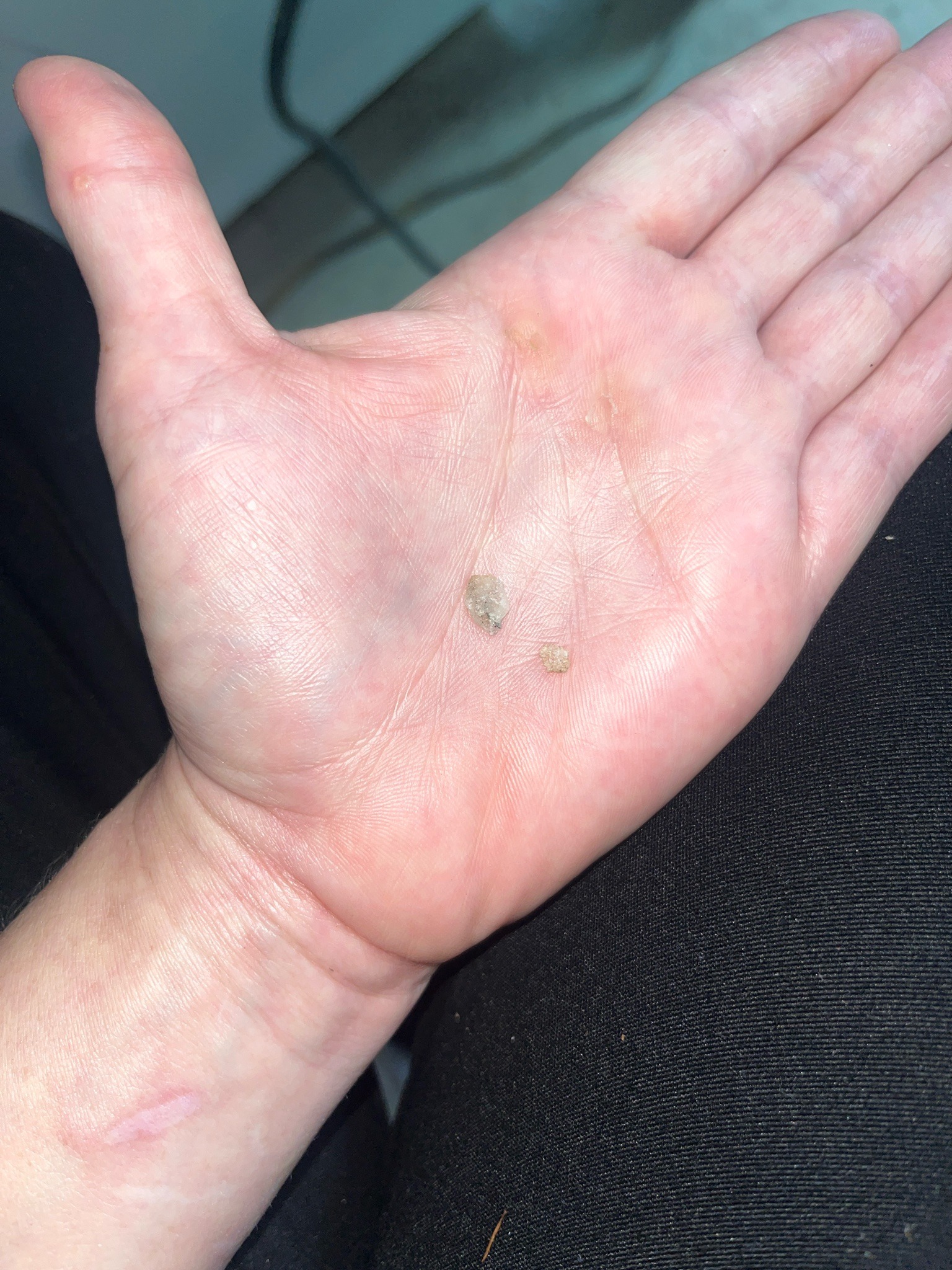
Small mineral fragments reminiscent of kidney stones

This name is the AI's identification of the item — it may be incorrect.

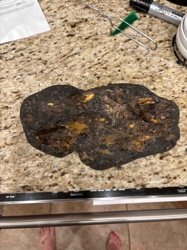
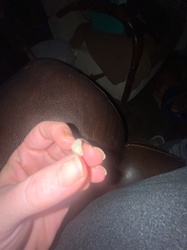
Submitted photo of Small mineral fragments reminiscent of kidney stones
Photo submitted by the user — not generated by AI

AI Estimated Value

Not an official valuation

$5 - $25

AI estimate as of June 4, 2026 · verify with a professional before acting

AI-Generated · Verify before acting

Everything on this page is generated by AI for informational purposes only. AI can make mistakes — the AI may misidentify items or misattribute them (artist, maker, brand, designer, origin, era). This is not an official valuation and should not be used for insurance, sale, tax, estate, legal, or lending purposes — or any decision requiring a certified appraisal. It is not an authoritative claim about any person, brand, or rights holder — do not share or rely on it as a factual statement about a third party. Always consult qualified professionals before making financial decisions.

Read the full disclaimer

AI Item Analysis

AI can make mistakes
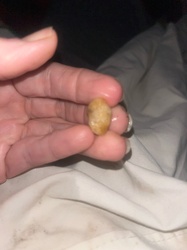
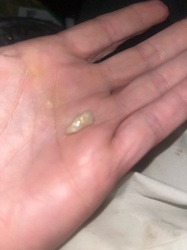
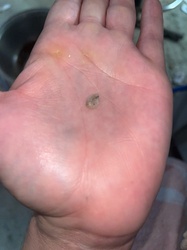
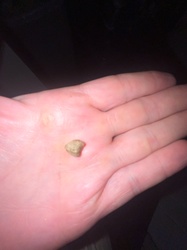
This image displays two small, irregularly shaped mineral fragments resting in the palm of a person's hand. The larger fragment appears to be approximately 3 to 5 millimeters in length, featuring an off-white to yellowish-brown coloration with a rough, crystalline surface texture. The smaller fragment is roughly half that size and displays a similar granular appearance. Based on their size, color, and crystalline structure, these objects appear consistent with urolithiasis, commonly known as kidney stones (calculi). However, because these are biological or mineral specimens without labels or specific provenance visible in the image, this identification is a hypothesis and would require a chemical analysis (such as infrared spectroscopy) for verification. The fragments show no obvious signs of post-extraction cleaning or processing and maintain a naturally occurring, jagged morphology. There are no maker's marks or identifying stamps as these are naturally formed objects. The hand holding the objects provides a scale reference, indicating the tiny, pebble-like nature of the specimens.
AI Appraisal Report

AI can make mistakes
I have examined the image provided, which features two small, irregularly shaped fragments that bear a physical appearance consistent with urolithiasis, or kidney stones. Based on what I can see, the off-white to yellowish-brown coloration and granular, crystalline morphology are characteristic of mineral deposits typically found in biological specimens. However, I cannot verify the chemical composition or organic origin from a photo alone; such an identification would require scientific testing, such as infrared spectroscopy, to differentiate these from common terrestrial minerals or synthetic gravel. The value estimate is based on the assumption that these are indeed biological specimens. There is a very niche market for medical oddities among collectors of 'curiosities'; however, specimens lacking documented clinical provenance, historical significance (such as belonging to a notable figure), or exceptional size generally command very little monetary value. In the general market for such items, they are often sold as novelty specimens within the $5 to $25 range. If these are found to be simple pebble fragments rather than biological calculi, they would hold negligible or no financial value. Conversely, if they were accompanied by verifiable documentation of a unique medical case, the interest from specialized collectors might increase slightly. Physical inspection and laboratory analysis are necessary to establish the exact nature of the material. Given the naturally occurring and common nature of such fragments, the market remains highly limited and demand is low.

Keep exploring

More mineral and biological specimens appraisals

Get your items appraised

Instant AI-powered appraisal estimates — a starting point, not an official valuation

Browse More Appraisals