Raccoon Baculum (Oosik)
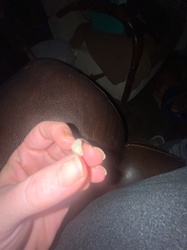
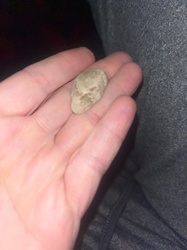
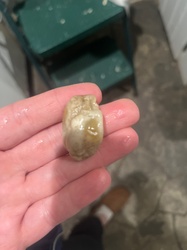
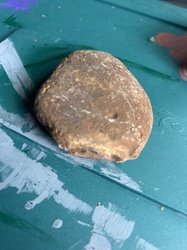
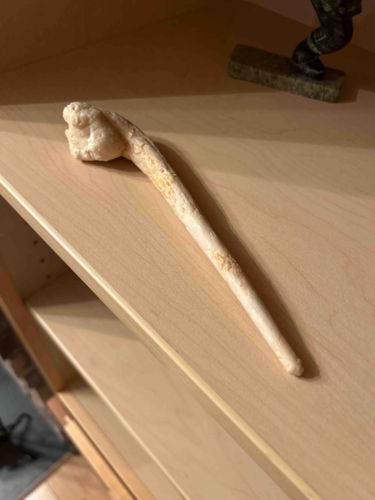
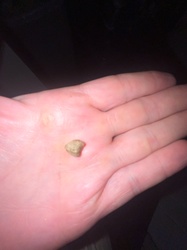
This item is a biological specimen known as a baculum, or penis bone, likely originating from a North American raccoon (Procyon lotor). Measuring approximately 4 to 5 inches in length, the bone exhibits a distinctively curved, slender shaft that tapers toward a slightly bulbous distal end. The proximal end features a more pronounced, rounded, and textured head. The material is natural bone, characterized by its off-white to cream coloration with visible yellowing and localized brownish staining, which is typical of aged biological remains that have not been professionally bleached or chemically treated. The surface texture is somewhat porous and uneven, particularly near the base, indicating the natural ossification process. No artificial markings, engravings, or maker's signatures are present, as it is a natural anatomical element. The condition appears stable, though it shows organic patina and minor surface dehydration consistent with an older specimen. Such items have been historically used as folk charms or decorative oddities, often referred to in certain contexts as 'coon bones.' Its lack of carving suggests it is a raw natural history collectible rather than a piece of scrimshaw.
AI-Generated Appraisal Disclaimer
Estimated Value
$15 - $35
Basic Information
Category
Biological Specimens / Natural History
Appraised On
February 11, 2026
Estimated Value
$15 - $35
Item Description
This item is a biological specimen known as a baculum, or penis bone, likely originating from a North American raccoon (Procyon lotor). Measuring approximately 4 to 5 inches in length, the bone exhibits a distinctively curved, slender shaft that tapers toward a slightly bulbous distal end. The proximal end features a more pronounced, rounded, and textured head. The material is natural bone, characterized by its off-white to cream coloration with visible yellowing and localized brownish staining, which is typical of aged biological remains that have not been professionally bleached or chemically treated. The surface texture is somewhat porous and uneven, particularly near the base, indicating the natural ossification process. No artificial markings, engravings, or maker's signatures are present, as it is a natural anatomical element. The condition appears stable, though it shows organic patina and minor surface dehydration consistent with an older specimen. Such items have been historically used as folk charms or decorative oddities, often referred to in certain contexts as 'coon bones.' Its lack of carving suggests it is a raw natural history collectible rather than a piece of scrimshaw.
Related Tags
Explore similar items and categories:
Get Your Items Appraised
Instant estimates of your treasures with AI-powered instant appraisals