AI Appraisal Estimate

AI-generated estimates · not official valuations

From the user

What was submitted

Photo and notes provided by the user — not generated by AI

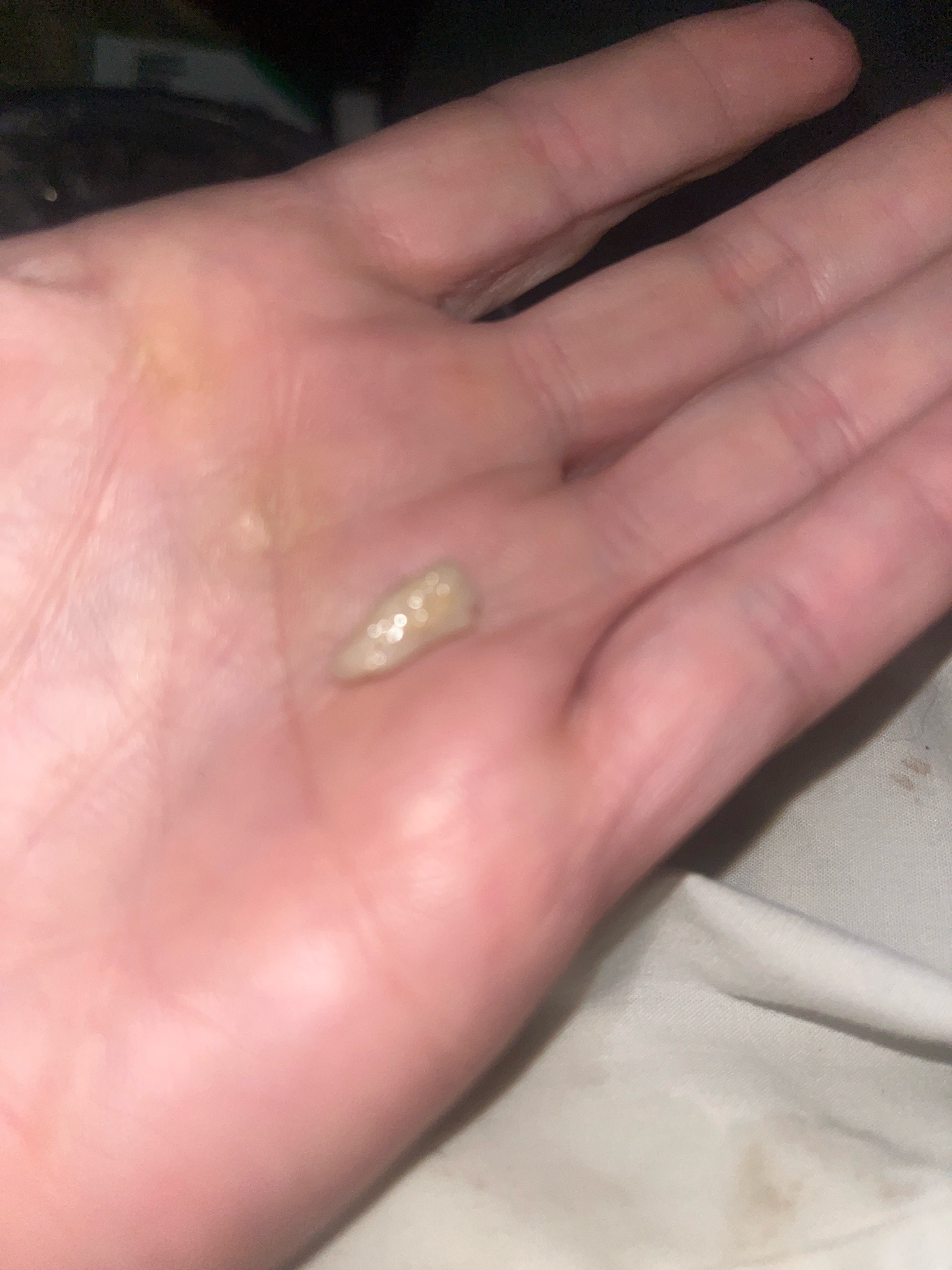
Submitted item photo
Submitted photo · June 12, 2026

User's notes

No additional notes provided.

AI analysis below

AI appraisal

AI analysis & estimate

AI-Generated · Verify before acting

Everything below is generated by AI for informational purposes only. AI can make mistakes — the AI may misidentify items or misattribute them (artist, maker, brand, designer, origin, era). This is not an official valuation and should not be used for insurance, sale, tax, estate, legal, or lending purposes — or any decision requiring a certified appraisal. It is not an authoritative claim about any person, brand, or rights holder — do not share or rely on it as a factual statement about a third party. Always consult qualified professionals before making financial decisions.

Read the full disclaimer

AI Identification

·Not independently authenticated·Verify before acting

Biological specimen consistent with a salivary or tonsil stone

Biological Specimens

AI Estimated Value

·Not an official valuation·Verify before acting

$0.00

As of June 12, 2026

AI Item Analysis

·AI can make mistakes·Verify before acting
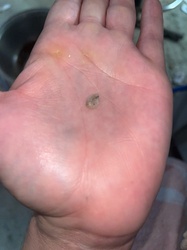
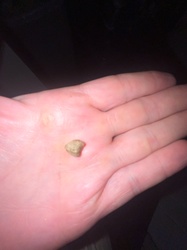
The image displays a small, elongated biological specimen resting in the center of a human palm. The object is approximately 10-15mm in length, appearing semi-opaque with a pale, yellowish-white coloration. Its surface texture appears irregular and slightly glossy, consistent with moist biological phlegm, mucus, or a calcified deposit. Stylistically, the specimen is consistent with several biological possibilities: it appears to be a tonsil stone (tonsillolith) or a salivary gland stone (sialolith), though it could also represent consolidated mucus or soft tissue. Without laboratory analysis or physical inspection, a definitive identification is not possible from a photograph alone. The object has a tapered shape, broader at one end than the other. No visible markings, manufacture labels, or anatomical identifiers are present. The hand beneath the object provides a sense of scale, highlighting the specimen's small size. Given the nature of the photograph, there is no evidence of craftsmanship or manufacturing; it appears to be an organic production of the body.
AI Appraisal Report

·AI can make mistakes·Verify before acting
Based on the provided imagery, I have reviewed the specimen which appears to be a small biological deposit, possibly a tonsillolith or sialolith. From what I can see, the object exhibits the pale, yellowish-white color and irregular surface texture typical of calcified organic matter. However, I cannot verify the exact chemical composition or origin from a photograph alone; a physical inspection and laboratory analysis would be required to determine if this is indeed a stone or merely consolidated mucus. From a valuation perspective, biological specimens of this nature—specifically those produced by the human body like tonsil or salivary stones—generally hold no fair market value. They are typically considered medical waste or biological byproducts rather than collectible scientific specimens. Unlike rare geological minerals or professionally preserved anatomical curiosities, there is no established secondary market or demand for individual, unpreserved human excretions. The value of $0.00 is based on the assumption that the item is an organic production of the body as hypothesized; should the item be identified through scientific testing as a rare mineral or a different substance entirely, the valuation would need to be reassessed. To reach a more formal conclusion regarding its nature, one would need to consult a medical professional or a pathologist. Given the lack of craftsmanship, historical significance, or aesthetic appeal to the general collecting public, this specimen is assessed as having no commercial trade value.

Get your items appraised

Instant estimates of your treasures with AI-powered appraisals

Browse More Appraisals