AI estimate as of September 27, 2025 · verify with a professional before acting
AI-Generated · Verify before acting
Everything on this page is generated by AI for informational purposes only. AI can make mistakes — the AI may misidentify items or misattribute them (artist, maker, brand, designer, origin, era). This is not an official valuation and should not be used for insurance, sale, tax, estate, legal, or lending purposes — or any decision requiring a certified appraisal. It is not an authoritative claim about any person, brand, or rights holder — do not share or rely on it as a factual statement about a third party. Always consult qualified professionals before making financial decisions.
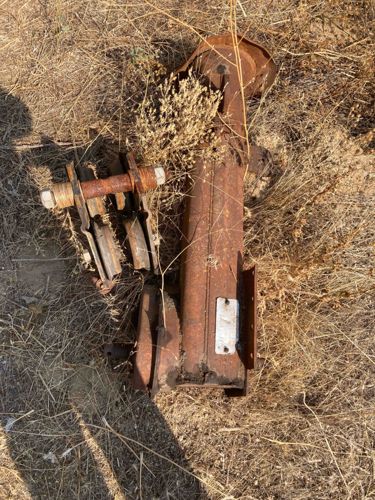
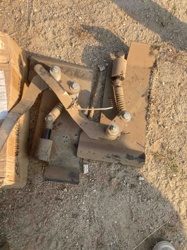
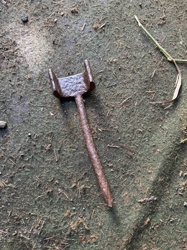
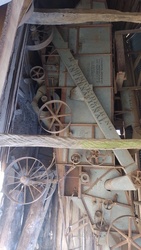
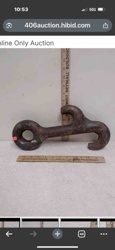
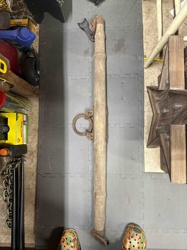
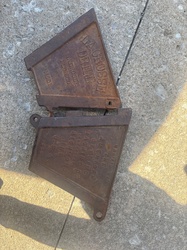
The item appears to be a heavily weathered and rusted agricultural implement component, possibly part of a plow, disc harrow, or similar tillage equipment. It is constructed primarily of thick, heavy-gauge steel, exhibiting a deep, reddish-brown rust patina across nearly all visible surfaces. Physical characteristics include a long, somewhat rectangular main body with a tubular or box-section profile, indicating robust construction for heavy-duty use. Attached to one end are several curved, blade-like elements, which are also heavily rusted and appear to be bolted together with large, robust bolts and nuts. These blade-like components suggest a function related to cutting or turning soil. One section of the main body features a small, rectangular metal plate, possibly an identification tag or serial number plate, which is lighter in color and appears to be made of a different metal or coated, and is attached with two rivets or small bolts. The overall condition is poor, characterized by significant surface rust, pitting, and possible material loss due to corrosion. There are no clear legible manufacturer's marks or signatures visible on the identification plate due to glare or deterioration. The item is embedded in dry grass and vegetation, suggesting it has been discarded or left exposed to the elements for an extended period, leading to its advanced state of degradation. Its construction points to a utilitarian design, likely from the mid-20th century or earlier, given the heavy casting and bolting methods, indicative of older agricultural machinery that prioritized durability over sleek modern design. The quality of craftsmanship, while difficult to ascertain in its current state, was clearly focused on strength and functionality for farm work.
AI Appraisal Report
I have examined the provided image of what appears to be a heavily weathered and rusted agricultural implement component. My assessment of its condition is poor, characterized by significant surface rust, pitting, and potential material loss due to extensive corrosion. The thick, heavy-gauge steel construction and robust bolting methods suggest a utilitarian design, likely from the mid-20th century or earlier, emphasizing durability for heavy farm work. While the original craftsmanship was undoubtedly focused on strength, its current state severely impacts any inherent value beyond scrap or a very specific restoration project.
Market conditions for such heavily degraded components are extremely limited. Comparables would typically include other salvaged or scrap agricultural parts. Demand is very low, primarily from hobbyists, restorers seeking a specific, hard-to-find part for a vintage machine (where this piece might serve as a donor for patterns), or as architectural/garden salvage. Rarity is difficult to ascertain without knowing the exact model and original manufacturer; however, given its generic appearance, it's unlikely to be exceptionally rare. The significant factors impacting its low value are its extremely poor condition, the absence of legible manufacturer's marks, and the general availability of similar scrap metal.
Limitations in authenticity verification from images alone are significant. While I can confirm it is an agricultural implement part, I cannot definitively identify its original purpose, manufacturer, or precise age. An in-person examination would be crucial to assess the extent of structural integrity loss due to rust, confirm material composition, and possibly uncover hidden markings. Provenance documentation would be necessary to establish its specific history, and scientific testing could determine precise alloy composition, which might be relevant for some niche restoration markets. Without these, its value remains speculative and low.