AI estimate as of September 27, 2025 · verify with a professional before acting
AI-Generated · Verify before acting
Everything on this page is generated by AI for informational purposes only. AI can make mistakes — the AI may misidentify items or misattribute them (artist, maker, brand, designer, origin, era). This is not an official valuation and should not be used for insurance, sale, tax, estate, legal, or lending purposes — or any decision requiring a certified appraisal. It is not an authoritative claim about any person, brand, or rights holder — do not share or rely on it as a factual statement about a third party. Always consult qualified professionals before making financial decisions.
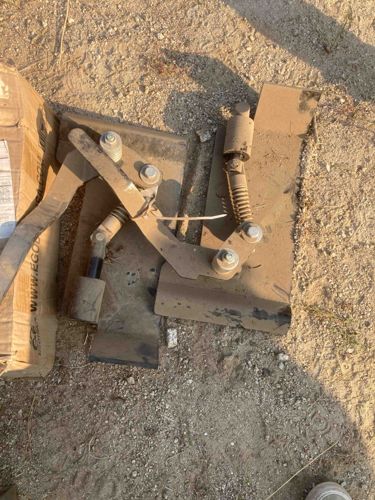
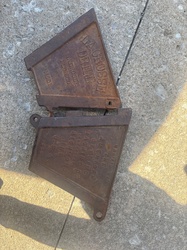
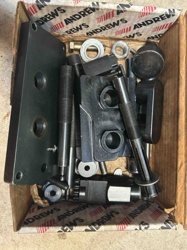
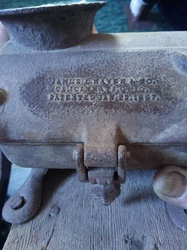
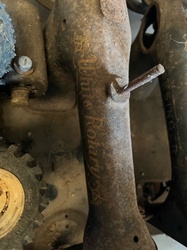
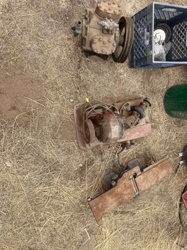
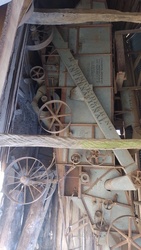
This item appears to be a heavy-duty, weathered metal component, likely from a piece of agricultural machinery such as a planter, tiller, or cultivator. It is constructed primarily from thick gauge steel, exhibiting a dark, rusted, and dirt-covered patina, indicative of prolonged outdoor use and exposure to elements. The overall dimensions suggest a substantial piece, although exact measurements are not discernible from the image. Key physical characteristics include several flat or slightly curved metal plates, joined together by robust bolts and nuts, suggestive of a modular or adjustable assembly. There are visible mechanical elements, including a heavy-duty coil spring assembly attached to one of the flat plates, which likely serves a tensioning, suspension, or depth-control function in the context of soil engagement. Another part resembles an arm or lever, pivotally attached, possibly indicating an adjustable or articulated mechanism. The presence of large bolts and nuts further suggests that this part would be subjected to considerable force and stress during operation. The surfaces are largely obfuscated by dirt and wear, but no explicit manufacturer's marks or serial numbers are visible. There are clear signs of wear, including surface rust, chipped paint (where any may have existed), and accumulated soil and debris, suggesting it is a used part and not new. The construction appears utilitarian and rugged, designed for functional agricultural applications rather than aesthetic appeal. Given the robust construction and the presence of a spring mechanism, it points towards a part that interacts directly with the ground or provides support for such interaction. The overall style and material point to a durable, practical component from modern agricultural equipment, likely from the late 20th to early 21st century.
AI Appraisal Report
I have examined the provided image of this agricultural implement component, which appears to be a heavy-duty, weathered metal part likely from a planter, tiller, or cultivator. The item is constructed from thick steel, exhibiting significant rust, dirt, and wear, consistent with prolonged outdoor use. Its robust design, including a coil spring assembly and large bolted plates, indicates it is built for considerable stress and interaction with soil. The condition is clearly used, showing no original paint and substantial surface corrosion, but its overall structural integrity seems intact for function. Without a clearer view of specific wear points or cracks, it's difficult to ascertain its exact functional lifespan.
Authenticity, in terms of it being a genuine agricultural component, is high given its utilitarian construction and visible wear. However, without manufacturer's marks or part numbers, identifying the specific machine or brand it belongs to is impossible from the image alone. This significantly impacts its market value. Most such components are sold new or as specific used parts for particular equipment models.
Market conditions for generic, unidentifiable used agricultural components are generally low. Value is primarily driven by its potential for reuse or as scrap metal. Comparables would include used parts from salvage yards or online marketplaces, where prices vary greatly depending on condition, specific application, and branding. The lack of identifiable features makes it a commodity item rather than a specialty part. Its demand is limited to individuals needing a generic heavy-duty spring-loaded mechanism or parts for custom fabrication, not direct replacement.
Limitations in authenticity verification are substantial. I cannot definitively identify the manufacturer, part number, or specific model it fits. An in-person examination would be critical to locate any hidden markings, assess the full extent of wear and any structural damage not visible, and measure dimensions for potential cross-referencing. Without this information, the value is primarily based on its material weight and general utility, rather than its intended purpose as a specific replacement part.