AI estimate as of July 10, 2025 · verify with a professional before acting
AI-Generated · Verify before acting
Everything on this page is generated by AI for informational purposes only. AI can make mistakes — the AI may misidentify items or misattribute them (artist, maker, brand, designer, origin, era). This is not an official valuation and should not be used for insurance, sale, tax, estate, legal, or lending purposes — or any decision requiring a certified appraisal. It is not an authoritative claim about any person, brand, or rights holder — do not share or rely on it as a factual statement about a third party. Always consult qualified professionals before making financial decisions.
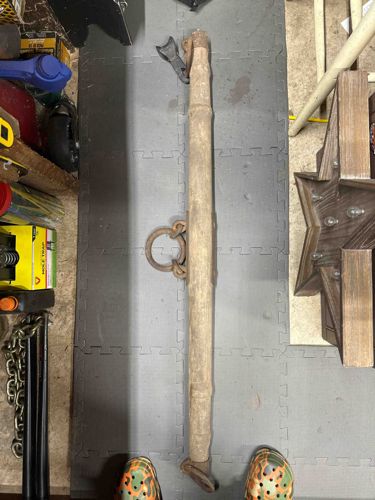
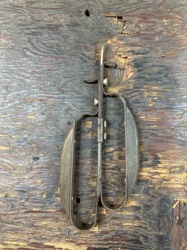
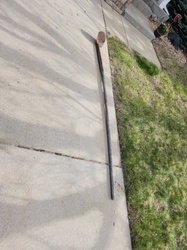
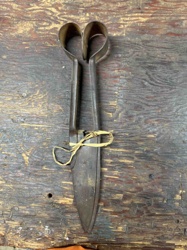
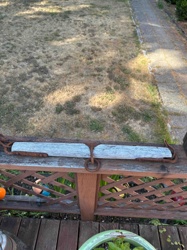
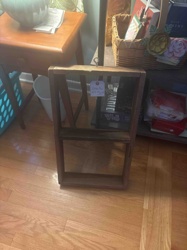
The item appears to be an antique or vintage wooden beam, likely a component of an agricultural implement such as a plow or a wagon tongue. It is primarily constructed from a single, elongated piece of light-colored wood, exhibiting a weathered and aged patina with visible grain and some surface irregularities. The wood has a natural, unsanded finish, indicating its utilitarian purpose. Its overall form is straight and somewhat substantial, suggesting it was designed for strength and durability.
Attached to the wooden beam are several metal fittings, which appear to be wrought iron or a similar heavy dark metal. At one end, there is a large, sturdy metal ring, possibly for attaching harnesses or hitches for draft animals. Further along the beam, what looks like a clevis or attachment point is visible, used to connect other parts of machinery. The opposite end features a broad, flattened metal shoe or blade, showing significant wear, suggesting it was intended to make contact with the ground or another surface, possibly for digging or scraping. The metal components show signs of oxidation and rust, consistent with age and exposure to the elements.
The craftsmanship appears functional rather than decorative, with robust joinery where the metal meets the wood. There are no readily apparent maker's marks or signatures visible in the image. The condition indicates heavy use, with scuffs, scratches, and a prominent dark stain or discoloration on the wooden surface near the metal ring. The wood itself seems intact with no major cracks or breaks, but the general aged appearance suggests a period of practical application. The item's design points towards a style period from the late 19th to early 20th century, a time when such wooden implements were common in farming. Its rustic and sturdy construction is indicative of tools designed for demanding farm work.
AI Appraisal Report
I have examined the provided image of what appears to be an antique wooden plow beam or wagon tongue with integrated metal fittings. My assessment of its condition, based solely on visual inspection, is that it is in good, used antique condition, consistent with heavy utilitarian use. The wood seems intact with no major structural cracks or breaks visible, though it exhibits significant weathering, scuffs, scratches, and a prominent dark stain near the metal ring. The metal components show expected oxidation and surface rust, which is consistent with age and outdoor exposure. Authenticity appears strong based on the construction methods, materials (light-colored wood, wrought-iron-like metal), and wear patterns, all indicative of a late 19th to early 20th-century agricultural implement. However, without a physical examination, I cannot definitively confirm the age of the wood or metal, nor can I rule out any unseen repairs or modern fabrications.
In terms of market conditions, items like this fall into the rustic decor and antique agricultural tool categories. Demand is generally stable but not exceptionally high, driven by collectors of antique farm equipment, rustic decorators, or those seeking unique architectural salvage. Comparables typically range from $100 to $400 for similar, unrestored implements. The lack of discernible maker's marks or unique design features limits its rarity. Its primary value is in its historical interest and aesthetic appeal as a functional antique. Factors positively impacting value are its apparent completeness and robust original construction. Negative factors include the lack of specific provenance, general wear, and the absence of any rare or collectible attributes.
To fully authenticate and provide a more precise valuation, I would need to perform an in-person examination to assess the wood's integrity and type, the metal's composition, the exact nature of the wear, and search for any hidden marks. Provenance documentation, if available, would significantly enhance its historical value. Scientific dating of the wood could also provide an exact age.