Antique Cast Iron Seedeer/Drill Seed Box Ends
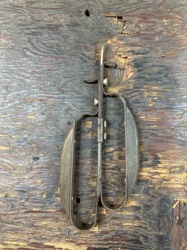
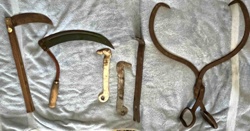
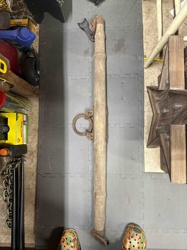
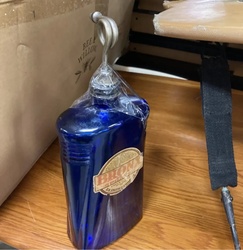
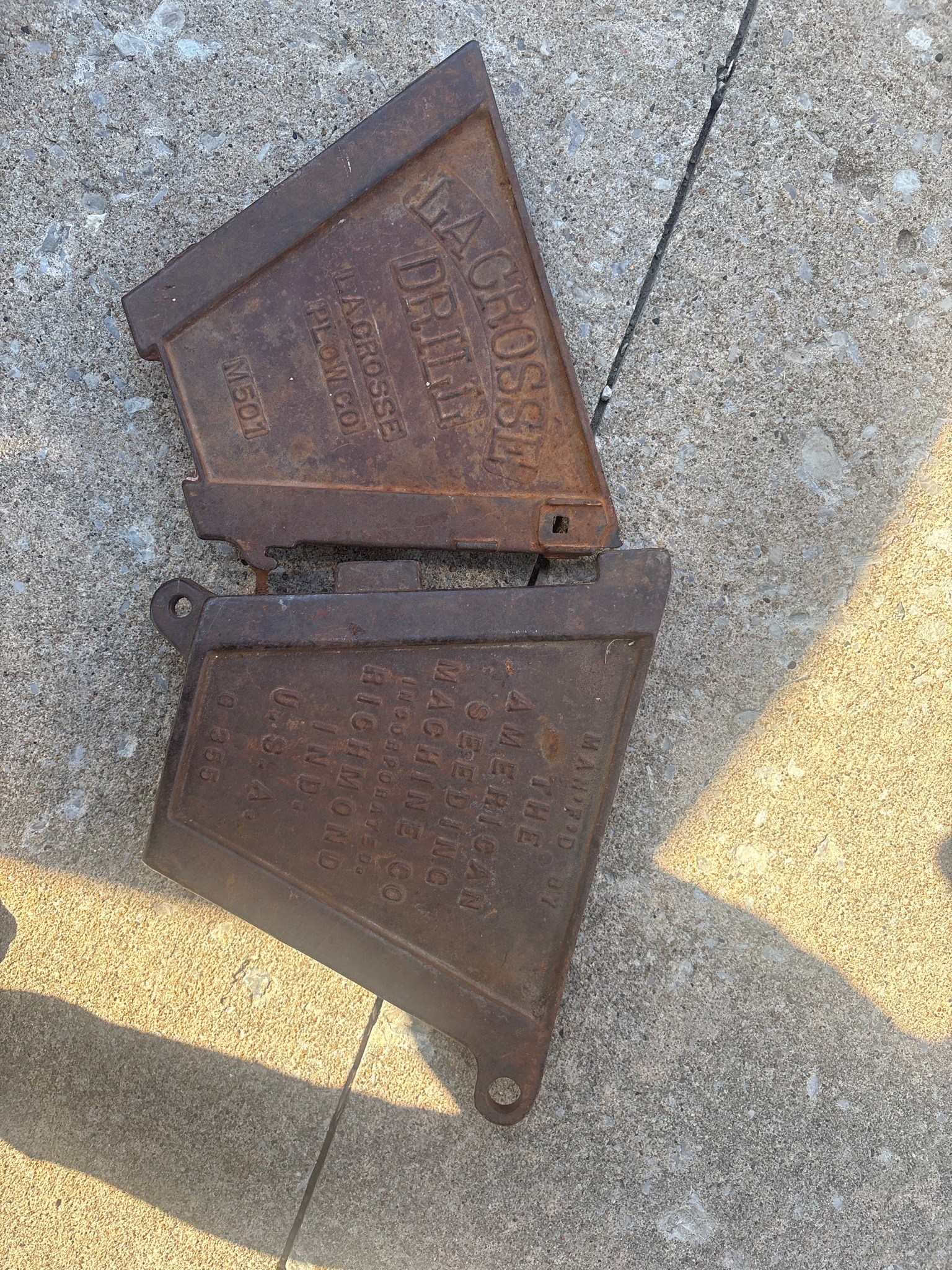
This is a pair of antique cast iron side plates or box ends from horse-drawn agricultural seed drills. The top piece is marked 'LACROSSE DRILL' and 'LA CROSSE PLOW CO.' with the part number 'M501'. The bottom piece is embossed with 'MANF'D BY THE AMERICAN SEEDING MACHINE CO INCORPORATED RICHMOND IND. U.S.A.' with a part or model number 'G 365'. Both items exhibit a trapezoidal shape common for hopper ends, designed with integral hinges and bolt-hole tabs for structural attachment to wooden or metal seed boxes. The material is heavy, sand-cast iron featuring raised font typical of early 20th-century industrial manufacturing (likely circa 1900-1920s). The physical condition shows significant surface oxidation and a dark brown rust patina consistent with long-term outdoor exposure. There are minor chips or casting irregularities along the edges, and the presence of dirt/grime is visible in the recessed lettering. There are no apparent structural cracks in the main bodies, though the mounting lugs show signs of wear. These pieces represent a transition period in American agriculture before the consolidation of many regional implement manufacturers into larger conglomerates like John Deere or International Harvester.
AI-Generated Appraisal Disclaimer
Estimated Value
$60.00 - $110.00
Basic Information
Category
Antique Agricultural Equipment & Tools
Appraised On
May 13, 2026
Estimated Value
$60.00 - $110.00
Item Description
This is a pair of antique cast iron side plates or box ends from horse-drawn agricultural seed drills. The top piece is marked 'LACROSSE DRILL' and 'LA CROSSE PLOW CO.' with the part number 'M501'. The bottom piece is embossed with 'MANF'D BY THE AMERICAN SEEDING MACHINE CO INCORPORATED RICHMOND IND. U.S.A.' with a part or model number 'G 365'. Both items exhibit a trapezoidal shape common for hopper ends, designed with integral hinges and bolt-hole tabs for structural attachment to wooden or metal seed boxes. The material is heavy, sand-cast iron featuring raised font typical of early 20th-century industrial manufacturing (likely circa 1900-1920s). The physical condition shows significant surface oxidation and a dark brown rust patina consistent with long-term outdoor exposure. There are minor chips or casting irregularities along the edges, and the presence of dirt/grime is visible in the recessed lettering. There are no apparent structural cracks in the main bodies, though the mounting lugs show signs of wear. These pieces represent a transition period in American agriculture before the consolidation of many regional implement manufacturers into larger conglomerates like John Deere or International Harvester.
Related Tags
Get Your Items Appraised
Instant estimates of your treasures with AI-powered instant appraisals